Buyer's guide
Choose Your After-Hours Cover
Seven lessons scoring five options, including doing nothing, against your own after-hours data. Ends with a written decision, a review date, and a clear reason if the answer turns out to be no.
Both promise your phone gets answered when nobody is there to pick it up. They hand back very different things the next morning, and the gap is where the decision sits.
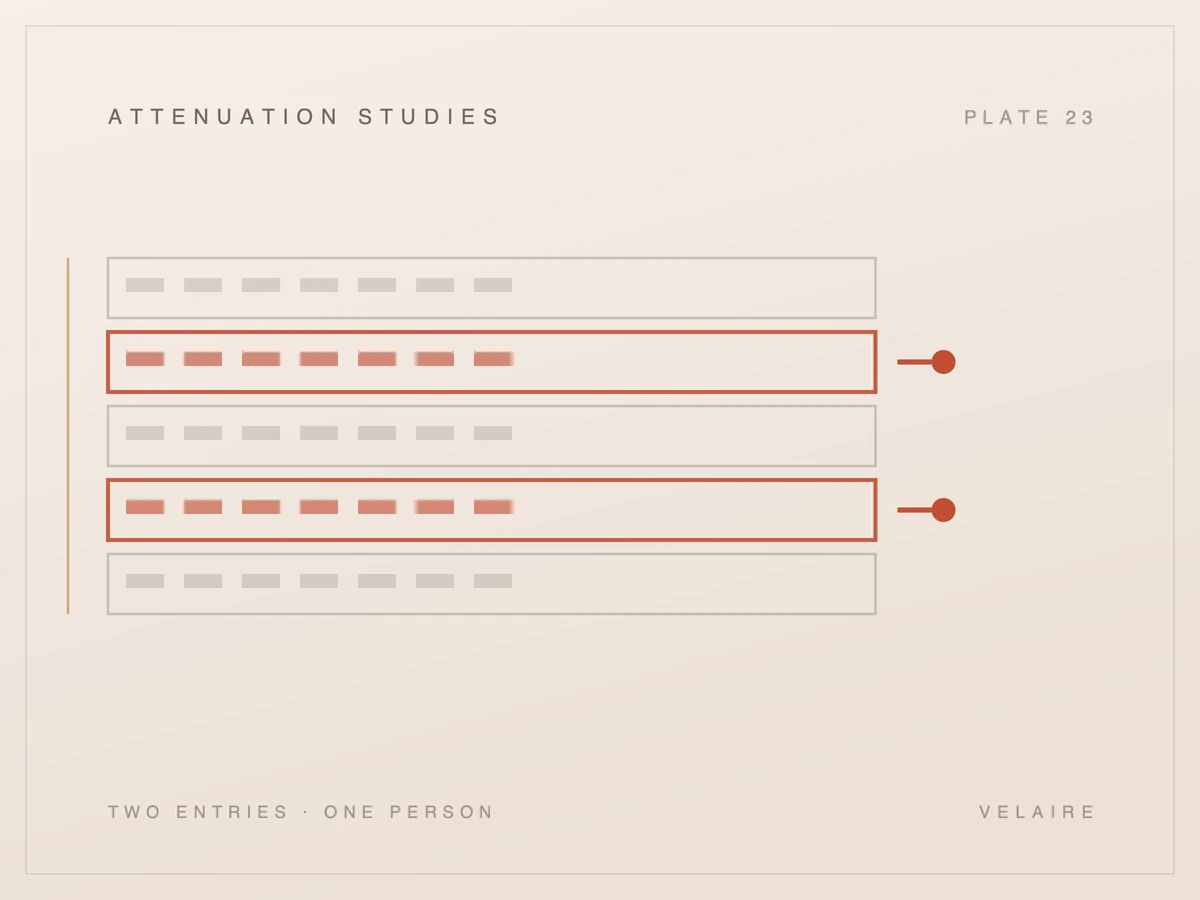
Both vendors will tell you your phone gets answered when nobody is there to pick it up. The difference shows up the next morning, in what is sitting on your desk.
answering service, 9am
front office, 9am
Two vendors can quote you for the same problem and describe themselves in almost the same words. Your phone gets answered when nobody is there to pick it up. Someone captures the caller's details. You hear about it in the morning. On a sales call the two sound close enough that price becomes the tiebreaker, which is usually the wrong way to pick.
The gap shows up the next morning, in what is actually sitting in front of you. One approach hands you a list of people to call back. The other hands you appointments that are already in the calendar. That difference compounds every single day, and it is worth understanding before you sign anything.
What follows is the comparison stripped of vendor framing: how each one is built, what it hands back, what it does with a call it should not be handling, what it costs, and where patients actually draw the line.
An answering service is people. Trained operators pick up your overflow and after-hours calls, follow a script you supply, and take a message. An AI front office is software built to finish a specific job on the call itself, without a human in the middle and without anyone waiting for the morning.
That difference in construction drives everything downstream. An answering service scales by hiring, so its economics are tied to how many minutes humans spend on your calls. Software scales differently, which is why the pricing models look nothing alike once you read past the first page of either proposal.
Neither model is automatically better. A practice with genuinely complex, high-variance calls that need judgement in the moment may be better served by trained humans who know the account. A practice whose after-hours calls are overwhelmingly the same three requests is paying a premium for judgement it does not need.
The question is not which is better. It is which one matches the calls you actually get.
The honest framing is that these are different products aimed at the same symptom. Ask a vendor which of the two shapes theirs is, and be suspicious of an answer that claims to be both.
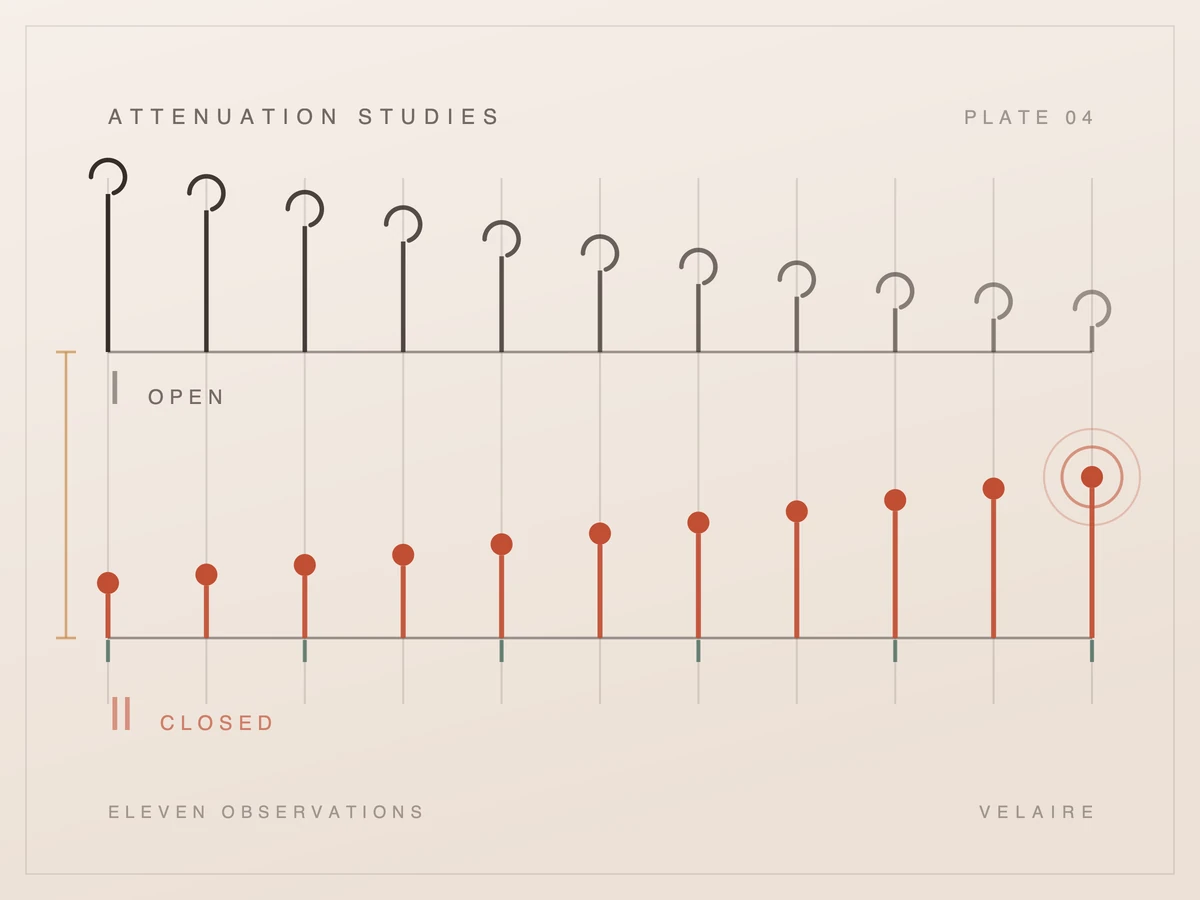
The single clearest test is what exists after the call ends. A message means the work is still ahead of you: someone has to read it, call back, reach the person, and then book. A completed booking request means the work already happened while your office was closed and nobody was awake to do it.
This is where most of the practical difference lives. A message is a promise of future work, and it decays. The caller who left it at 8pm has spent the evening looking at other options, and the person calling back at 9:15 the next morning is arguing with a decision that has already been made.
| After one after-hours call | What the caller gets | What you get back | When you can act |
|---|---|---|---|
| Voicemail | A beep | A recording, if they bothered | After someone listens |
| Answering service | A person, a few questions | A written message | After a callback connects |
| AI front office | A conversation that ends in a slot | A booking request in the calendar | Already done |
The row that matters is the last column. Two of those three paths still require your front desk to spend time tomorrow on a call that happened yesterday. Only one of them closed.
Worth checking carefully: where a booking request actually lands. A request that lives in a vendor's own app your team has to remember to check is closer to a message than a booking, whatever the sales deck calls it. Ask to watch it land in the calendar your team actually works from, on screen, during the demo. This is the same question that separates real vendors from noisy ones across the whole buying decision.
Both approaches have to answer the same hard question: what happens when the caller needs something the system cannot give them. For a healthcare practice this is not an edge case, it is a safety requirement, and it is the part of a demo most vendors move through quickly.
An answering service has a natural advantage here, because a human is already on the line and can improvise. Software has to be explicit about it. A well-built AI front office routes clinical questions, urgent calls, and anything it cannot resolve to a live line or logs a callback, and it never attempts to give medical advice or anything resembling a diagnosis.
Patients are clear about wanting this. In a 2024 Talkdesk survey of 1,000 US adults, 81% said they would rather consult a human for medical advice, even though the same group was broadly comfortable with automation handling the administrative side [1]. A vendor with no clean path to a person is solving the easy half of the problem and leaving you the half with risk in it.
Independent polling agrees and adds a second requirement. Pew Research Center, surveying 3,488 US adults in June 2026, found 81% wanted to be told when AI was used to make a diagnosis against 56% for scheduling an appointment, and 63% wanted more say in whether it was used at all [3]. Patients accept the machine on the administrative tasks. What they want on the clinical ones is a person, plus a straight answer about which one they are getting.
A system that cannot hand off cleanly has not automated the front desk. It has added a step in front of it.
So ask both types of vendor the same three questions. What specifically triggers a handoff, where does that call go at 10pm, and what does the caller hear while it happens. Vague answers here are the most expensive kind.
Answering services almost always price on usage: per minute, per call, or in blocks of minutes with overage. That model is honest about what it sells, which is human time, but it means a good month for your practice is an expensive month, and a busy week produces a bill you did not forecast.
Flat-rate software prices the other way. The cost is known before the month starts and does not move when call volume does. Velaire is built this way: Recovery covers after-hours calls at $599 a month, Growth adds business-hours overflow at $1,199, and Pro covers full inbound from $1,999.
Neither model is a trick. They suit different volume profiles, and the comparison only becomes real when you put your own numbers into it. A practice missing a handful of calls a month will find per-minute pricing cheap. A practice missing several a day will find the same pricing punishing at exactly the moment it is working.
It helps to know what the human hour underneath an answering service actually costs. O*NET, carrying BLS 2025 wage data for medical secretaries and administrative assistants, puts the median at $22.08 an hour, or $45,930 a year, before employer taxes, benefits or cover for leave [2]. An answering service is not paying your local rate and spreads its people across many clients, which is why per-minute pricing can undercut hiring outright. It is also why the bill climbs the moment your volume does. You are buying the scarce input directly.
The trap is comparing the headline numbers instead of the total. Add what the follow-up work costs you: the callbacks your staff make on messages, the hours that takes, and the share of those callbacks that never reach the person. That work is real and it is unpriced in an answering-service quote. Running your own arithmetic on a missed call is the only way to see it.
There is a common objection that patients will resent talking to software, and it deserves a straight answer rather than a reassuring one. The evidence suggests acceptance depends heavily on the task, and that patients draw the line in a fairly sensible place: administration yes, clinical judgement no.
The same 2024 Talkdesk survey found 60% of respondents were comfortable with AI updating basic information such as an address change, 56% with prescription refill requests, and 42% with scheduling routine appointments [1]. Those are not overwhelming majorities, and it would be dishonest to present them as though patients are uniformly enthusiastic.
More interesting is the finding that ran the other way. Among patients dealing with sensitive health issues, 67% said they would be more comfortable making an appointment through an online chatbot than with a person [1]. For an aesthetic or elective practice, where a first enquiry can feel exposing, that is worth sitting with rather than dismissing.
The concerns are equally specific. In the same survey, 26% named inaccurate responses as their main worry about AI in healthcare, and 24% named data privacy [1]. Both are answerable, but only by a vendor willing to talk about how the system behaves when it is unsure, and what happens to the recording afterwards.
Privacy is the one to press hardest on, because it is the question where a confident answer and a correct answer sound identical. Any vendor touching patient information in the United States needs a signed business associate agreement, and every vendor in the chain behind them needs one too. HIPAA is a configuration and a contract, never a certificate somebody hands you, and a vendor describing themselves as certified has told you they do not know that.
Both options address the same narrow problem, which is a call arriving when nobody can answer it. Neither one repairs a booking process that is already slow during business hours, and neither replaces a front desk. Being clear about that boundary saves a lot of disappointment three months in.
If your daytime phone rings out because two staff are covering four jobs, coverage for the evening does not touch that. It moves the queue rather than shortening it, and the practice that expected relief at 2pm gets it at 8pm instead. Overflow coverage during business hours is a separate decision with a separate cost, and it is worth naming that up front rather than discovering it after signing.
Neither model fixes a calendar nobody maintains, either. A booking request landing in a system your team has stopped trusting produces the same outcome as a voicemail nobody checks. The technology assumes the destination is being used, and that assumption fails quietly.
Coverage extends the hours you can answer. It does not repair what happens after you do.
The practices that get the most out of either option tend to be the ones that fixed something small first: a calendar that reflects reality, or a clear rule about who owns follow-up. That work is unglamorous and it is usually free.
The decision comes down to matching a model to the calls you genuinely receive, not to which demo felt more impressive. Pull a week of your own call logs before you talk to anyone, because almost every question below gets easier to answer once you know what is actually arriving at your phone.
If most of your after-hours calls are new enquiries asking about availability and price, software that books is doing the whole job. If they are established patients with complicated, varied questions, trained humans who know your account may still be the better fit, and no amount of vendor enthusiasm changes that.
Most practices find the split is less even than they expected, and usually more repetitive. A week of logs tends to show the same handful of requests arriving over and over, which is an argument for the model that completes them rather than the one that writes them down. If the logs show the opposite, that is a genuine finding and worth acting on rather than explaining away.
One more practical note. Whichever you choose, insist on seeing a real monthly report before you sign, not a description of one. Calls received, requests captured, and follow-ups sent is a short list, and a vendor who cannot show it in a sample is telling you something. Velaire includes that report on every plan and gets a practice live in under 48 hours on the number it already uses, which you can weigh against what each tier covers.

Buyer's guide
Seven lessons scoring five options, including doing nothing, against your own after-hours data. Ends with a written decision, a review date, and a clear reason if the answer turns out to be no.
Buyer's guide
Four situations where an AI front office is the wrong purchase, what the cheaper fix is in each, and the one shape of practice where the arithmetic genuinely works.
Buyer's guide
Four very different products describe themselves with the same sentence. The difference is what ends up in your calendar and who put it there, and it is the question worth asking in every demo.
Buyer's guide
Most of these tools sound identical in a sales call. Here are the questions that actually separate them, and what a real answer sounds like when you ask each one.
Operations
Seven lessons of unglamorous cleanup that decide whether a connected system works. Appointment types, availability rules, duplicates, phone formats, and who is allowed to write what.
Compliance
Six situations that happen weekly at every practice, what the rule actually permits in each, and why the answer is usually more permissive than staff assume and stricter than callers expect.
The plain-language explainer: what it does, what it deliberately doesn't, and how it compares with voicemail, an answering service, a phone tree, and hiring.
See how Velaire would handle the calls your practice misses. A personal walkthrough, built around your questions.
Let’s talk about your practice