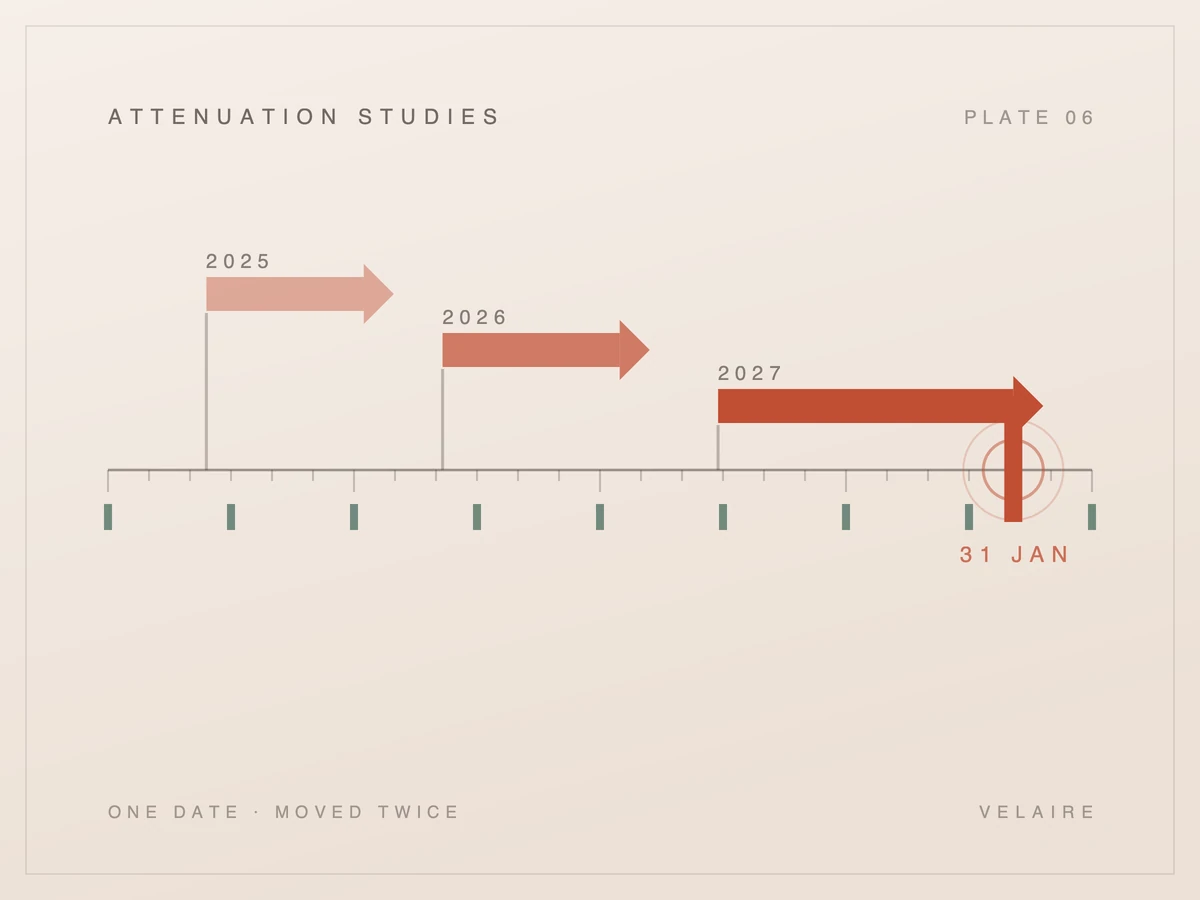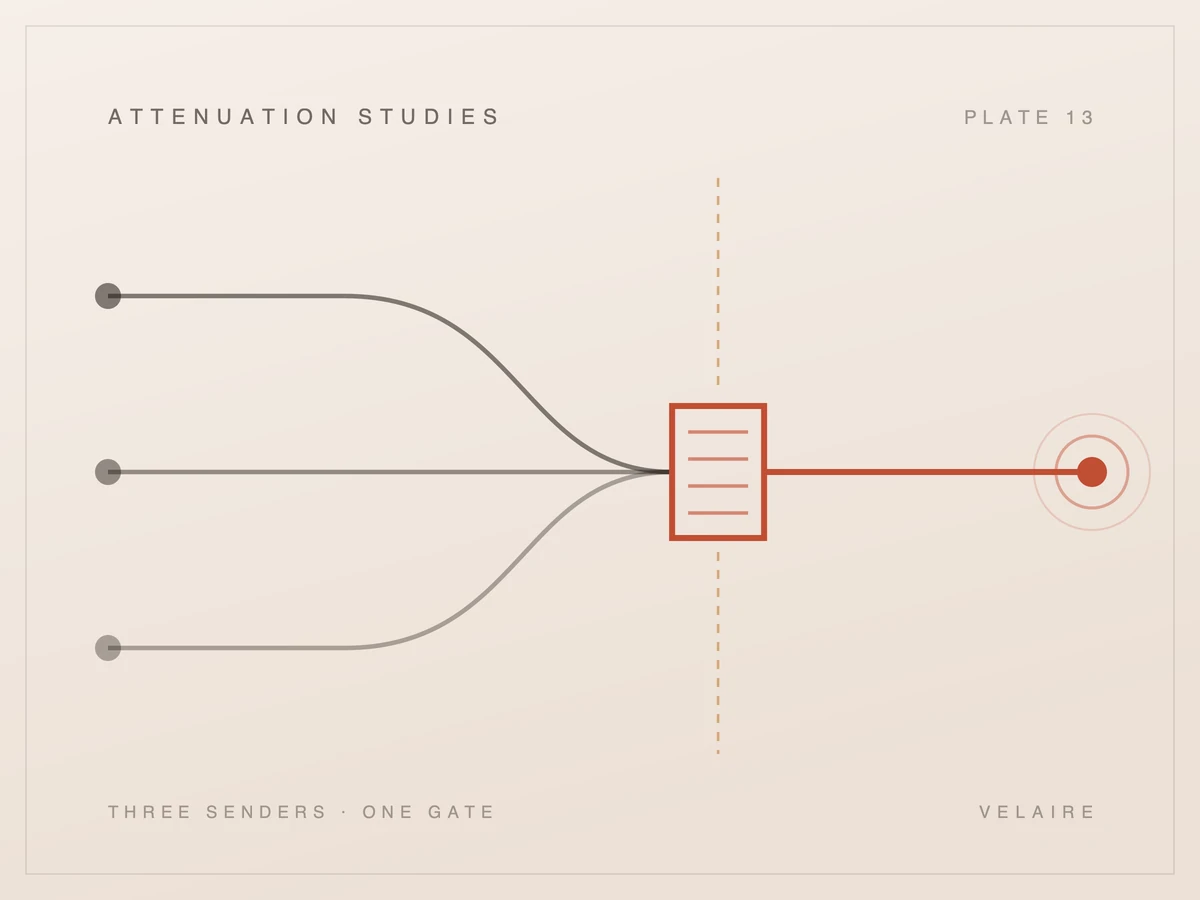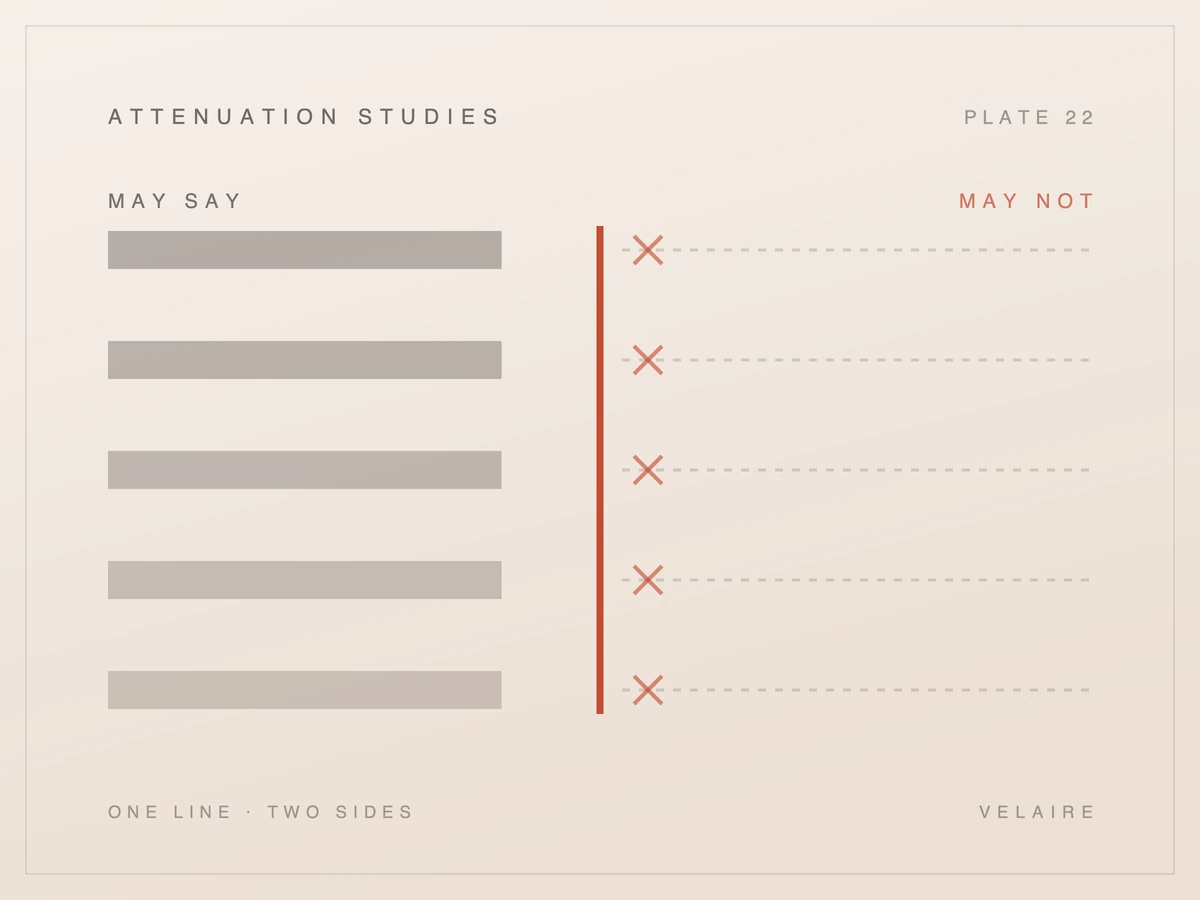
The caller sounds entirely reasonable. They are asking whether their mother has an appointment on Thursday. Your receptionist has about two seconds to decide, and nobody has ever told them what the answer is.
the caller, entirely pleasant
the front desk, improvising
Key takeaways
- •Confirming that a named person is a patient is itself a disclosure, whoever is asking.
- •The family-member route requires the individual to have identified that person, not the caller identifying themselves.
- •Names audible in a waiting room are ordinary; names plus a reason for the visit are avoidable.
- •Messages may be left, with the practice name and a callback number, and never the reason.
- •A patient may request an alternative contact method, and that preference needs to live in a system rather than in someone's memory.
Front-desk privacy training tends to arrive as a general instruction to be careful, which is useless at the moment it is needed. What a receptionist actually faces is a specific person asking a specific question in a tone that makes refusing feel rude, and a general instruction gives them nothing to say.
The rule is more permissive than most staff assume and stricter than most callers expect, and the gap between those two is where practices get into trouble in both directions: over-refusing to people who are entitled to an answer, and over-sharing with people who sound like they should be.
This is six situations that occur weekly at every practice, what the rule actually permits, and the wording worth having written down before it is needed. None of it is legal advice, and a practice with a real incident should be talking to its own counsel rather than to a blog.
Why "be careful" is not a policy#
A caller applying mild social pressure is a genuinely hard thing to refuse without a script in front of you, and a receptionist improvising under that pressure will reach an inconsistent decision. Inconsistency, rather than any single disclosure, is the specific failure a written policy exists to prevent.
Inconsistency is the real exposure, more than any single disclosure. Two staff answering the same question differently means one of them is wrong, and a practice that cannot say which has no defence available if anyone asks.
The rule the policy implements is narrower than most staff assume. The minimum necessary standard at 45 CFR 164.502(b) asks a practice to limit what it discloses to what the purpose actually requires, which is a question about the specific request in front of you rather than a general instruction to say as little as possible [4]. Read properly it settles both failures at once: it sets the ceiling, and it makes clear that refusing something the rule permits is not compliance either.
There is a second cost to leaving it unwritten that shows up in the other direction. Staff who have been told only to be careful become defensive by default and refuse things they were entitled to answer, which produces complaints from patients who were, in fact, on the list of people the practice may speak to. Over-refusal is a worse patient experience and it is just as much a failure of the policy.
Written answers also protect the staff member, which is the part usually left out. A person reciting an agreed sentence is doing their job; a person inventing a boundary in real time is being asked to carry a risk that was never theirs.
The hard calls to refuse are the ones that sound entirely reasonable. Script those, and stop relying on judgement under pressure.
The question that catches everyone#
"Is my mother booked in on Thursday?" is the most common hard question a front desk receives, and it is hard for an awkward reason: the instinct it triggers, which is to be helpful to somebody who sounds worried, is exactly the instinct that produces the wrong answer here. Helpfulness is the failure mode.
Confirming that a named person is a patient is itself a disclosure. Whether they have an appointment, when it is, and what it is for are all protected, and the fact that the caller knows the name and sounds related does not establish anything.
The rule does provide a route, and it is narrower than callers assume. A practice may share information directly relevant to a person's involvement in the individual's care with a family member, relative, close personal friend, or another person the individual has identified [1]. The operative words are "the individual has identified", and a caller identifying themselves is not the same thing.
- ✓The information is directly relevant to that person's involvement in the patient's care
- ✓The patient identified them, rather than them identifying themselves
- ✓The patient agreed, did not object when given the chance, or their non-objection can reasonably be inferred
- ✓None of those three is available on a cold inbound phone call
Where the patient is present and able to decide, the practice may disclose if it obtains agreement, gives an opportunity to object with none raised, or reasonably infers from the circumstances that they do not object [1]. On a cold phone call, none of those three conditions is available.
So the answer is a refusal, and the refusal should be a sentence somebody wrote in advance rather than an awkward improvisation. Something close to: I am not able to confirm anything about who is or is not a patient here, but I can take a message and pass it on.
Practise it out loud once with the staff who will use it. A sentence that reads fine on paper can come out apologetic or accusatory when said under pressure for the first time, and 2 minutes of rehearsal is what turns it into something deliverable rather than something that exists in a folder.
That wording matters because it refuses without accusing. The caller is usually exactly who they say they are, and treating them as a suspect is both unpleasant and unnecessary.
The waiting room, and what gets overheard#
Practices worry a great deal about calling a patient's name in a waiting room, and the worry is mostly misplaced. Names being audible in a public area is an ordinary consequence of running a practice, not a disclosure that needs consent.
What matters is what accompanies it. A name is one thing; a name plus a reason for the visit, said loudly enough for a room to hear, is a different thing, and the second is entirely avoidable.
The same applies at the desk. A receptionist confirming a patient's date of birth in a normal voice is fine. Confirming what treatment they are booked for, while somebody stands 2 feet behind them, is what a queue layout is supposed to prevent and frequently does not.
There is a 5 minute version of this worth doing once a year. Stand at the desk and have a colleague speak at their normal volume from the chair a patient occupies, then swap. Most practices discover the desk carries about 3 metres further than anyone assumed, and that the quiet voice people think they are using is not quiet at the second row of seats.
The practical version of this is a walk rather than a policy. Stand where a waiting patient stands, at your busiest hour, and listen to what you can hear from there. Most practices find one specific spot where the desk is unexpectedly audible, and the fix is usually a sign asking people to wait behind a line.
Messages, and what may be left on them#
Leaving a message is permitted, and the sensible limit falls on content rather than on the act itself. The practice's name, a callback number, and a request to call back are all ordinary and uncontroversial. The reason for the appointment is not, and that single distinction covers almost every message a practice leaves.
The reason is that you do not know who will hear it. A household answering machine, a shared voicemail, a phone handed to a partner, and a colleague standing nearby are all normal, and a message that names a treatment or a condition has disclosed it to whoever was in the room.
- The practice name
- A callback number
- A request to call back
- That it concerns an appointment
- The treatment or procedure
- Any condition or symptom
- Results, or that results are available
- Anything a household member should not learn from a machine
There is a related right that practices routinely forget and that resolves a lot of these situations. A patient may request that you communicate with them by alternative means or at alternative locations, and a provider must accommodate reasonable requests [2].
It also cuts the other way in a useful direction. A patient who has told you a home number is fine has removed most of the ambiguity for that record, and noting that is as worth doing as noting a restriction.
"Do not leave messages on the home number, use my mobile" is a reasonable request, and honouring it needs somewhere to live in your systems rather than in the memory of whoever took it. A preference that exists only in one person's head is a preference that will be broken during their annual leave.
Where the marketing line actually falls#
The other question that reaches the front desk is about what may be sent rather than what may be said, and it usually arrives as a nervous query about whether recall messages are allowed at all. The boundary here is considerably more usable than most staff have been told, and it turns on one thing.
Marketing means a communication about a product or service that encourages the recipient to buy or use it, and communications for treatment, including case management and care coordination, are carved out of that definition, as are refill reminders where no third party is paying for the message [3].
| The message | Where it sits |
|---|---|
| Your 6 month review is due | Care coordination, not marketing |
| A reminder for an appointment already booked | Treatment, not marketing |
| Post-procedure follow-up instructions | Treatment, not marketing |
| Book your review and get 20% off whitening | Marketing, needs authorisation |
| A seasonal offer sent to the patient list | Marketing, needs authorisation |
The distinction that runs through the whole table is what the message is encouraging. A message encouraging you to attend something clinically due is coordination of your care. A message encouraging you to buy something is marketing, regardless of how health-related the thing is or how established the relationship.
The fourth row is the one that catches practices out, because the offer is attached to something legitimate. Adding a discount converts the whole message, and staff need to know that the combination is the problem rather than either part alone.
A recall is not marketing. A recall with an offer stapled to it is, and the staple is what changed it.
The six answers worth writing down#
Every practice should have these 6 written down, agreed by whoever holds clinical responsibility, and physically available at the desk rather than filed somewhere. Each of them will be needed at a moment when there is no time to think, which is the entire reason for writing them in advance.
The refusal for a third party asking about a named patient. The answer for a caller who becomes upset at that refusal. What may be left on a voicemail. What to do when a patient asks you to use a different number. What to say when somebody asks a clinical question. And who to escalate to when none of the five fits.
- 1The refusalFor a third party asking about a named patient. Refuse without accusing.
- 2The second sentenceFor the caller who becomes upset at the refusal.
- 3The message rulePractice name, callback number, nothing about the reason.
- 4The alternative-contact ruleWhere the preference gets recorded, so it outlives whoever took it.
- 5The clinical boundaryNo interpretation, no reassurance, route to a clinician every time.
- 6The escalation pointA named person, so anything uncovered becomes a 30 second question.
The second one is worth drafting as carefully as the first. A refusal that lands badly turns a routine call into a complaint, and the difference is usually one sentence acknowledging that the rule is frustrating before restating it. Something like: I know that is not the answer you wanted, and it is the same answer I would have to give about you.
The fifth of those is the one with the widest consequences and the simplest answer. Nobody without clinical training should be interpreting symptoms or offering reassurance, and "that sounds normal" is the most common way a helpful person creates a real problem. The route is to a clinician, every time.
Review the 6 answers once a year and after any incident, and keep them to 1 page. A privacy policy that runs to 12 pages is a document nobody at a desk will consult in the 2 seconds available, which is the only moment that matters here.
The sixth exists because the other five will not cover everything. A named escalation point, available during opening hours, turns an improvised decision into a 30 second question, and the whole point of this article is to make improvisation unnecessary.
If you are writing these down, they belong in the same document as your escalation rules and your prohibited responses rather than in a separate privacy folder, which is the approach set out in writing your call handling rules. The same boundaries apply to anything automated answering your phone, for the same reasons and with the same wording, which is worked through in what "the AI books the appointment" actually means.
Sources
- [1]45 CFR 164.510, uses and disclosures requiring an opportunity to agree or object, via Cornell LII
- [2]45 CFR 164.522, confidential communications requirements, via Cornell LII
- [3]45 CFR 164.501, definition of marketing and its exclusions, via Cornell LII
- [4]eCFR, 45 CFR 164.502(b), the minimum necessary standard (official current text)