The Real Cost of a Missed Call, and How to Actually Think About It
Skip the vendor stat sheets. Four numbers you already have will tell you what a missed call is worth to your specific practice, and whether covering them is worth paying for.
+ Published missed-call statistics disagree with each other because they are marketing, not research.
+ Four inputs answer this: weekly misses, booking likelihood, value per booking, and cost of coverage.
+ Value a booking including what typically follows it, not just the initial consultation fee.
+ Test the sensitivity. Knowing where the answer stops clearing $599 matters more than the headline number.
+ Your call log undercounts, so whatever figure you calculate is a floor rather than an estimate.
Every vendor deck opens with a scary percentage. None of them have ever seen your phone log, your conversion rate, or what an appointment is actually worth at your practice.
every vendor deck, page one
the practice owner, reasonably
Four numbers you already have beat one number a stranger made up.
Search for the cost of a missed call and you will find a great deal of confidence and very little agreement. One page will tell you a specific percentage of callers never leave a voicemail. Another will give you a different percentage for the same behaviour. A third multiplies its own figure by an average appointment value and produces a number designed to feel alarming.
The numbers disagree because they are marketing rather than research, and because the underlying reality varies enormously by practice type, size, hours and speciality. There is no universal answer here, which is precisely why a borrowed statistic is the wrong tool. The useful number is one you work out yourself, and it takes about an afternoon.
A statistic drawn from someone else's customer base tells you almost nothing about your practice. Call volume, patient mix, opening hours and how busy your front desk already is all move the answer substantially. Borrowing a number means importing assumptions you cannot see and cannot check.
The good news is that you do not need the borrowed number. Everything required to answer this properly is already sitting in your phone system and your calendar, and the arithmetic is deliberately simple enough to do on paper.
Four numbers, one afternoon
1
Count the misses
Unanswered calls in a normal week, from your phone log.
2
Estimate the share that would have booked
A quarter to a half is defensible for elective enquiries.
3
Value a booking honestly
Include what typically follows a first appointment.
4
Multiply, then compare
Hold the result against what coverage would cost.
The whole method. No spreadsheet model and no consultant required.
It is worth noticing why the published figures vary as much as they do. Each one is drawn from whichever customers a particular vendor happened to have, in whichever industries they sell into, measured however suited the point being made. None of those choices are disclosed, and none of them are likely to match a healthcare practice of your size and shape.
There is a second reason to do this yourself, which is that it changes the conversation with vendors. Walking into a demo with your own figure means you are evaluating a price against a known quantity rather than against a feeling. It also makes it obvious very quickly when a vendor's pitch does not survive contact with your actual numbers.
A number you calculated is worth more than a number you were shown.
None of this requires a spreadsheet model or a consultant. Four inputs, multiplied, gets you close enough to make a decision, and being approximately right with your own data beats being precisely wrong with somebody else's.
Four inputs are enough. How many calls go unanswered in a normal week, how many of those would realistically have booked if someone had picked up, what a booked appointment is genuinely worth to you, and what covering those calls would cost. Everything else is refinement.
Most practices know none of these off the top of their head, and that is completely normal rather than a sign of poor management. They are simply numbers nobody has needed until now, and three of the four are sitting somewhere you already have access to.
The four inputs
Where it comes from
How confident
Missed calls per week
Phone system call log
High, and it undercounts
Share that would book
Your judgement
Estimate, so test a range
Value per booking
Practice management system
High, if follow-on is included
Cost of coverage
A vendor quote
High, once caps are checked
Three are lookups. Only the second is genuinely an estimate.
The second input is where people go wrong, in both directions. Assuming every missed caller would have booked is obviously too generous. Assuming almost none would is a way of avoiding the conclusion. Somewhere between a quarter and a half is a defensible starting range for elective enquiries, and you should adjust it based on what you know about your own callers rather than what makes the answer comfortable.
A reasonable way to sanity-check the second input is to look backwards rather than forwards. Take a sample of callers from three months ago who did get through, and see what share of them ended up booking something. That figure is not identical to the missed-call conversion rate, but it is a real number from your own practice and it beats a guess pulled out of the air.
The third input should include what typically follows a first appointment, not just the fee for the appointment itself. A consultation that routinely leads to a course of treatment is worth the course, discounted for the share of consultations that do not convert. Using the consultation fee alone will understate the answer considerably.
Three of the four inputs already exist somewhere you can reach. The fourth is a quote. Getting them takes an afternoon rather than a project, and the exercise is worth doing even if you decide against buying anything, because the numbers are useful on their own.
Missed calls come from your phone system, which almost certainly logs them with timestamps. Export a normal month rather than a quiet one or a chaotic one. Appointment value comes from your practice management system, and booking likelihood is the one you will have to estimate rather than look up.
Pulling the inputs
✓Export a normal month of missed calls with timestamps
✓Split them by inside and outside opening hours
✓Pull average appointment value, including typical follow-on
✓Pick a booking-likelihood range rather than a single figure
✓Get a written quote with caps and overage spelled out
An afternoon of work, useful even if you buy nothing.
Split the missed calls by time of day while you are in there, because the after-hours subset behaves differently from the daytime one and is usually the larger opportunity. A daytime miss often recovers on its own when the caller rings back. An evening miss frequently does not, which means averaging the two together will flatter your recovery rate and understate the leak.
One caveat on the call log itself: it understates the problem rather than overstating it. Callers who hang up during the first ring may not register at all, and anyone who checked your opening hours online and decided not to dial never appears anywhere. Whatever figure you pull is a floor, which is a useful property when you are deciding whether something clears a cost.
Here is the calculation with a deliberately conservative set of example numbers. These are placeholders chosen to demonstrate the method, not a claim about what any particular practice will see, and the entire point is that you substitute your own figures for them.
Input
Example value
Running total
Missed calls per week
10
-
Share likely to have booked
4 of 10
-
Value per booked appointment
$250
-
Weekly opportunity
4 x $250
$1,000
Monthly opportunity
$1,000 x 4
$4,000
Annual opportunity
$4,000 x 12
$48,000
The example, carried out
$1,000
Weekly opportunity
4 bookings at $250
$4,000
Monthly opportunity
Before any coverage cost
$599
Recovery plan
After-hours coverage, per month
Placeholder figures shown to demonstrate the method, not a forecast.
Against that, after-hours coverage on the Recovery plan is $599 a month. Whether the trade makes sense depends entirely on whether your own version of the table clears it, and by enough of a margin to be worth the change. If your practice misses two calls a week rather than ten, the answer is probably no, and that is a perfectly good outcome from an afternoon's work.
The sensitivity worth checking is the second row. Drop the booking likelihood from 4 in 10 to 2 in 10 and the monthly figure halves to $2,000, which still clears $599 comfortably. Run it at 1 in 10 and it lands at $1,000. Knowing where the answer stops working is more useful than the headline number, because it tells you how much your estimate has to be wrong before the decision flips.
The four-number calculation captures the direct opportunity and misses several real costs sitting around it. None of these are large enough to change a clear answer, but they matter when the result lands close to the line and you are looking for a tiebreaker.
The first omission is staff time. Every message a practice takes generates a callback, and callbacks take minutes each, land poorly, and interrupt whatever else was happening. That work is invisible in the calculation above because it is absorbed by people already on payroll, which is not the same as being free.
The callback nobody makes is a lost booking. The callback somebody makes is an unpriced cost.
There is also an opportunity cost in the other direction that is easy to miss. Practices that never measure this tend to solve the symptom by extending opening hours or adding a Saturday clinic, both of which cost considerably more than coverage and address a smaller share of the gap. Knowing the number stops you spending against the wrong problem.
The second is that recovered callers are not guaranteed to convert at the same rate as callers who got through first time. An appointment booked at 8pm is still one somebody can cancel or fail to turn up to, and some of those will fall over. Being honest about this keeps the estimate defensible rather than optimistic.
The third is the effect on the patients who did get through. A front desk spending its morning chasing yesterday's messages is a front desk giving less attention to the people currently standing in the waiting room, and that cost never appears in any call report.
It is fair to ask whether a call answered by software converts at all, or simply annoys the caller into leaving anyway. The honest answer is that acceptance depends heavily on the task, and the evidence suggests patients are more comfortable with automated booking than the objection assumes.
In a 2024 Talkdesk survey of 1,000 US adults, 42% said they were comfortable with AI scheduling routine appointments, while 81% still wanted a human for actual medical advice [1]. The split is consistent and sensible: administration is acceptable, clinical judgement is not, and any system taking your calls has to route the second category to a person.
That survey was commissioned by a company selling contact centre software, so the pattern is worth checking against researchers with nothing to sell. Pew Research Center, polling 3,488 US adults on a probability panel in June 2026, found the same split from the opposite direction: 81% wanted to be told when AI was used to make a diagnosis, against 56% for scheduling an appointment, and a third saw no need to be told about scheduling at all [2]. Tolerance rises as the task moves away from clinical judgement, and booking sits at the tolerant end.
The caution worth carrying is about data rather than competence. KFF, polling 1,343 adults over 7 days in early 2026, found 77% were concerned about the privacy of personal medical information given to AI tools, while 32% had already used a chatbot for health information in the past year [3]. Patients will let a machine take a booking. What they object to is not knowing where the recording went.
More striking for elective practices, 67% of patients dealing with sensitive health issues said they would be more comfortable booking through an online chatbot than speaking to someone [1]. If your callers are enquiring about something they would rather not explain to a receptionist, the automated path may convert better than the human one rather than worse.
That does not make the conversion rate 100%, and no vendor should claim it does. It does mean the assumption buried in most versions of this objection, that automation costs you bookings, is not well supported. Build your estimate on your own recovered-booking rate once you have one, and treat the first few months as the measurement rather than the proof.
Once you have your figure, the decision is usually obvious in one direction or the other, which is the main argument for spending the afternoon. Ambiguous answers are rarer than people expect, because the gap between the opportunity and the cost of coverage tends to be large rather than marginal.
If the number clearly clears the cost, the remaining question is which coverage shape fits, and that comparison is a separate exercise with its own set of questions. If it clearly does not clear the cost, you have saved yourself a subscription and learned something concrete about your own practice in the process.
Write the working down somewhere durable rather than keeping it in your head. In six months you will want to know what you assumed and whether it held, and a note with four numbers and a date on it turns the next version of this decision into a five-minute update rather than a repeat of the whole exercise.
If it lands close to the line, the tiebreakers above are where to look: staff time spent on callbacks, the attention cost to patients already in front of you, and how much of your missed volume falls after hours where recovery is worst. Rerun the arithmetic in six months, because call volume moves and the answer moves with it.
FAQs
Questions about this
Because published figures for this disagree with each other and mostly originate from vendor marketing rather than research. Practice type, size, opening hours and front-desk load all move the answer substantially. Four numbers from your own systems produce something defensible, and the exercise takes roughly an afternoon.
Almost every phone system logs missed calls with timestamps, so it is usually a matter of exporting a normal month rather than guessing. Split the results by your opening hours while you are there, because after-hours misses behave differently and recover far less often than daytime ones do.
Use a range rather than a single figure, and test the sensitivity. Somewhere between a quarter and a half is defensible for elective enquiries. The useful exercise is finding the point where the answer stops clearing the cost, since that tells you how wrong your estimate can be before the decision changes.
No, and it is not intended to. The figures are deliberately conservative placeholders chosen to demonstrate the arithmetic. Substituting your own missed-call count, booking likelihood and appointment value is the entire point, because the output is only meaningful with your own inputs in it.
Survey evidence suggests patients accept automation for scheduling, with some preferring it for sensitive enquiries. It will not convert every call, and no vendor should claim otherwise. Treat your first few months as measurement, then rebuild the estimate on your own observed recovered-booking rate.
Builds AI front-office systems for medical and aesthetic practices. Posts here start from published sources rather than vendor claims, and every number links back to where it came from.
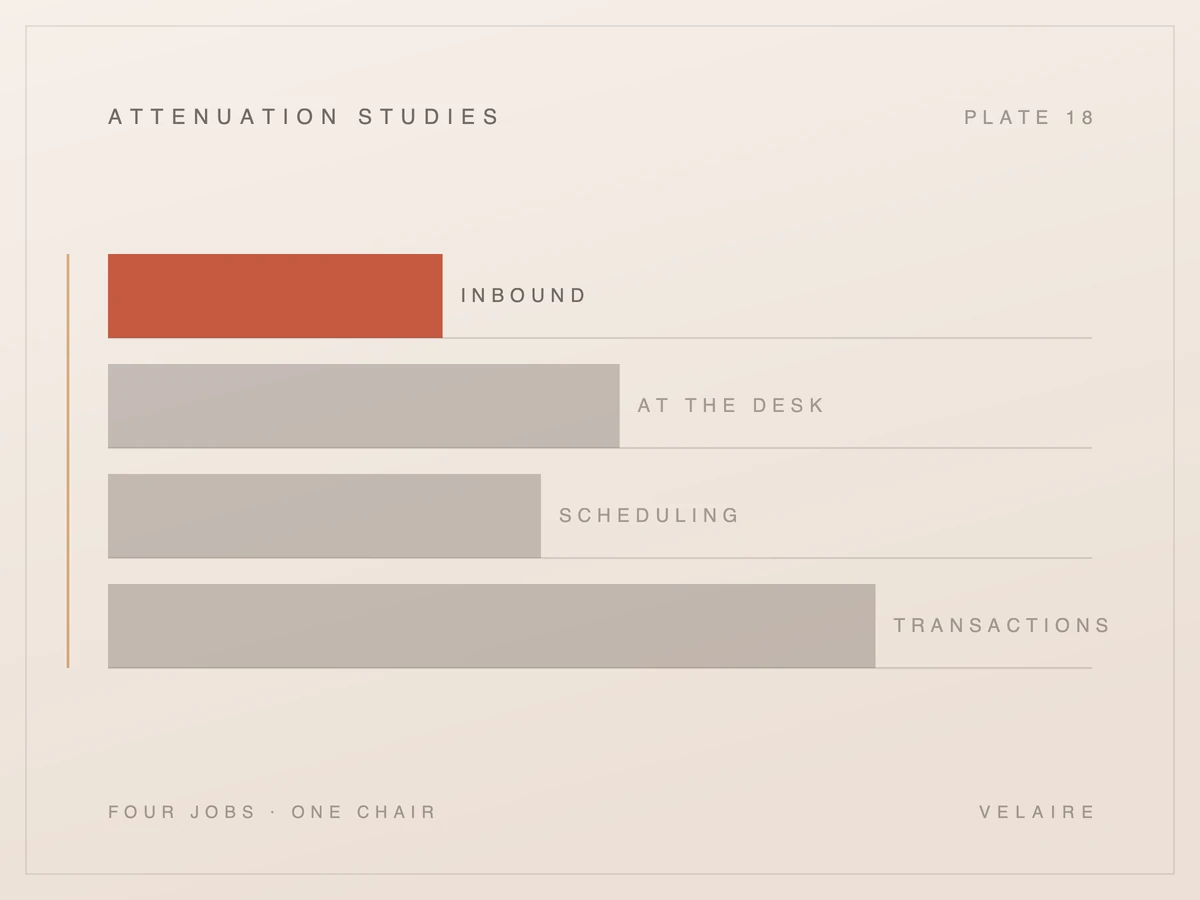
Eligibility checks, prior authorisations and claim status inquiries have measured per-transaction costs. Automating your phone does not touch any of them, and it is worth knowing that before you buy.
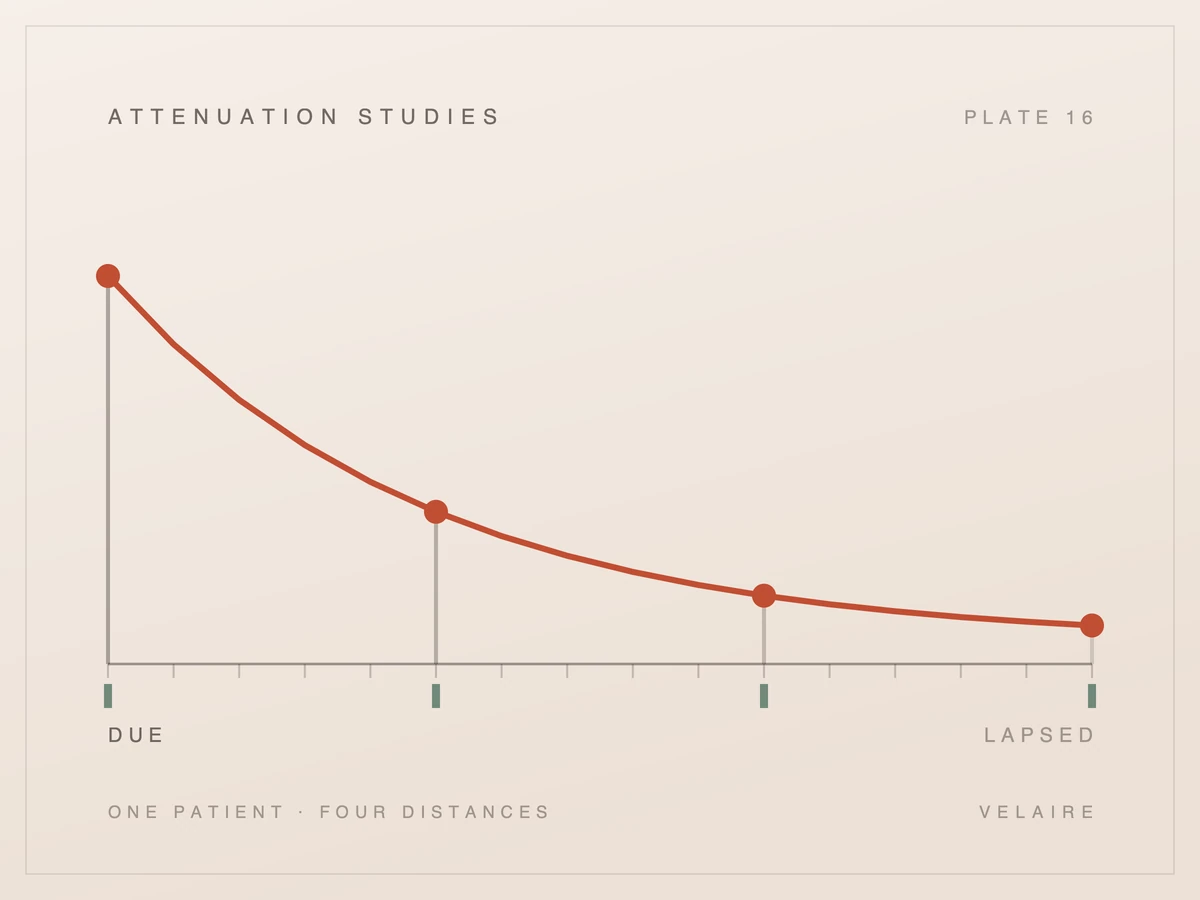
The patients most likely to book are the ones you have already treated. Here is why the contact rate is the number that matters, why recall is not marketing under HIPAA, and why the list decays quietly.
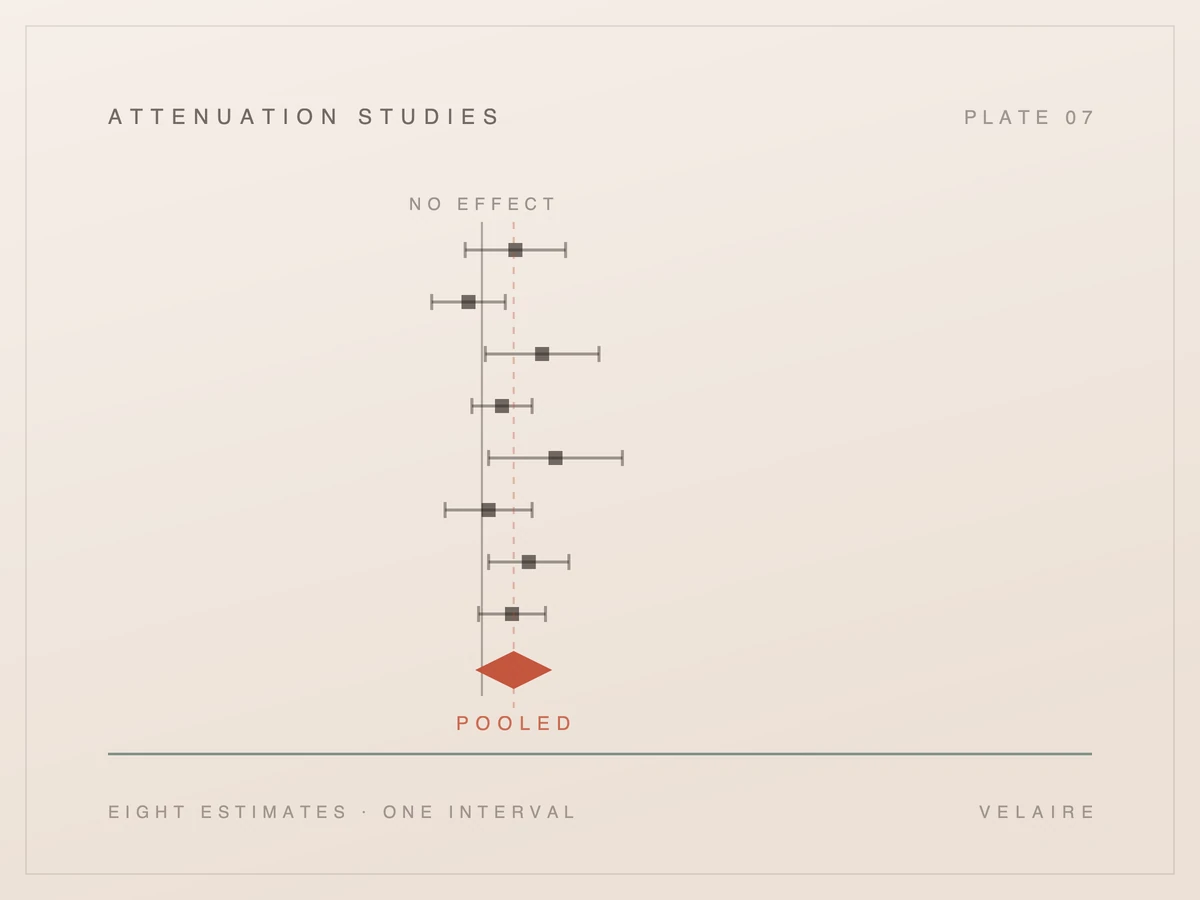
Reminders work. They work less dramatically than the marketing suggests, and the honest number is a 10.8 point improvement rather than the 14.6 point one everybody quotes. Here is what the trials found.
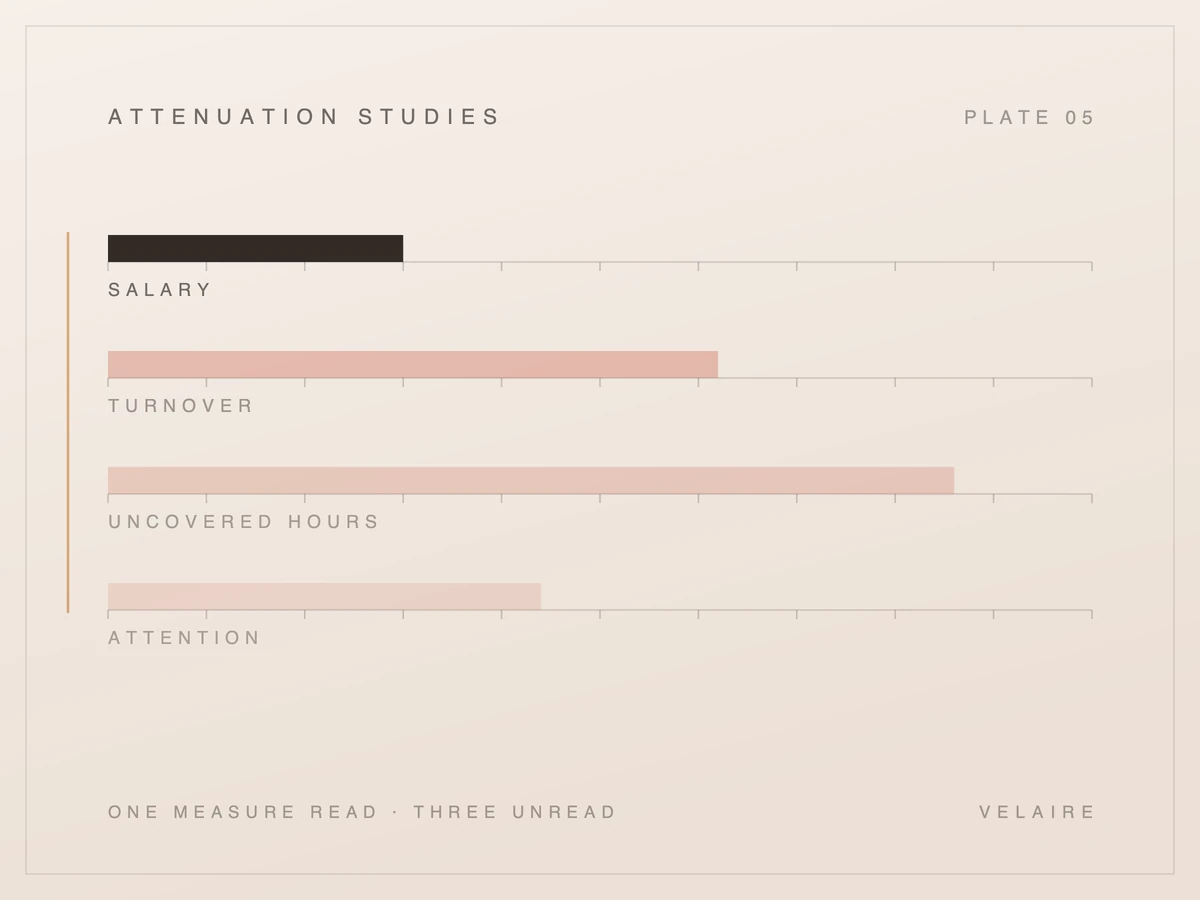
The salary is the number everyone quotes and the easiest one to find. Three others sit underneath it, and together they change what any coverage decision is really being compared against.
Nine lessons that turn one month of call records into a defensible range for what your missed calls are costing. No new software, no vendor stat sheets, and an honest answer at the end even if it is small.
Seven lessons scoring five options, including doing nothing, against your own after-hours data. Ends with a written decision, a review date, and a clear reason if the answer turns out to be no.
The plain-language explainer: what it does, what it deliberately doesn't, and how it compares with voicemail, an answering service, a phone tree, and hiring.