AI Disclosure Laws for Medical Practice Phone Agents
No federal law makes a phone agent say it is an AI on a call you receive. A few states do, in different ways. This post reads the statute text for California, Utah, Texas and Colorado, plus the FCC proposal.
+ No federal law makes a phone agent say it is an AI on an inbound call, so the duty comes from state law and varies widely.
+ California's AB 3030 excludes appointment scheduling but requires a spoken disclaimer at the start and end when generative AI communicates clinical information.
+ Utah requires a verbal disclosure at the start of a high-risk interaction and an honest answer to a clear question, with fines up to $2,500 per violation.
+ Texas requires a provider to disclose AI used in a health care service by the date the service is first provided.
+ Colorado's 2026 act excludes routine scheduling and the FCC proposal covers outbound calls only, so neither reaches an ordinary inbound booking call.
A caller on your line asks, "Am I talking to a person?" Before that question comes up, some states already have a view on what your phone agent must say about itself. Here is what the statute text requires.
Halfway through the booking.
The agent was set to deflect.
The caller works it out anyway.
The question that makes the greeting matter.
A phone agent's greeting is easy to write once and forget. Then a caller asks whether they are talking to a real person, and the answer is suddenly a legal question as well as a courtesy. The rules are a patchwork. Some bind only online chatbots. Some bind only licensed clinicians. The one federal proposal covers only calls you place.
This post reads the enacted text of the state laws that matter most to a US practice, as they stood in mid-October 2026, and says what each one asks of a phone agent. It is an overview for owners and office managers, not legal advice. The points the statutes leave open go to your health care counsel in the last section.
No single law does. No federal statute requires a business to tell a caller it is an AI on a call the caller placed. What exists is a patchwork of state laws that differ on who must disclose, what triggers the duty, and whether a scheduling call counts.
Each rule answers three questions differently. Who carries the duty? What triggers it: a caller who asks, a certain kind of content, or every call? And does a scheduling call count? Start with the states where you are licensed and where your patients live.
Other states have chatbot or AI laws that this post did not verify in primary text, so treat the list as a floor for your own search, not a map of the country. Our post on whether patients hang up on an AI covers the trust side. This one covers the law.
When each rule starts
1 July 2019
California bot law operative
Online bots, intent to mislead
1 January 2025
California AB 3030 in force
Clinical communications
7 May 2025
Utah Chapter 77 in effect
Consumer and regulated occupation duties
1 January 2026
Texas HB 149 in effect
Provider disclosure
1 January 2027
Colorado SB 26-189 in effect
Consequential decisions
1 July 2027
Utah AI Policy Act repealed
Title 13, Chapter 72
Dates from the enacted text. Utah's repeal date applies to its AI Policy Act, not to Chapter 77 directly.
California has two laws, and they reach different things. The 2019 bot law bars deceiving people online about a bot's identity to sell something. The 2025 health care law, AB 3030, requires an AI disclaimer when generative AI communicates a patient's clinical information. Neither clearly covers a scheduling phone call, though the second comes close.
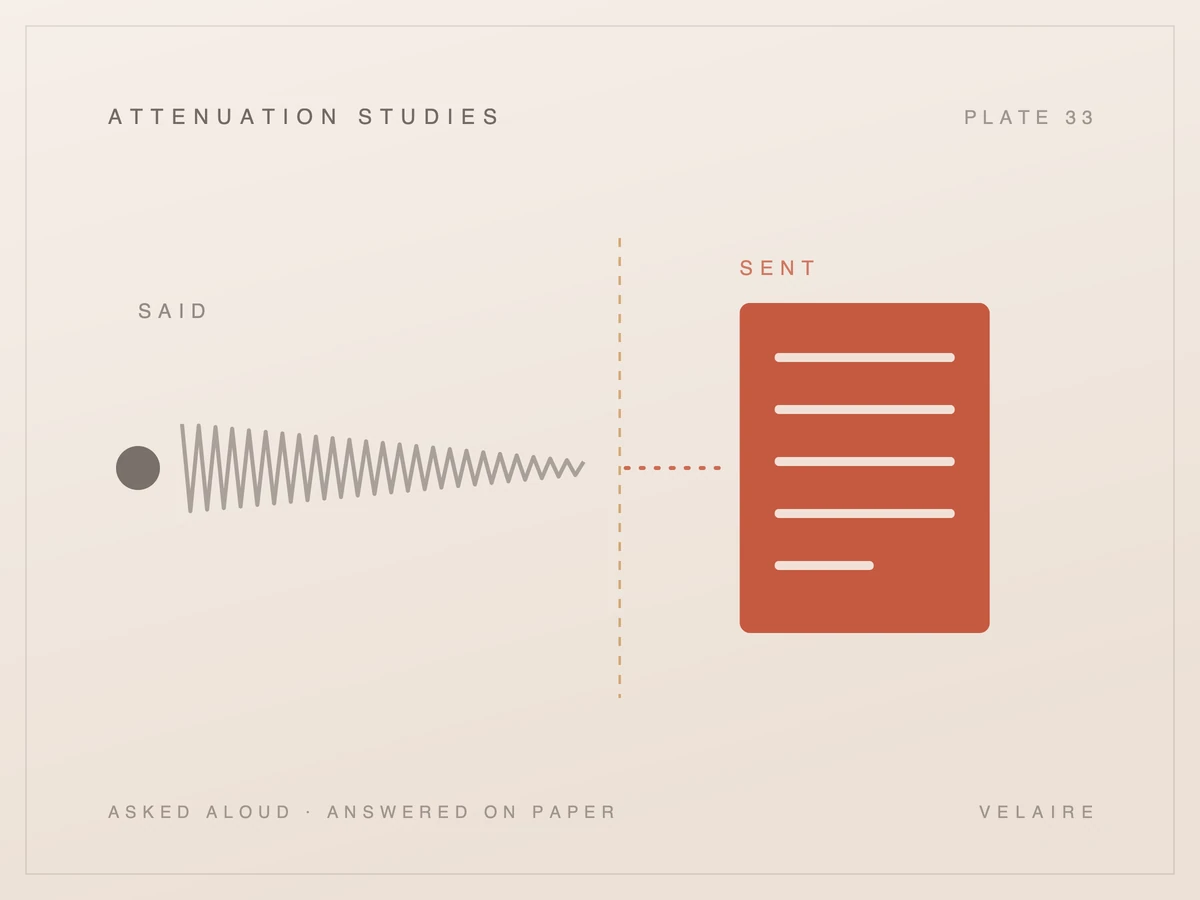
California's AB 3030 draws its line at a patient's health status, not at the booking.
The bot law is Business and Professions Code sections 17940 to 17943, operative 1 July 2019. It makes it unlawful to use a bot to interact with someone in California online, with intent to mislead them about its artificial identity to incentivize a sale or influence a vote, and it says a person using a bot is not liable if they disclose that it is a bot [1]. The catch for a phone line is the definition. A bot is "an automated online account," and online means a public-facing website or app [1]. A phone call is neither. Counsel should confirm that reading.
AB 3030 is Health and Safety Code section 1339.75, in force since 1 January 2025. It covers a health facility, clinic, physician's office or group practice office that uses generative AI to produce written or verbal patient communications "pertaining to patient clinical information" [2]. Those communications need a disclaimer that generative AI produced them, plus clear instructions for reaching a human. For audio, the disclaimer must be spoken at the start and at the end of the interaction [2].
Two limits matter. If a licensed or certified provider reads and reviews what the AI produced, the rule does not apply [2]. And "patient clinical information" means information about a patient's health status, expressly not "appointment scheduling, billing, or other clerical or business matters" [2]. Licensing bodies enforce it, and the Medical Board does for physicians [2].
Scheduling sits outside California's health AI law. A caller's symptoms do not.
The edge case is the caller who mentions a symptom mid-booking. The text does not say whether an agent that listens, logs the symptom and hands the call to staff has produced a communication about clinical information. It also names facilities, clinics and physician offices, not dental practices or med spas, so whether yours counts is a question for counsel. Your written rules should say what the agent does the moment a symptom comes up, which our guide to writing your call handling rules walks through.
Utah puts the heaviest spoken-word duty on licensed individuals. When a licensed person's service involves a high-risk AI interaction, they must disclose the AI prominently, and verbally at the start of a spoken exchange. Separately, any business using generative AI with consumers must say so if a caller clearly asks whether it is a human.
When a caller asks if it is a person
An answer that deflects
An answer that holds
Reply
"I'm here to help you book."
"No, I'm an automated assistant."
Next step
Carries on with the booking
Offers a staff member right away
Caller's view
Tricked
Informed
Under Utah's rule
Risks missing a clear question
Answers it
A deflecting answer reads as a lie to the caller. A straight one costs a few seconds.
The rules sit in Utah Code Chapter 77, in effect since 7 May 2025. Section 13-77-103 has two duties [3]. A supplier using generative AI in a consumer transaction must disclose that the person is dealing with AI, not a human, but only when the person asks, and the question must be a "clear and unambiguous request." A person providing services in a regulated occupation must prominently disclose generative AI in a high-risk interaction, and for a spoken exchange that disclosure comes verbally at the start [3].
High-risk has two prongs: collecting sensitive personal information, health data included, or giving personalized advice that could be relied on for a significant decision, medical advice included [3]. A booking call that collects the reason for a visit may touch the first. Generative AI is defined as a system built to simulate human conversation that produces non-scripted outputs with limited or no human oversight [3].
Section 13-77-104 adds a safe harbor: nobody is subject to enforcement under section 13-77-103 if the AI clearly and conspicuously discloses, at the outset and throughout the interaction, that it is generative AI, is not human, or is an AI assistant [3]. The division can fine up to $2,500 per violation, and up to $5,000 for violating an order [3].
Mind the sunset. Utah's 2024 law was a temporary AI Policy Act, and SB 332 moved the repeal of Title 13, Chapter 72 to 1 July 2027 [4]. The disclosure rules now live in Chapter 77, and the copy read for this post shows no repeal date of its own. But Chapter 77 borrows definitions from Chapter 72, so ask counsel what happens on that date.
Texas requires a provider using AI in a health care service to tell the patient. The disclosure is due by the date the service is first provided, or as soon as reasonably possible in an emergency. The rule took effect on 1 January 2026. The attorney general enforces it; a licensing agency can add sanctions on its recommendation.
The law is HB 149, the Texas Responsible Artificial Intelligence Governance Act. Section 552.051(f) says that if an AI system is used in relation to health care service or treatment, the provider must give the disclosure to the patient or the patient's representative not later than the date the service is first provided [5]. Health care services means services related to human health provided by an individual licensed, registered or certified to provide them [5].
The surrounding subsections were written for government agencies and set the form of a disclosure: clear and conspicuous, plain language, no dark patterns, required even when it would be obvious [5]. Subsection (f) points back to that disclosure. How far the form rules bind a private provider is for counsel, and so is whether a scheduling call is "in relation to" a service.
The attorney general must give notice and wait 60 days, during which the provider can cure. Uncured penalties run $10,000 to $12,000 for a curable violation and $80,000 to $200,000 for an uncurable one, with no private right of action [5]. A separate Texas law, SB 1188, requires a practitioner who uses AI for diagnostic purposes to disclose that to patients [6]. A phone agent that never diagnoses is outside it.
How Texas enforces HB 149
60 days
Notice and cure period before any penalty
Attorney general only
$10,000 to $12,000
Per curable violation left uncured
HB 149
$80,000 to $200,000
Per uncurable violation
HB 149
From HB 149 as enacted. The attorney general enforces it, a licensing agency can add sanctions on its recommendation, and there is no private right of action.
Neither reaches an ordinary scheduling call. Colorado rewrote its AI law in May 2026, and its notice duty covers consequential decisions, with routine scheduling excluded. The FCC has only proposed an AI-call disclosure, and the proposal covers calls a business places, not calls it receives.
Colorado's SB 26-189 was signed on 14 May 2026 and takes effect on 1 January 2027, applying to consequential decisions made on or after that date [7]. Its notice duty, section 6-1-1704, applies before a deployer uses an automated decision tool to materially influence a consequential decision [7]. The definition of consequential decision excludes low-stakes or routine processes, naming "routine scheduling," "administrative routing" and "customer service triage" [7]. The act text contains no rule requiring a system to say it is not human.
The FCC's notice of proposed rulemaking, FCC 24-84, was adopted on 7 August 2024 [8]. It proposes to define an AI-generated call as an outbound call using technology to generate voice or text, and to require a caller using an AI-generated voice to disclose, at the beginning of each call, that the call uses AI [8]. A caller that does not use AI-generated content would not have to disclose [8]. In mid-October 2026, no order adopting the proposal turned up among FCC documents searched, so treat it as a proposal. A practice that only answers calls is outside the definition as written.
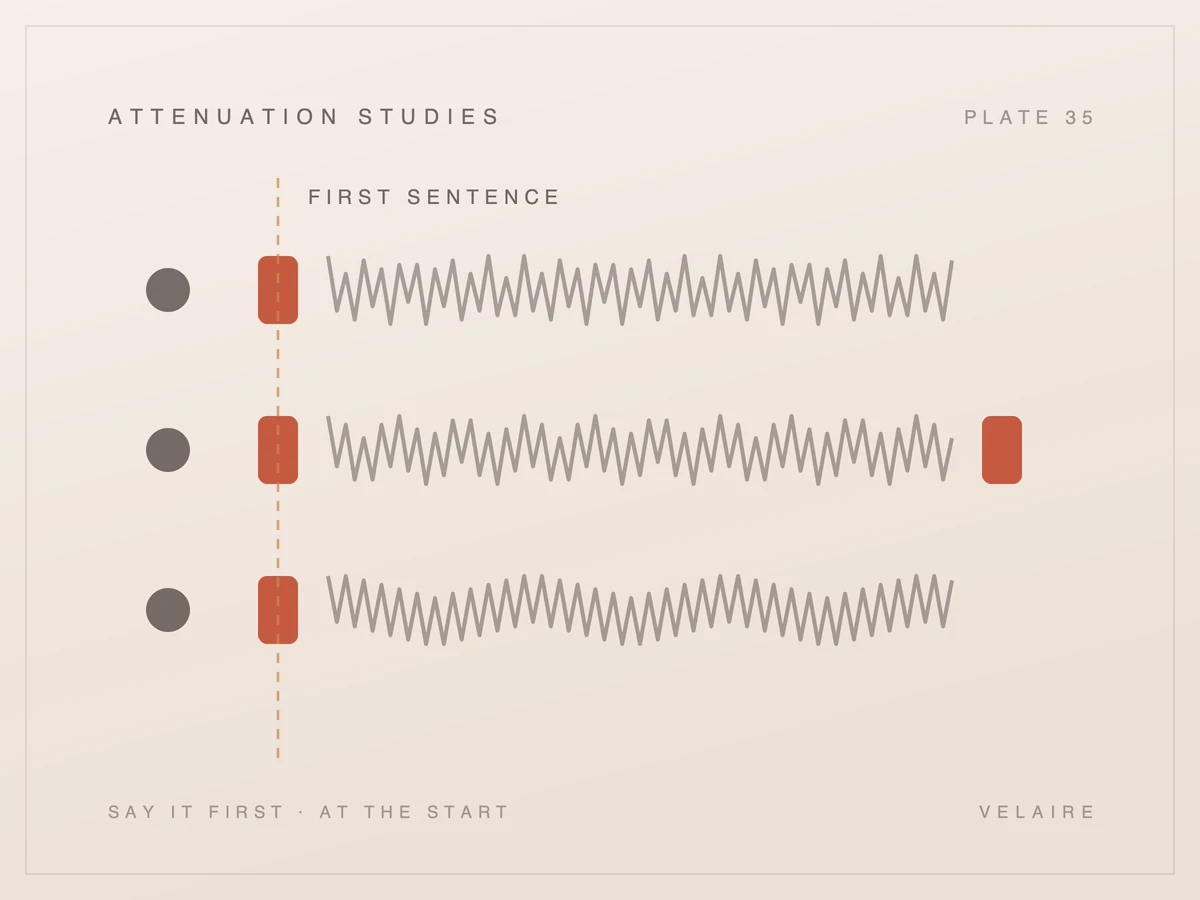
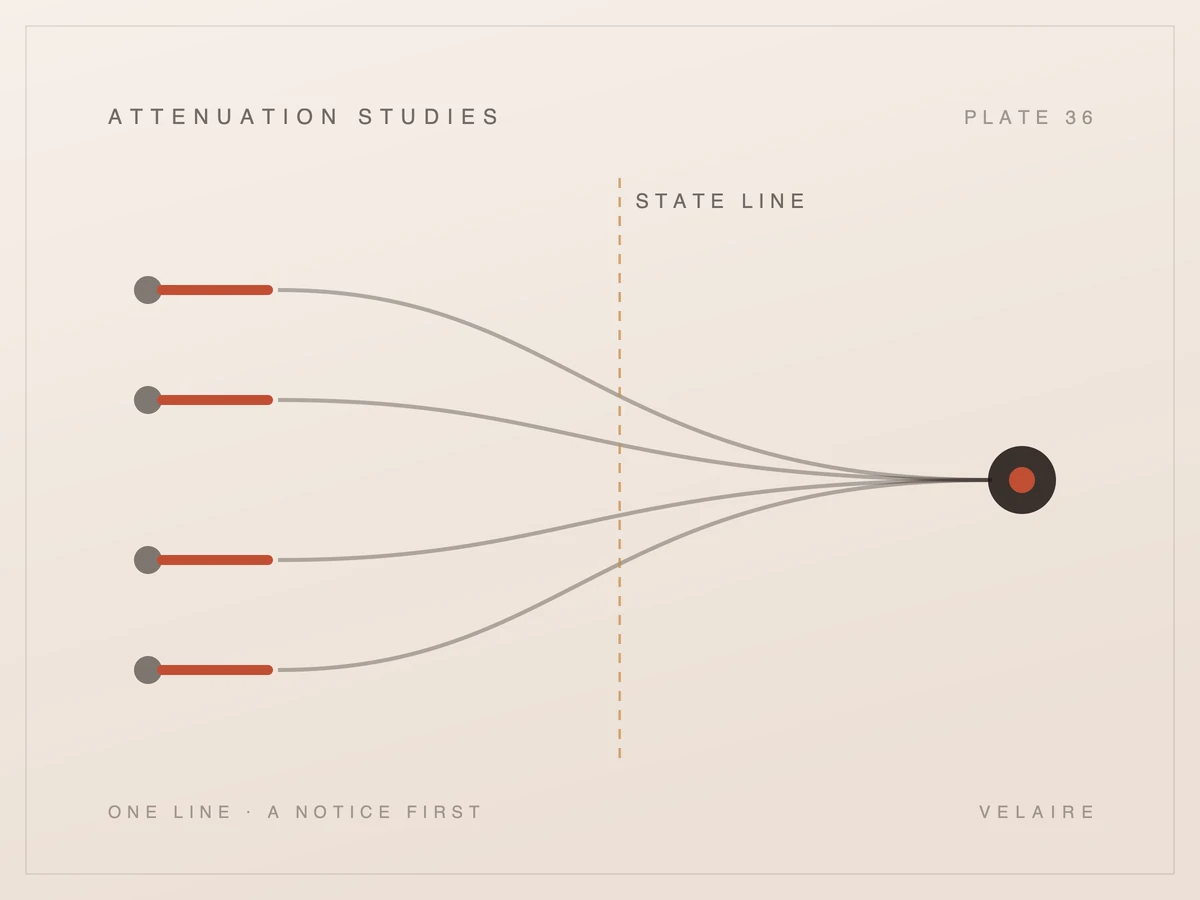
Say it in the first sentence, in plain words, before the caller asks. Name the voice as automated, say what it can do, and say how to reach a person. That wording meets the strictest spoken rule found here, Utah's, and costs a few seconds. California may add a second mention at the end of the call.
Here is a version to adapt: "Thanks for calling [practice name]. You've reached an automated assistant, not a person. I can help you book an appointment, and you can ask for a staff member at any time." A closing line for the places that want one: "This call was handled by an automated assistant. To reach staff, call [practice name] at [number]." Utah's safe harbor speaks of disclosing at the outset and throughout [3], and California's audio rule speaks of the start and the end [2]. A line at each end fits both patterns, though counsel should confirm it.
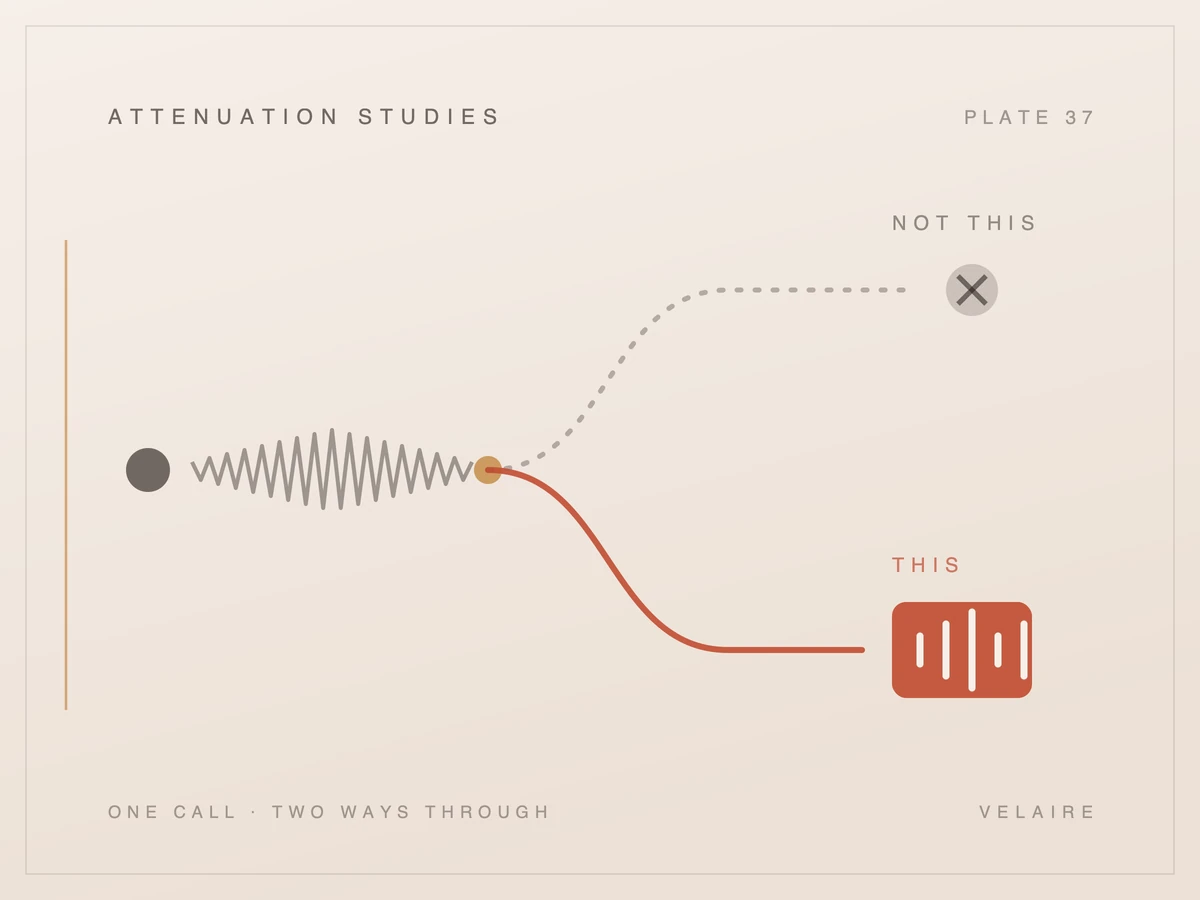
The direct question needs the same care. Utah makes an answer mandatory when a caller clearly asks whether they are dealing with a human [3]. An agent that replies "I'm here to help you book" is dodging, and the caller will hear it that way. The answer is "No, I'm an automated assistant," followed by the offer of a person.
Velaire Health says it is automated at the start of every call, and a caller can ask for a person at any point. That is how it is built. It is not a claim that any practice is compliant, because these laws put duties on the practice and its licensed staff, and the right wording depends on your state and on what your calls contain.
Ask four things. Which state's law reaches a caller in another state? Does a booking call that collects a reason for the visit count as clinical or health data? Does your practice type fall inside the California and Utah definitions? And how is each rule enforced? The statutes do not settle all four.
Put these in the written rule
✓The exact opening sentence, word for word
✓A closing sentence for states that want one
✓A straight reply when a caller asks if it is a person
✓How a caller reaches a human at any point
✓What the agent does when a caller mentions a symptom
✓Which states' rules counsel has checked
One disclosure rule for the staff line, the phone agent and the vendor.
The first is the least settled. California's bot law says "in California," but Utah and Texas do not say whose residents they protect [1][3][5]. A practice near a state line should assume more than one rule applies. The strictest wording used everywhere is cheap for an opening line and costly to retrofit.
On enforcement, the paths differ: licensing bodies in California [2], a consumer protection division with fines in Utah [3], an attorney general with a 60-day cure window in Texas [5], and rulemaking still ahead in Colorado [7]. Then write your answers into the document your team and your vendor both follow.
If a caller asks whether they are talking to a person, the only safe answer is the true one.
Then test it yourself. Call your own line and ask the agent whether it is a person, and read what it said, not what the vendor promised.
FAQs
Questions about this
It depends on the state and the call. No federal statute requires it on an inbound call. California, Utah and Texas each have rules that can reach a health care practice, and they differ on who must disclose and when. Check the states where your practice is licensed, and say it at the start of every call regardless.
By its text, no. It covers generative AI communications about a patient's health status, and it excludes appointment scheduling, billing and other clerical matters. It also exempts communications a licensed provider reads and reviews. A call that turns to symptoms is the edge case, so ask counsel how your agent should handle it.
Not as of mid-October 2026. The FCC proposed one in FCC 24-84 in August 2024, requiring callers using an AI-generated voice to disclose it at the start of each call. The proposal covers outbound calls, and no order adopting it turned up in the documents searched, so it is still a proposal.
Answer truthfully and offer a staff member. Utah requires a disclosure when a caller makes a clear and unambiguous request to know whether the interaction is with a human or with AI. A reply that dodges the question risks breaking that rule and, more simply, loses the caller's trust.
Not automatically. The laws put duties on the practice and its licensed staff, and they vary by state, by practice type and by what the call contains. Wording at the start of a call is a good habit and may satisfy several rules, but only counsel can tell you it settles yours.
Builds AI front-office systems for medical and aesthetic practices. Posts here start from published sources rather than vendor claims, and every number links back to where it came from.
Section 1557 asks covered practices to give callers with limited English a qualified interpreter, in writing and on the phone. Here is who is covered, what the rule says, and what a phone agent can and cannot do.
Federal law lets you record a call you are part of. Some states do not. Here is what the statutes and one California Supreme Court case say, what to say at the start of a call, and what to ask counsel.
Under a federal rule, a self-pay caller's question about cost counts as a request for a written Good Faith Estimate. Here is what the phone must say, the deadlines, and what is still unsettled.
HIPAA says a practice must verify who is calling before it discloses patient information, and leaves the method to you. Here is how to write that method down, for staff and for a phone agent.
When a US practice needs a business associate agreement with an AI phone agent vendor, what the agreement must cover under HIPAA, and what to request before call data flows.
Six situations that happen weekly at every practice, what the rule actually permits in each, and why the answer is usually more permissive than staff assume and stricter than callers expect.
The plain-language explainer: what it does, what it deliberately doesn't, and how it compares with voicemail, an answering service, a phone tree, and hiring.