Callers With Limited English: Language Access on the Phone
Section 1557 asks covered practices to give callers with limited English a qualified interpreter, in writing and on the phone. Here is who is covered, what the rule says, and what a phone agent can and cannot do.
+ About 28.9 million people in the US speak English less than very well, so language access is a routine phone-line question, not a rare one.
+ Coverage turns on federal funding, including Medicare Part B since 6 May 2025, and a cash-only practice should ask counsel rather than assume.
+ Covered practices must offer a qualified interpreter, and may not rely on a child, an unqualified adult or untrained staff except in narrow cases.
+ The 2025 executive order and the court vacatur left the 2024 language access sections in place, though counsel should confirm the current position.
+ A phone agent is not a qualified interpreter unless counsel says otherwise, so the safe design routes the caller to your written interpreter arrangement.
A caller says a few careful words in English, then switches to another language. Your front desk has about 10 seconds to decide what happens next, and the nearest helper is often the caller's child.
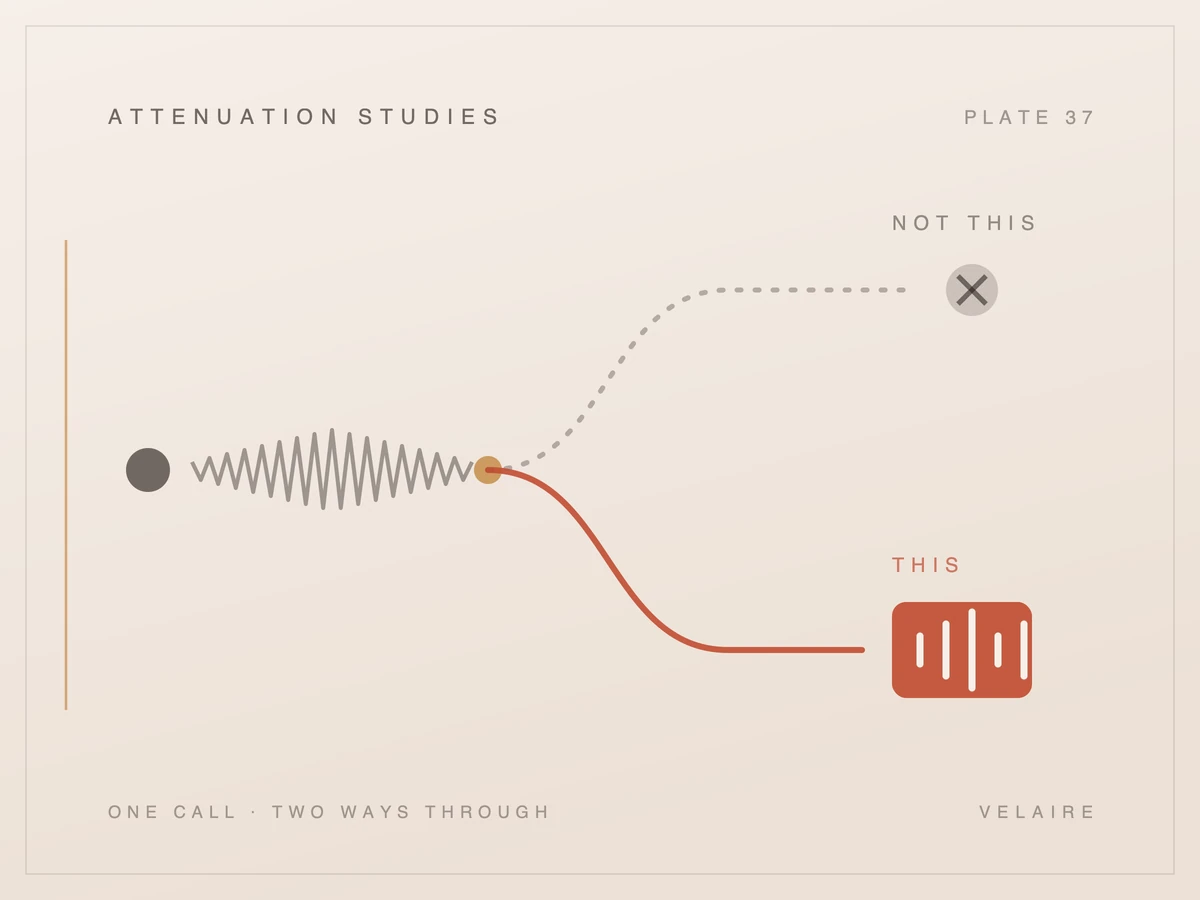
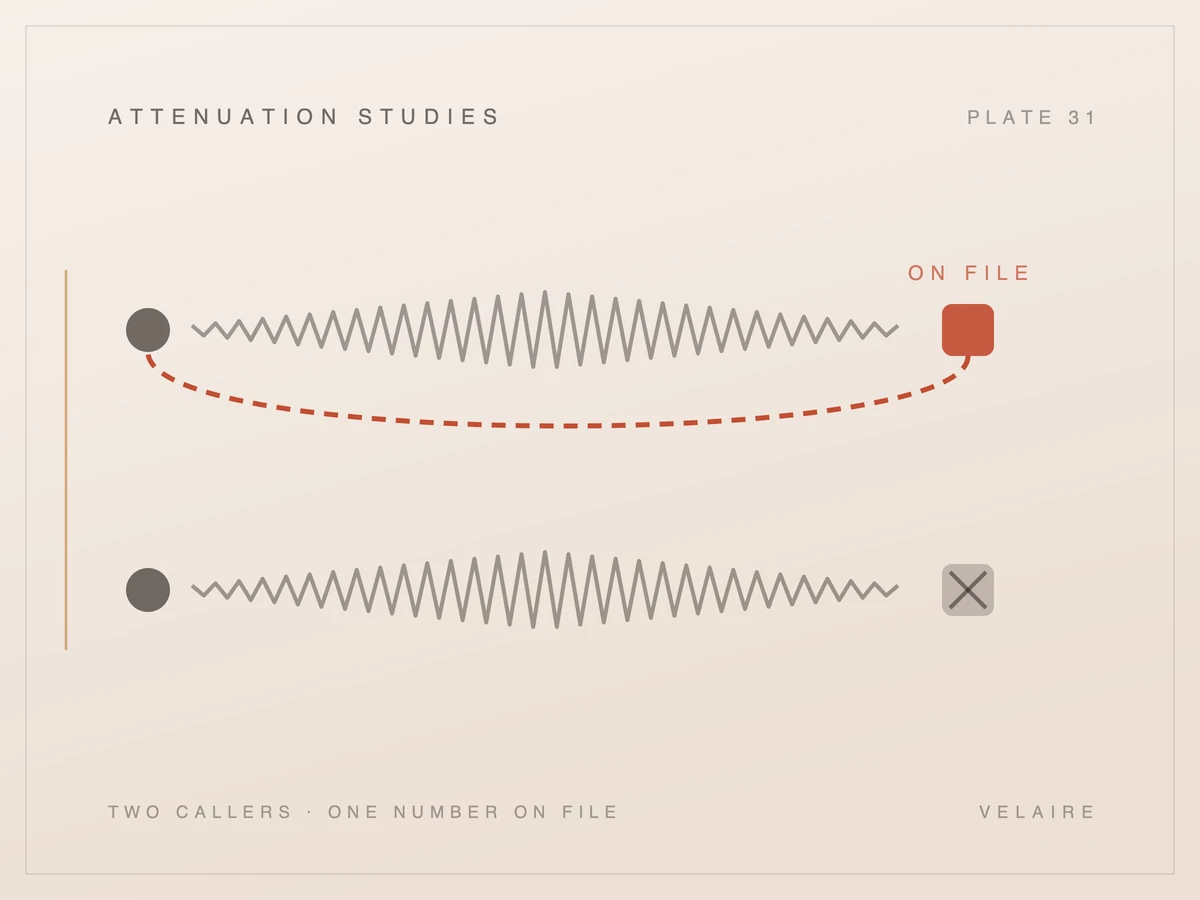
She calls to move her visit.
The desk grabs the nearest helper.
The written rule says otherwise.
The nearest helper, and the written rule.
Every practice phone gets this call eventually. The caller wants to move an appointment or ask about a bill, and the words they need are not the ones they have. Someone at the desk says "hold on" and starts hunting for help.
This post covers who has to provide language help on a practice phone line under Section 1557 of the Affordable Care Act, what the 2024 HHS rule requires, and what to put in writing. It is a plain overview for US practice owners and office managers, not legal advice. Where the answer depends on your facts, we point you to your counsel.
Millions. In the 2024 American Community Survey, about 28.9 million people age 5 and older in the US spoke English less than very well, which is 9.0% of that age group. Spanish speakers are the largest group, so Spanish is the obvious place to start planning.
The Census Bureau's one-year table counts 28,918,748 people age 5 and older who speak English less than "very well" [9]. Of those, 18.4 million speak Spanish at home, roughly 64% of the total.
Limited English in the US, 2024
28.9 million
People who speak English less than very well
2024 American Community Survey
9.0%
Share of people age 5 and older
Self-reported
18.4 million
Of them speak Spanish at home
About 64% of the total
People age 5 and older who speak English less than very well, from the 2024 American Community Survey.
These are national numbers, not a forecast for your waiting room. "Less than very well" is a self-reported Census proxy, not the legal test, which is a person whose primary language is not English and who has a limited ability to read, write, speak or understand it [2]. The rule adds that someone may be fine in English for one purpose and limited for another [2]. A caller can book a cleaning in English and still need help to follow a consent discussion.
It applies if any part of your health program receives federal financial assistance from HHS, directly or indirectly. Size does not decide it. A practice that takes Medicare Part B or Medicaid is likely in scope. A practice that takes no federal money, such as a cash-only med spa, may fall outside, and that is a question for counsel.
The rule defines a covered entity as a recipient of federal financial assistance, and it counts a physician's practice as a health program or activity [2]. Medicare Part B is the part owners miss. Until 2024, HHS did not treat Part B payments as federal financial assistance. The May 2024 final rule reversed that, with a delay: entities whose only federal funding is Part B had to comply, and file an Assurance of Compliance, by 6 May 2025 [5].
List your payers, mark any that are Medicare, Medicaid, CHIP or another HHS program, and take the list to counsel. We found no reliable data on how many dental or aesthetic practices fall on each side, so do not assume you are exempt.
Coverage turns on where your money comes from, not on how big the practice is.
A covered practice must take reasonable steps to give each caller with limited English proficiency meaningful access. The help must be free, accurate and timely, and it must protect the caller's privacy and ability to decide for herself. When interpretation is needed, you must offer a qualified interpreter, not an improvised one.
Those duties sit in 45 CFR 92.201, and paragraph (c) says a covered entity "must offer a qualified interpreter" [1]. The definition of qualified is specific: demonstrated proficiency in speaking and understanding both English and another language, the ability to interpret effectively, accurately and impartially without changes, omissions or additions, and adherence to interpreter ethics, including confidentiality [2].
Two points matter for a phone line. First, the rule names audio remote interpreting as an acceptable way to deliver a qualified interpreter. It asks for real-time audio over a high-quality connection, clear transmission of voices and training for the staff who use it [1]. Second, stakes matter. OCR gives substantial weight to the nature and importance of the program and of the particular communication [1]. Rebooking a cleaning is not a consent discussion, yet you cannot sort calls by importance until someone has understood the caller.
Nobody has to accept help. A caller who prefers to manage in English may do so [1]. Your job is to offer.
Not the caller's child, and not a relative or friend standing nearby, with narrow exceptions. The rule also bars making callers bring or pay for their own interpreter. And it bars leaning on staff who are not qualified interpreters, translators or designated bilingual employees, however well they speak the language.
Who may interpret on your phone line
Not on their own
Allowed
Caller's child
A minor child
Only as an emergency stopgap
Companion
An adult who is not qualified
Emergency stopgap, or a documented private request
Staff
Someone who speaks some of the language
Designated, qualified bilingual staff
Interpreter
One the caller must bring or pay for
A qualified interpreter, free of charge
The rule limits who may interpret. The narrow exceptions are for emergencies and a documented private request.
The list is in 92.201(e) [1]. You may not require the caller to supply or pay for an interpreter. You may not rely on an adult who is not qualified, except as a temporary measure in an emergency with an imminent threat to safety, or when the caller asks privately, with a qualified interpreter present, that a companion interpret, and that choice is documented. Children are allowed only as an emergency stopgap while a qualified interpreter is found [1].
The last item is the easiest to get wrong. The rule bars relying on staff other than qualified interpreters, qualified translators or qualified bilingual staff [1]. A bilingual employee qualifies only if the practice has designated them to provide in-language help as part of their job and they have demonstrated to the practice that she is proficient and able to communicate accurately and impartially [2]. "Speaks some" does not qualify.
Text is a separate case. If you use machine translation on writing that is critical to a person's rights, benefits or access, or where accuracy is essential, a qualified human translator must review it [1]. The rule defines machine translation as text-based [2], so it speaks to translated forms and web pages. It does not address a live voice.
A bilingual coworker helps only after the practice has designated them and checked their skills.
Three things: a written language access procedure, a posted notice that language help is free, and a way for staff to reach a qualified interpreter during a call. The rule gave covered practices until 5 July 2025 for the procedure and the notice. A procedure that exists only in someone's memory fails the first time that person is out sick.
The procedure requirement is 45 CFR 92.8(d). At a minimum it covers how an employee identifies a caller with limited English, how staff obtain the qualified interpreters and translators the practice uses, the names of any qualified bilingual staff, a list of translated materials, and the contact for the practice's Section 1557 Coordinator if it has one [3]. OCR also looks at how effective that procedure is when judging compliance [1].
The notice is 45 CFR 92.11. It must say that language help is free and appear in English and at least the 15 languages most commonly spoken by people with limited English in your state. It goes on your website, in physical locations in at least 20-point sans serif type, and on documents such as intake forms, billing communications and consent forms [4]. Ask counsel which 15 languages apply to you and how OCR is enforcing the notice today.
Rule
What it asks
What it means on the phone
92.201(c)
Offer a qualified interpreter
Staff can reach one while the caller is still on the line
92.201(e)
No children, companions or unqualified staff
The desk script never says "is anyone there who can help?"
92.8(d)
Written language access procedure
A page that tells a new hire what to do on day one
92.11
Notice that help is free, in 15 languages plus English
Posted, on the website and on intake forms
What the written procedure covers
✓How an employee identifies a caller with limited English
✓How staff reach the qualified interpreters and translators you use
✓The names of any designated qualified bilingual staff
✓A list of translated materials, their languages and dates
✓Contact for the Section 1557 Coordinator, if you have one
✓What happens to a caller after hours
The minimum contents of a language access procedure under 45 CFR 92.8(d).
A common approach is a telephone interpreting service. Staff keep the caller on the line, dial the service, name the language and add the interpreter to the call. The rule names audio remote interpreting as an accepted modality. What makes it work is the setup: a number staff can find in seconds and a script they have practiced.
Start with identification. Ask "What language do you prefer?" slowly and listen for a name. Do not ask the caller to repeat themselves in English until they give up. Keep her on the line, say you are bringing in an interpreter, and connect the service. Once the interpreter is on, speak to the caller directly, in short sentences, and pause for each turn. Staff should be able to find the number in under 10 seconds, and you should test the line by calling it yourself every 3 months.
Pick the service before you need it. Ask which languages it covers, its hours, how fast a line connects, and what confidentiality terms it signs. An interpreter hears patient information, so ask counsel whether you need a business associate agreement with the vendor. Our post on whether you need a BAA for a phone agent covers the question.
After hours is harder. Nobody is there to dial. Your written procedure should say what happens: a recorded greeting that names the options, a callback within 24 hours with an interpreter on the line, and a note in the chart. If that is not written down, nobody knows the answer, including the people answering.
This post covers spoken languages. Callers who are deaf or hard of hearing fall under the rule's separate effective communication procedures [3] and need their own plan. Our guide to writing your call handling rules is a good place to add both.
Language access in the 2024 rule is still on the books. Executive Order 14224 named English the official language but did not amend the rule. A federal court vacated only provisions about gender identity. HHS says the other provisions remain in force. Rules can still change after this post, so confirm the current position with counsel.
What changed around the rule, 2024 to 2026
5 Jul 2024
The 2024 rule takes effect
Language access duties in 45 CFR 92.201 apply.
1 Mar 2025
Executive Order 14224
Names English the official language and revokes EO 13166.
21 Mar 2025
DOJ rescinds its 2002 guidance
Title VI obligations continue.
22 Oct 2025
Tennessee v. Kennedy
Vacates only the gender identity provisions.
2 Jun 2026
HHS notice of vacatur
The other provisions remain in force.
None of these steps amended the language access sections, 92.11 and 92.201. Confirm the current position with counsel.
The executive order was signed on 1 March 2025. It revoked Executive Order 13166, the 2000 order on services for people with limited English, and directed the Attorney General to rescind guidance issued under it. It also said that nothing in it "requires or directs any change in the services provided by any agency" [7]. It governs federal agencies, not HHS's regulation.
The Department of Justice then rescinded its own 2002 guidance on limited English, effective 21 March 2025. Its notice reminded recipients of federal funds that they keep a continuing obligation to comply with Title VI and other civil rights laws, and that denying language assistance can be evidence of national origin discrimination in some circumstances [8].
In Tennessee v. Kennedy, a federal court in Mississippi, on 22 October 2025, vacated listed provisions of the 2024 rule, only to the extent they expand sex discrimination to include gender identity. HHS's June 2026 notice says "the other provisions of the Section 1557 Rule remain in force" [6]. The listed sections do not include 92.11 or 92.201 [6]. Enforcement can move faster than text. Ask counsel where OCR stands today.
Not as your interpreter. Whether an AI voice agent counts as a qualified interpreter, or as machine translation that needs human review, is unresolved, and we found nothing in the rule that answers it. Unless your counsel says otherwise, treat a phone agent as a router to your interpreter arrangement, not the interpreter.
Start with the definitions. A qualified interpreter is defined by demonstrated proficiency and by adherence to interpreter ethics [2]. The rule bars relying on anyone who is not a qualified interpreter, translator or designated bilingual staff member [1], and it defines machine translation as text-based [2]. None of it mentions a voice agent. The rule is silent, so counsel gets the question.
Velaire Health answers calls on the practice's existing number, says it is automated at the start of every call, and lets a caller ask for a person at any point. Velaire does not offer interpreting, and this post makes no claim about which languages an agent can handle. A call that needs a person goes to your team, and your written procedure takes over from there. Calls with a clinical question work the same way, as our post on when a caller asks a clinical question explains.
If you are evaluating any phone agent, ask what it does when it cannot understand a caller, how that caller reaches a human or an interpreter, what the caller hears in the meantime, and what is recorded. Ask counsel before any marketing copy says "multilingual" or "language-access compliant." The safe design is the plain one: the agent hands the caller to the interpreter arrangement you already wrote down.
The helpers the rule limits, and the one it requires you to offer. The exceptions are narrow.
FAQs
Questions about this
Size does not decide it. The rule covers any health program that receives federal financial assistance from HHS, directly or indirectly, and that includes Medicare Part B since 6 May 2025. A practice that takes no federal money, such as a cash-only med spa, may fall outside. Bring your list of payers to counsel and ask.
Generally not. The rule bars relying on a minor child, except as a temporary emergency stopgap, and bars relying on an unqualified adult, except in an emergency or at the caller's documented private request with a qualified interpreter present. Staff who are not qualified or designated bilingual employees are also off the list.
No. Executive Order 14224 named English the official language and revoked an older order, but it governs federal agencies and did not amend HHS's rule. A court later vacated only provisions about gender identity. HHS states that the other provisions of the 2024 rule remain in force. Confirm anything newer with counsel.
Treat it as not qualified unless counsel says otherwise. The rule defines a qualified interpreter by demonstrated proficiency and interpreter ethics, and nothing in it addresses a voice agent. Whether one counts as an interpreter or as machine translation is unresolved. The safer design routes the caller to your interpreter arrangement.
A language access procedure that says how staff identify a caller with limited English, how they reach a qualified interpreter, who your designated bilingual staff are, and which materials are translated. Add what happens after hours. Then post the notice that language help is free, in English and the 15 languages your state needs.
Builds AI front-office systems for medical and aesthetic practices. Posts here start from published sources rather than vendor claims, and every number links back to where it came from.
Federal law lets you record a call you are part of. Some states do not. Here is what the statutes and one California Supreme Court case say, what to say at the start of a call, and what to ask counsel.
No federal law makes a phone agent say it is an AI on a call you receive. A few states do, in different ways. This post reads the statute text for California, Utah, Texas and Colorado, plus the FCC proposal.
Under a federal rule, a self-pay caller's question about cost counts as a request for a written Good Faith Estimate. Here is what the phone must say, the deadlines, and what is still unsettled.
HIPAA says a practice must verify who is calling before it discloses patient information, and leaves the method to you. Here is how to write that method down, for staff and for a phone agent.
When a US practice needs a business associate agreement with an AI phone agent vendor, what the agreement must cover under HIPAA, and what to request before call data flows.
Six situations that happen weekly at every practice, what the rule actually permits in each, and why the answer is usually more permissive than staff assume and stricter than callers expect.
The plain-language explainer: what it does, what it deliberately doesn't, and how it compares with voicemail, an answering service, a phone tree, and hiring.