Relay Calls and 711: Deaf, Hard of Hearing and Speech-Disabled Callers
The ADA says a medical practice must answer relay calls the way it answers any call, and that its automated phone systems must work for relay users. Here is what that means at your desk.
+ The ADA covers a private health care office whether or not it takes federal money, and its phone line is part of how patients reach it.
+ A practice must respond to relay calls in the same manner as other calls, which on a plain reading rules out hanging up on them.
+ A relay call arrives as an ordinary call from an operator who opens with an introduction, and the pauses are the relay at work.
+ Automated attendants and interactive voice response systems must provide effective real-time communication with relay users, and an AI phone agent is plausibly covered.
+ Test your own line by placing a relay call, in hours and after hours, and make sure a relay caller can reach a person.
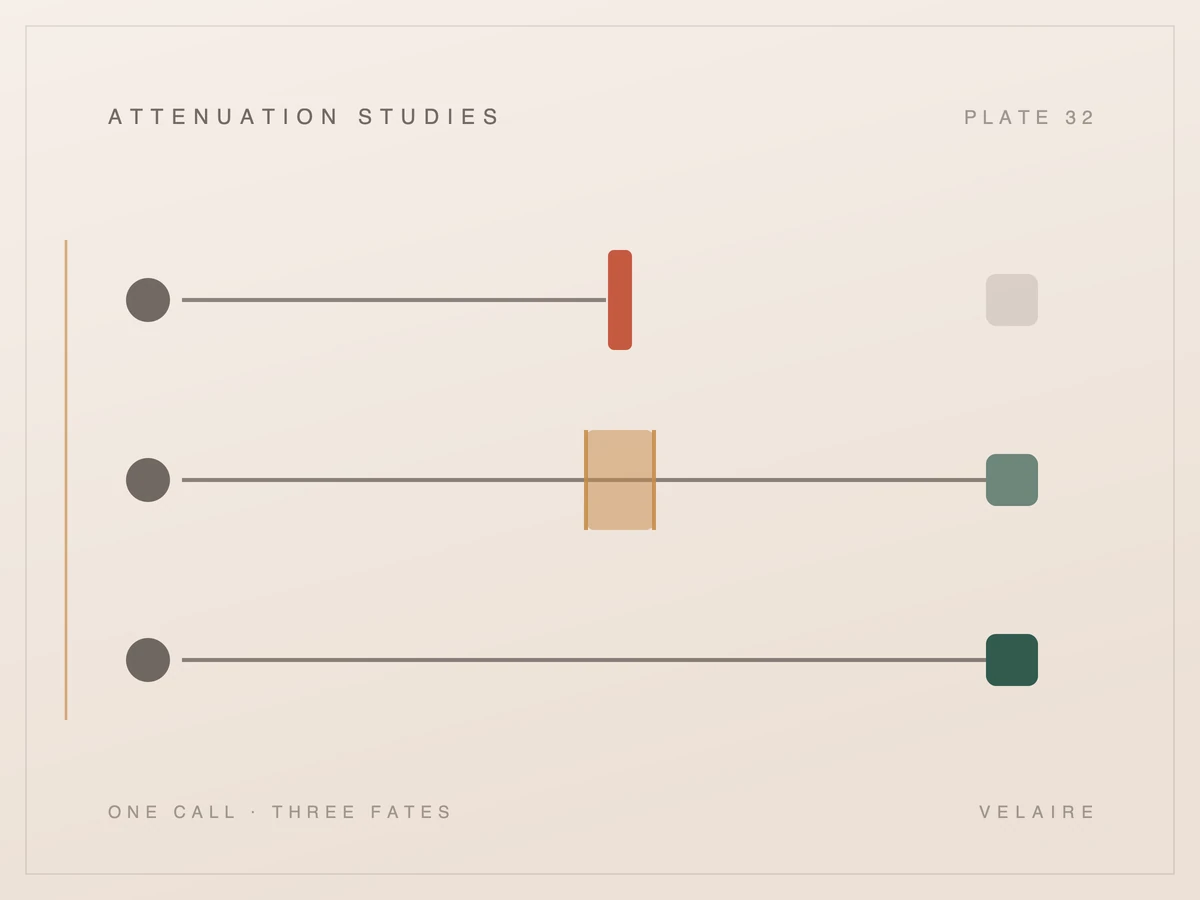
The desk picks up and hears, "Hello. This is the relay service." Then a few seconds of nothing. Plenty of people would hang up here. The person on the other end was a patient.
The desk picks up.
A few seconds of silence.
The desk hangs up. It was a patient.
The same call, answered two ways.
Has your front desk ever been told what a relay call sounds like? An operator opens with a line about a relay service, the caller's words arrive a beat late, and the whole thing feels like a sales pitch. It is a patient, or someone about to become one, using the phone the only way that works for them.
Below: what the law asks of a practice, how relay and 711 work, why these calls get dropped, and what to do about an automated phone system. This is a plain overview for owners and office managers of US practices, not legal advice. Where the answer depends on facts we cannot see, we send you to your counsel.
Yes. Title III of the Americans with Disabilities Act covers private businesses that serve the public, and the regulation names the professional office of a health care provider. Your phone line is one of the ways patients reach you, so your duty to communicate effectively with deaf, hard of hearing and speech-disabled callers reaches it.
The definition sits in 28 CFR 36.104. Its list of places of public accommodation includes the "professional office of a health care provider, hospital, or other service establishment" [2]. The test is whether you are a private entity whose operations affect commerce. Nothing in it asks whether you take federal money, so a cash-only practice is covered the same as one that bills Medicare.
The duty itself is in 36.303. A public accommodation must take the steps needed so that no one with a disability is excluded or treated differently for want of an auxiliary aid or service, unless the step would change the nature of the service or impose an undue burden [1]. The telephone has its own paragraph, covered below.
How many callers is that? The National Institute on Deafness and Other Communication Disorders reports that approximately 15% of American adults, or 37.5 million people, report some trouble hearing [5]. The CDC puts adults with any difficulty hearing at 16.0% in 2025, from the National Health Interview Survey [6]. Neither figure counts relay users, and we found no primary count to offer.
Hearing difficulty among US adults
15%
Of adults report some trouble hearing
NIDCD, about 37.5 million people
16.0%
Of adults report any difficulty hearing
CDC, NHIS, 2025
711
Dial from any phone in the US
FCC, free, TTY-based relay
Self-reported trouble hearing is common. These figures do not count relay users.
A relay service puts a trained operator, called a communications assistant, between two people on a call. The caller types, signs or speaks in whatever way works for them, and the assistant turns it into the form the other side can use. The call costs the practice nothing extra.
The FCC lists several forms [3]. In the oldest, a person types on a text telephone, or TTY, to reach the assistant. The assistant then places a voice call to you, speaks what was typed and types what you say. The other forms keep the same shape and change the equipment.
Service
Who uses it
What reaches your phone
TTY relay
Types on a text telephone
An operator who speaks the typed words and types yours
Voice or hearing carry over
Uses their own voice or hearing for one half of the call
One side in the caller's own voice, the other through the operator
Speech-to-speech
A person with a speech disability
A specially trained operator who repeats the caller's words clearly
Captioned telephone, including IP CTS
Has some hearing and reads captions of what you say
The caller's own voice, with your words captioned on their end
IP Relay
Types over the internet
An operator, as with TTY
Video relay service
Signs in American Sign Language on video
An interpreter who speaks the signed words and signs yours
Dialing 711 connects a caller to an assistant from any phone in the United States, and the FCC calls it fast and free [4]. Voice users and TTY users can both start a call that way. It does not work for video relay, IP Relay, IP CTS or captioned telephone, because those calls start over the internet. A person using one of those services dials you directly and the assistant joins the call [4].
For you, that means a relay call arrives as an ordinary call placed by the operator. Nobody on your side dials 711 to receive one.
TTY use is shrinking, and the FCC has noticed. On October 30, 2025 it issued a proposal asking for comment on ending the requirement that state relay programs offer TTY relay [8]. That is a proposal, not a rule. It concerns what state programs must offer, not what your practice must do, and the ADA text still names TTYs and all FCC-approved relay services [1].
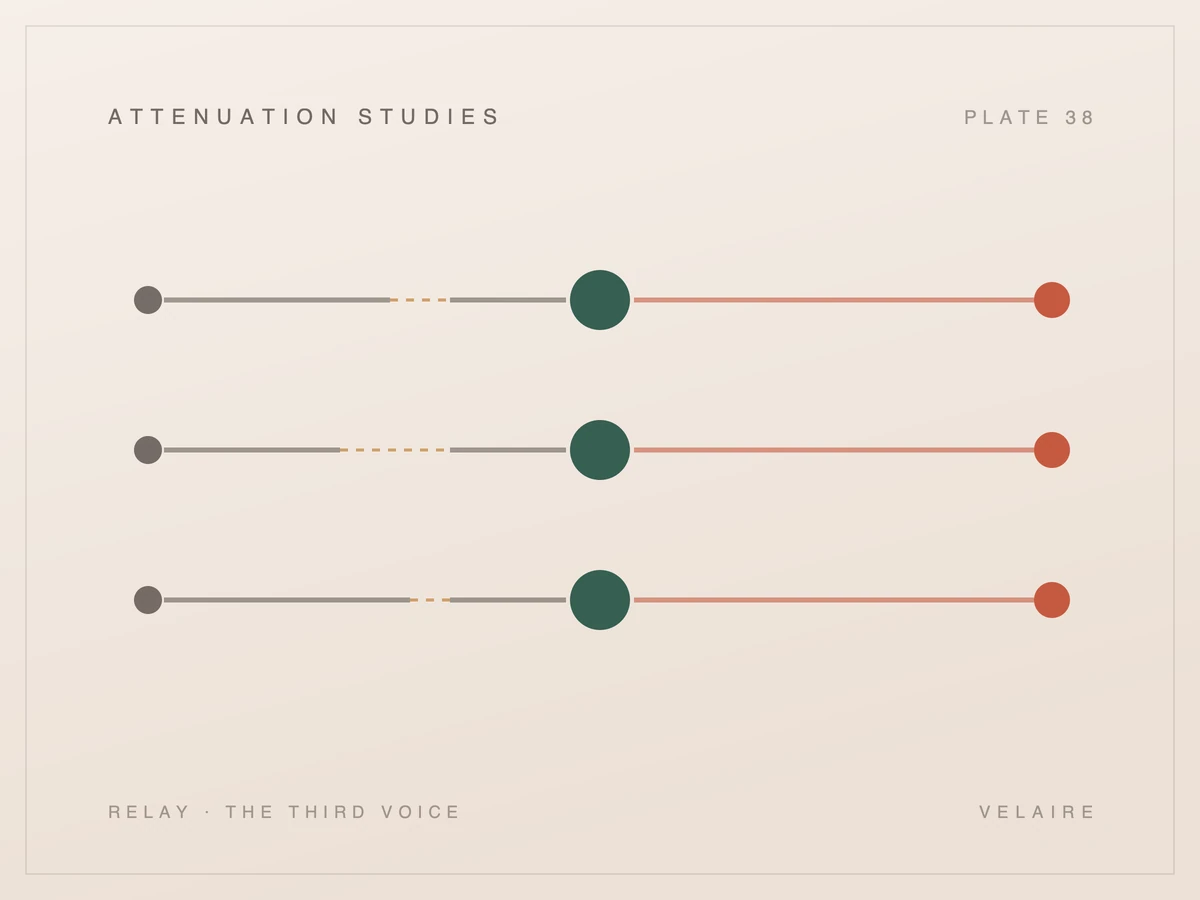
Because a third person is on the line. The operator may open with a line such as "Hello, this is the relay service," then relay each side word for word, so replies arrive with pauses while someone types or signs. To a receptionist trained on sales calls, the opening and the silence both look like a robocall.
Anatomy of a relay call
Ring
A call arrives
It is placed by the operator, like any other call.
Opening
The operator introduces the call
Often a line such as "This is the relay service." Stay on the line.
Middle
Words are relayed, with pauses
Someone is typing or signing. Wait for the reply.
Length
The operator stays on
At least 10 minutes, or 20 for speech-to-speech.
What your desk hears from ring to hang-up, and what to do at each step.
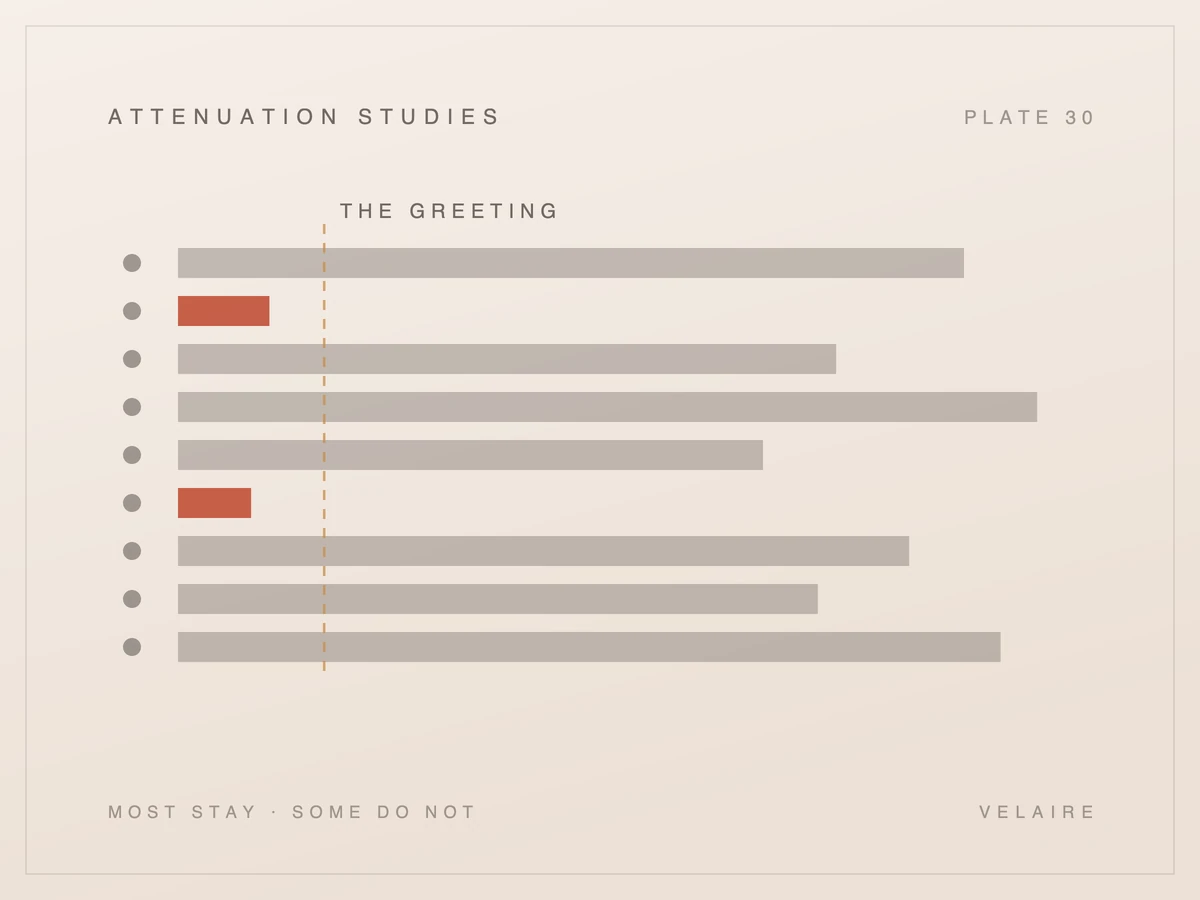
The FCC's consumer guide has a section headed "Don't hang up!" It says some people hang up on relay calls because they take the assistant for a telemarketer, and asks you to stay on the line when you hear the relay greeting [3]. How often it actually happens is another matter. No primary source measures it, so this post gives no rate.
A relay call is a patient calling. The only unusual part is the operator in the middle.
The pauses are built in. The FCC's standards require the assistant to relay the conversation in real time and, in general, word for word, and to stay with the call for at least 10 minutes, or 20 minutes for speech-to-speech [3]. Assistants may not keep records of what was said [3]. So what you hear is the caller's own words, a little delayed, and a call that may run longer than your average booking call.
Automated systems can fail the same call in different ways. A system may read the opening line as a wrong answer, treat a few seconds of silence as an abandoned call, or screen the operator's number as spam. These are failure modes worth testing for, not findings.
The regulation addresses them directly. Any automated attendant, voicemail or interactive voice response system that a public accommodation uses to receive and direct calls must provide effective real-time communication with people using TTYs and every FCC-approved relay service. The wording is broad enough to include a phone tree and an after-hours greeting.
The text of 36.303(d)(1) says the system "must provide effective real-time communication" with those users, and it names "all forms of FCC-approved telecommunications relay systems, including Internet-based relay systems" [1]. The phrase "including, but not limited to" appears in the list of covered systems, so the rule does not depend on how new or old the technology is.
Three other paragraphs matter. Paragraph (d)(4) says you must respond to relay calls "in the same manner that it responds to other telephone calls" [1]. If a person answers and books other callers, a person answers and books relay callers. Paragraph (d)(3) lets you use relay services yourself, in place of direct calls, to receive or make calls. And paragraph (d)(5) says you do not have to buy a TTY [1].
On a plain reading, several habits fail the same-manner test. Hanging up is the obvious one. Others are asking the caller to ring back "with their own voice," sending relay calls to voicemail while everyone else reaches a person, and letting a menu time out on a caller who needs a moment. Whether a specific setup passes is a question for counsel, as is the undue-burden defense in 36.303(a) [1].
The question is never whether you have the right equipment. It is whether a relay caller gets the same call everyone else gets.
An AI phone agent is an automated system that receives and directs your incoming calls, so the interactive voice response wording applies to it just as it does to a phone tree. The practical test is concrete. Place a relay call to it before it goes live, and make sure a relay caller can reach a person.
A relay call has a third party in the middle, so replies arrive a beat late.
That is our reading, and it rests on the breadth of 36.303(d)(1) [1]. The regulation predates AI voice agents, and we found no statement from the Justice Department or the FCC that addresses them. Have counsel confirm it, and ask them what evidence of testing to keep.
Velaire Health answers a practice's calls on the practice's existing number. It says at the start of every call that it is automated, and a caller can ask for a person at any point. We do not claim that it works with relay services, and we have no published results on relay calls. Our advice is the same as for any phone agent: do not take a compatibility claim on trust, whether it comes from us or from anyone else. Ask for a recorded 711 call into the system, and ask for the route a relay caller takes to a person.
Relay callers have reason to ask for that person early, because a system built for quick spoken answers can handle a relayed call badly. Our post on whether patients hang up on an AI phone agent covers how callers react more widely. Whoever supplies the agent, the duty stays with your practice [1].
The Justice Department enforces Title III against medical offices and has settled communication cases with small practices. The clearest confirmed example is a 2023 Michigan case that cost one practice up to $200,000. It concerned interpreters for in-person visits, not telephones, but it shows how seriously the department treats communication failures in health care.
On June 21, 2023, the US Attorney's Office for the Eastern District of Michigan announced that Flint Neurological Centre had agreed to pay up to $200,000 to resolve a Title III case. The complaint, filed in March 2022, alleged the practice failed to provide auxiliary aids and services needed to communicate with deaf and hard of hearing patients and their companions [7].
The money was split three ways: $150,000 in damages to ten patients and companions, a $40,000 victim fund, and a $10,000 civil penalty. The three-year consent decree also required a written policy telling patients they can get interpreters and other aids free of charge, plus staff training [7]. The release describes effective communication in general terms and does not discuss phone calls.
We did not find a published settlement about relay calls specifically, though our search was not exhaustive. Read the Flint case as evidence of the department's attitude, not as a rule about phones.
Private lawsuits and state disability laws are a separate question. Ask counsel how they apply in your state.
Write one page covering who answers a relay call, what they say, and how a relay caller reaches a person. Then test it with a real relay call on every number patients can reach, in business hours and after hours. Until someone has tried it, a rule is a guess about what your line does.
Test your line with a relay call
✓Dial 711 and ask the operator to place a call to your main number
✓Confirm the desk stays on the line through the opening and the pauses
✓Run it after hours and check the greeting, any menu and voicemail
✓If you use a phone agent, place a relay call to it and keep the recording
✓Confirm the relay caller can reach a person, and time how long it takes
✓Write down what a pass looks like before the test, not after
Run each check on every number patients can reach, in hours and after hours.
The page can be short. It tells staff that the greeting "this is the relay service" means a patient is calling, that they stay on the line and answer as they would anyone, and that a long pause is the relay at work. It says relay calls wait in the same queue as everyone else's.
Check your verification and callback rules against relay. If your rule says to call back on the number already on file, remember that 36.303(d)(3) lets you place that callback through a relay service [1]. Our post on how to verify the caller sets out those tiers. Add a line saying how a callback is placed to a patient who cannot take a voice call.
To run the test, dial 711 and ask the operator to place a call to your main number. If a staff member or a patient advisor uses relay every day, ask them to try it and tell you what they hit. Run it at 9 in the morning, at 4:55 on a Friday, and after hours, and write down what a pass looks like before you start.
Do the same for every layer in front of your desk: the greeting, any menu, voicemail, and the phone agent if you have one. A relay call that passes your desk but dies in the after-hours greeting has still failed.
FAQs
Questions about this
No. The ADA regulation says it does not require a public accommodation to use a TTY for its calls, and it lets you use relay services in place of direct telephone communication. What it does require is that you respond to relay calls the way you respond to other calls, and that any automated phone system works for relay users.
Your regular number. The operator places the call to you, so it rings like any other. The 711 code is for the person starting a TTY-based relay call, and it does not work for video relay, IP Relay or IP CTS, which start over the internet. Nobody on your side needs to dial 711 to receive a call.
The text covers any automated attendant or interactive voice response system used to receive and direct calls, and says it is not limited to the examples it lists. On its face that reaches a phone agent. We found no Justice Department or FCC statement on AI voice agents specifically, so ask your counsel, and test with a real relay call.
Offering email or a web form as an extra option is fine. Replacing the phone with it is the problem. The regulation requires you to respond to relay calls in the same manner as other calls, so a relay caller who dials your number should get what any caller gets. Ask counsel about your specific setup.
No. In October 2025 the FCC asked for comment on ending the requirement that state programs offer TTY relay. That is a proposal about state programs, not a rule, and it does not touch video relay, captioned telephone or speech-to-speech. The ADA text still names TTYs and all FCC-approved relay systems.
Builds AI front-office systems for medical and aesthetic practices. Posts here start from published sources rather than vendor claims, and every number links back to where it came from.
Portals and online booking keep growing, yet the most common reason patients skip the portal is wanting to talk to a person. Here is what the surveys show, and the one number nobody has measured.
Most adults let unknown numbers ring. Add spam labels, carrier blocking and call authentication, and a callback can fail before anyone hears it. Here is what the rules say and what a practice can control.
Surveys show many customers distrust AI in service, mostly because they fear losing a route to a person. Waiting on hold also drives hang-ups. Here is how to weigh both risks.
What published research can and cannot tell you about replying to new inquiries, and a target your front desk can hold for live calls, callbacks and web forms.
Clinical and urgent calls are never booked by Velaire Health. They go to a person. Here is why that line exists, and how to write the handoff so an urgent caller never waits in a queue.
Voicemail looks like a safety net and behaves like an unmanaged work queue. Here is why the ownership problem is structural, what the alternatives actually change, and the number that settles it.
The plain-language explainer: what it does, what it deliberately doesn't, and how it compares with voicemail, an answering service, a phone tree, and hiring.