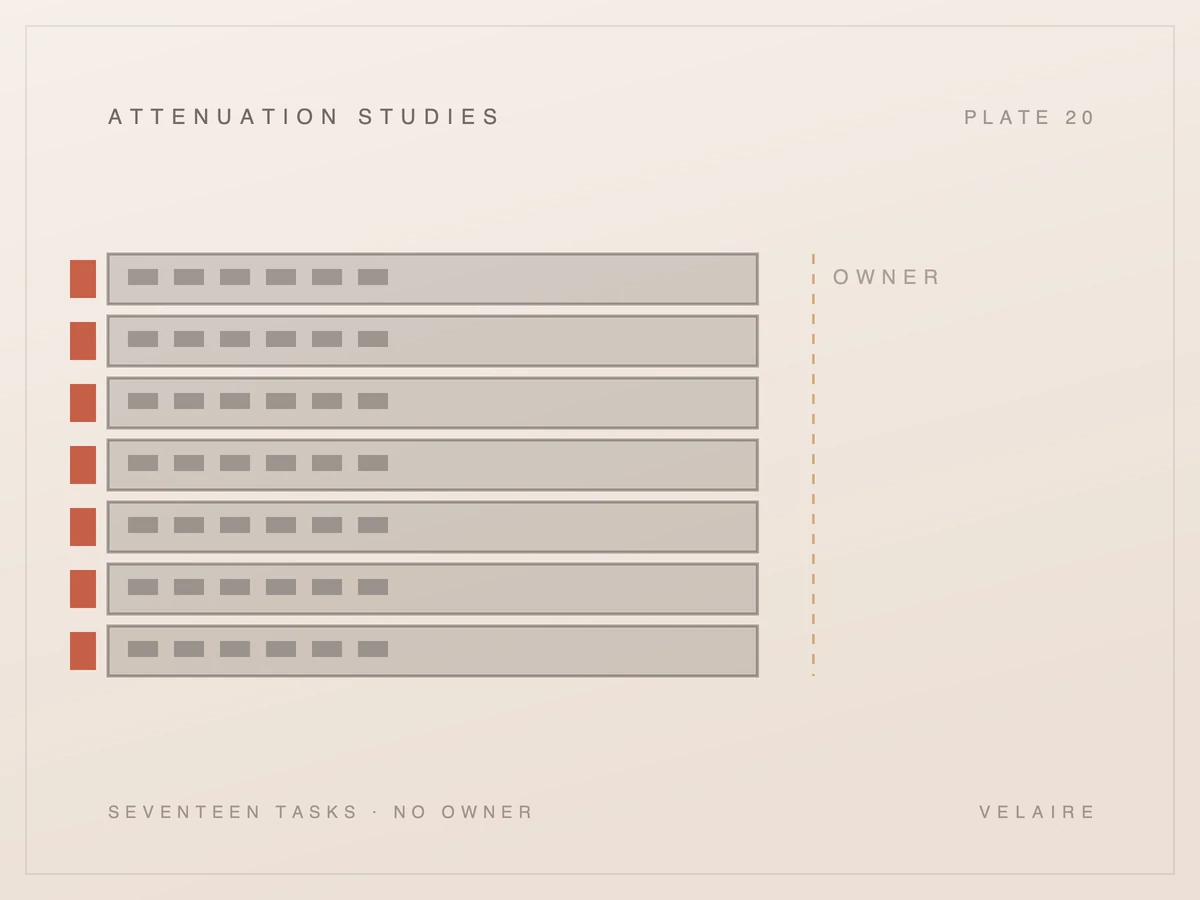
A voicemail is not a message. It is a task, created by a patient, assigned to nobody, with no due date and no record that it was ever completed. Practices run one of these permanently and call it a mailbox.
17 new messages
everyone, about the box
Key takeaways
- •A voicemail box is a work queue with no owner, no priority, no due date and no completion record.
- •The ownership problem is structural: messages arrive when the practice is busy and are worked when it is busy again.
- •Prose must be consumed serially at the speed the caller spoke, which is why it cannot be triaged like an inbox.
- •The box under-reports demand twice: it misses everyone who hung up and everyone who would only engage interactively.
- •Measure age at action and provable completion before replacing anything, because a working box needs no replacement.
Voicemail is the default answer to a phone nobody could reach, and it has been for so long that practices no longer evaluate it. It is simply what a phone does when you are not there, the same way a door has a letterbox.
That framing hides what it actually is. Every message in the box is a piece of work: somebody has to listen to it, work out what it needs, find the record, do the thing, and call back. The box is a work queue, and it is a work queue with no owner, no priority, no due date, and no completion record.
Almost every complaint a practice has about voicemail follows from that, and so does the reason a replacement helps when it does.
What a voicemail actually is#
Compare it to any other queue in the practice and the deficiencies become obvious rather than vague. A diary has slots, owners and a clear definition of done. A referrals list has a person and a review. The voicemail box has an unread count.
That count is the only management information it produces, and it is a poor one. It cannot tell you how old the oldest item is, which items are urgent, which have been half-handled, or which were listened to by somebody who then got interrupted and never came back.
The unread count is also actively misleading in one direction. It falls when somebody listens, not when somebody acts, so a box showing zero unread can contain 6 outstanding tasks that were heard on Thursday by a person who was interrupted before writing any of them down. Every other queue in the practice distinguishes read from done, and this one does not.
Nor does it record completion. A returned call leaves no mark on the message, so the only way to know whether something was handled is to ask the person who might have handled it, which is why the honest answer in most practices is that nobody is sure.
A diary has slots and owners. A referrals list has a reviewer. The voicemail box has an unread count.
The ownership problem is structural#
The usual diagnosis is that somebody should be responsible for the box, and the usual fix is to name that person. It helps, and it does not survive contact with a busy week, for reasons that have nothing to do with diligence.
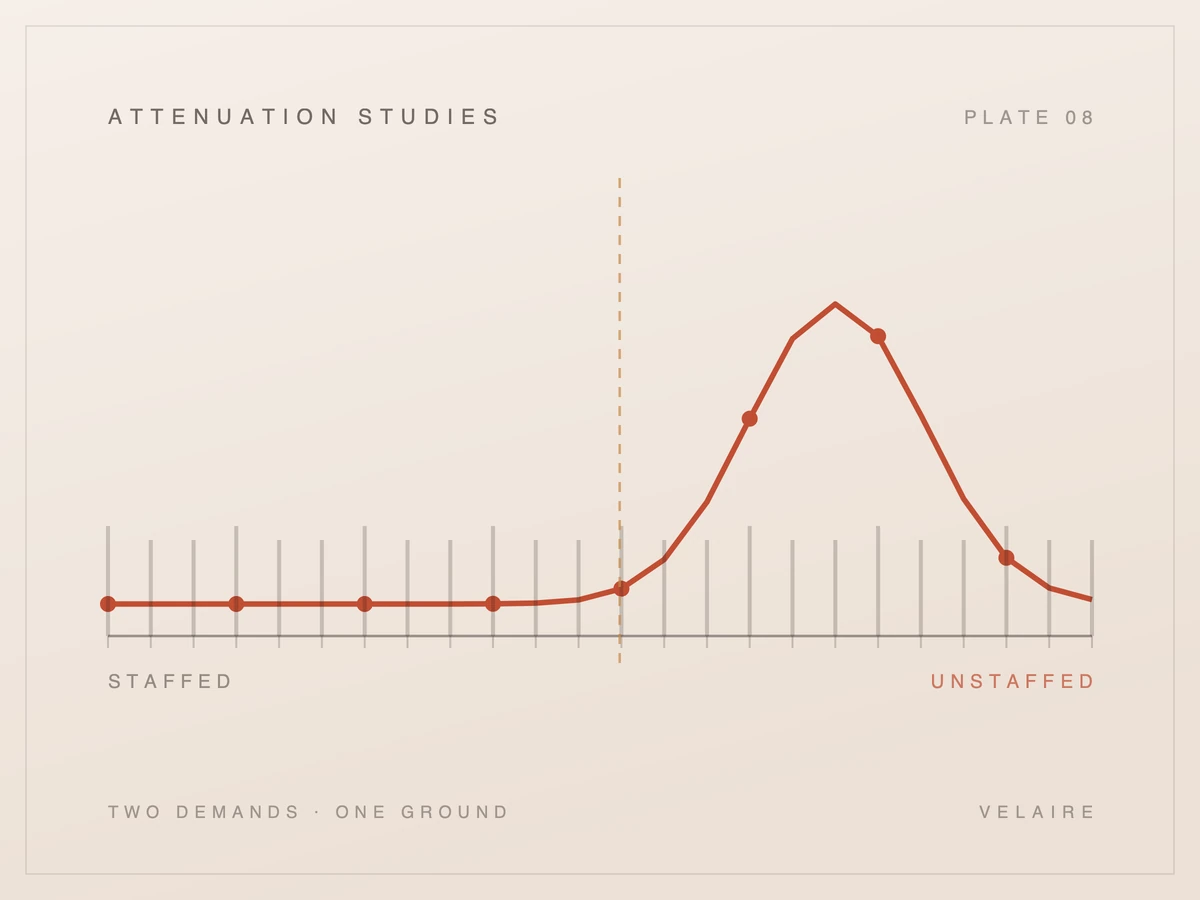
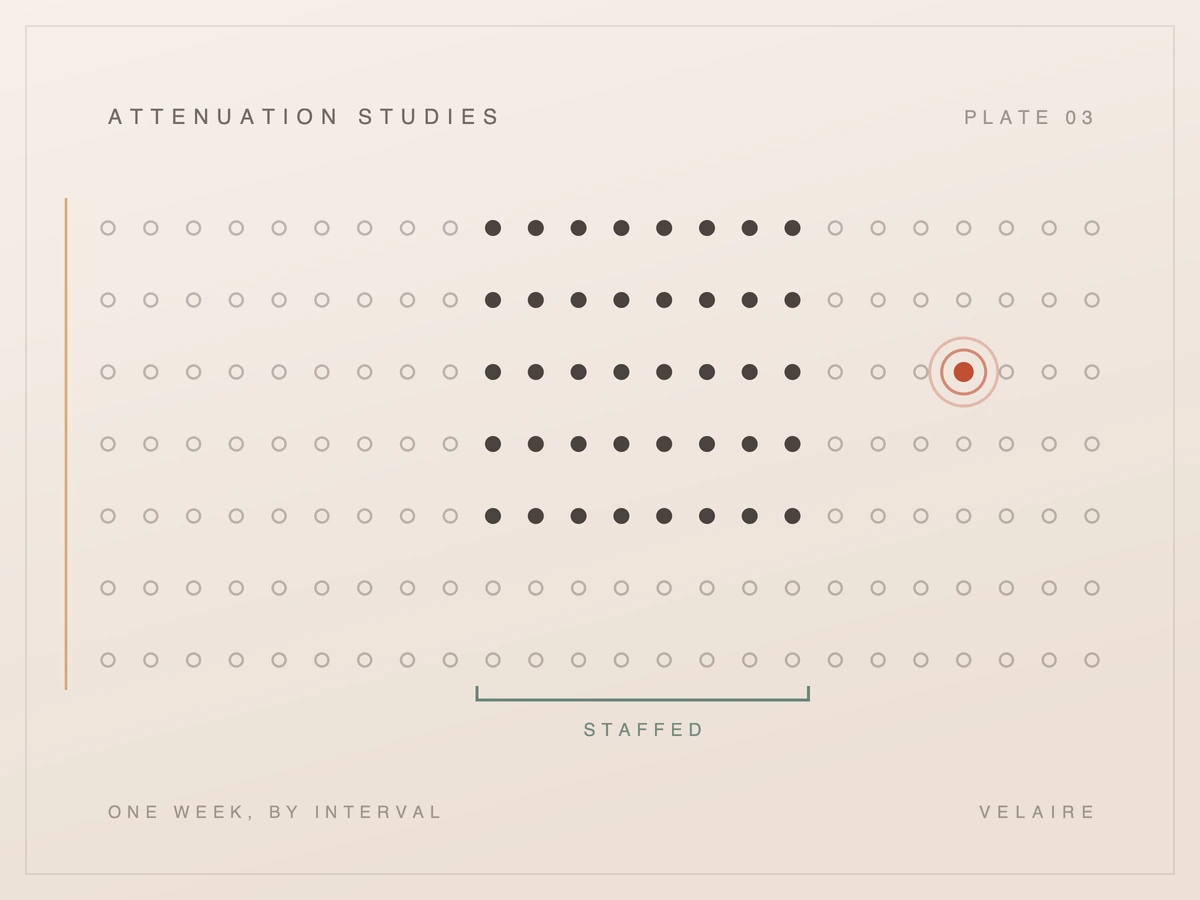
Messages arrive when nobody was available, which by definition means the practice was busy or closed. They are then processed at another moment when the practice is busy, by a person who is simultaneously handling a desk and a ringing phone. The work arrives at the worst time and gets done at the second worst.
- 1The message arrivesBy definition at a moment nobody was free, so the practice was busy or closed.
- 2It waits for a gapGaps are unpredictable, so a Friday 5:10pm message waits longer than a Tuesday 10am one.
- 3It is worked under loadBy someone also handling a desk and a ringing phone.
- 4Nothing records completionA returned call leaves no mark on the message, so nobody is sure.
There is also a shape problem. Voicemail is prose, and prose has to be listened to in full before you know what it needs, at real time, one at a time. Ten messages is 10 minutes of listening before a single decision has been made, and none of that time can be skimmed or triaged the way a list of fields can.
That is the specific thing that makes voicemail different from an email inbox, which people compare it to. An inbox can be scanned in seconds and sorted by sender and subject. A voicemail box has to be consumed serially at the speed the caller spoke.
There is a compounding effect worth naming. Because messages are consumed serially, a box with 12 messages in it is not 12 small tasks, it is one 12 minute task, and a 12 minute task needs a bigger gap than a 2 minute one. So the fuller the box gets, the larger the gap it requires, and the less likely any given gap is to be big enough. The queue defends itself against being worked.
The consequence is that the box gets worked when there is a gap, gaps are unpredictable, and a message left at 5:10pm on Friday is materially more likely to be actioned late than one left at 10am on Tuesday, entirely because of when the next gap falls.
Why callers stopped leaving them anyway#
The other half of the problem is that a shrinking share of callers use it, which changes what the box represents. It is no longer a record of everyone who could not reach you; it is a record of the subset willing to talk to a machine and wait.
That subset is not random. People calling about something sensitive, people calling from somewhere public, and people who are comparing 3 practices in one evening are all less likely to leave a message, and those are frequently the callers a practice most wants.
Patient preference data points the same way. In a survey of 1,000 US adults, 42% said they were comfortable with AI scheduling routine appointments, and among patients dealing with sensitive health issues, 67% said they would be more comfortable booking through an online chatbot than with a person [1]. A one-way recording offers none of what those patients are choosing.
- Existing patients with a routine request
- Callers who are not in a hurry
- People comfortable talking to a recording
- Anyone who needs this specific practice
- First-time enquiries comparing 3 practices tonight
- Anyone calling about something sensitive
- Callers ringing from somewhere public
- Everyone who hung up before the beep
So the box under-reports the problem twice over. It misses everyone who hung up, and it misses everyone who would have engaged with something interactive but not with a recording. A practice reading its voicemail count as the size of its after-hours demand is reading the smallest of several possible numbers.
There is a generational read on this that is worth resisting slightly. It is tempting to conclude that younger patients do not leave voicemails and older ones do, and while that is broadly true it is not the useful cut. The useful cut is urgency and privacy: a patient with a pressing question and somewhere else to try will not leave a message at any age, and a patient with a routine request and a settled relationship will.
The honest read is that a voicemail box tells you about your most patient callers, and tells you nothing about your least patient ones, who are usually the ones you lose.
What the alternatives actually change#
There are three common replacements and they change genuinely different things, which is worth separating before deciding between them. None of the three changes the underlying volume of demand arriving at your practice, and any pitch that implies otherwise is describing a marketing effect rather than a queue one.
| Replacement | What it changes | What it does not |
|---|---|---|
| A returned-call rota | Who owns the queue, and when it is worked | The prose problem, or the serial listening |
| Structured capture | Prose becomes fields, so it can be triaged and sorted | The need for a person to action it |
| A live answering arrangement | The caller speaks to someone at the time | Cost, and what happens on clinical questions |
The first row is worth taking more seriously than practices usually do, because it is free. A named person, a fixed time twice a day, and a written record of what was done costs nothing and fixes the ownership half of the problem outright. It leaves the listening cost untouched, which is why it works better at 5 messages a day than at 25.
The middle row is the one most relevant to anything sold in this category, and it is a smaller claim than it is usually given. Turning a 90 second recording into 6 fields does not remove the callback; it removes the listening, the interpretation, and the ambiguity about whether it has been handled.
That matters because it converts an unmanageable queue into a manageable one. Fields can be sorted by urgency, assigned to a person, marked done, and counted, and every one of those is impossible with a recording.
The evidence on channel cost points the same direction for the follow-up itself. Text and telephone reminders produce statistically indistinguishable attendance, and 2 studies put the cost per text per attendance at 55% and 65% below the equivalent call [2]. If the callback is confirming something rather than discussing it, the cheaper channel is defensible.
Structured capture does not remove the callback. It removes the listening, the guessing, and the doubt about whether anyone did it.
The measurement that settles it#
Before changing anything, measure the two numbers that describe how your box actually behaves rather than how it feels. Both are available from your phone system, your outbound call log and a stopwatch, neither takes longer than 1 week to collect, and together they decide whether there is a problem here at all.
The first is age at action: for every message in a week, the time from when it was left to when somebody actually called back. Report the median and the slowest one, because the median describes your normal and the slowest describes your risk.
The second is completion: of the messages left in a week, how many can you prove were returned. Not "would have been", proven, which usually means checking the outbound call log against the message list. Most practices doing this for the first time find a gap they did not expect.
Neither number has an industry standard attached, though the adjacent one does. A 2022 study of 6 Veterans Affairs medical centres chosen for above-average primary care access records the telephone targets those sites were held to: an average speed of answer of 30 seconds or less, and call abandonment under 5% [3]. Voicemail is what happens after both of those fail, so a full box is usually the downstream symptom of a queue problem nobody has measured.
- ✓Age at action, median: time from message left to callback made
- ✓Age at action, slowest: the one that describes your risk rather than your normal
- ✓Completion: how many of the week's messages you can prove were returned
- ✓Proven means checked against the outbound call log, not assumed
Collect both for the same week rather than at different times, because they interact. A practice with a fast median and poor completion is losing specific messages rather than being slow, which is a different fault with a different cause, usually a message heard by one person and assumed by everyone else to have been handled.
If the median age is under 2 hours and completion is near total, your voicemail box is working and this article does not apply to you. That is a real outcome and it is more common at small, well-staffed, single-location practices than the category's marketing suggests.
Run it for 2 weeks rather than 1 if your volume is low, since a handful of messages produces a median that swings on a single bad Friday.
If the median is a day, or completion has holes in it, you have found something that is worth fixing and that no amount of naming an owner has fixed so far.
What to do this week#
Start with the box itself rather than a replacement, because two of the most common faults cost nothing to fix and are usually still present. Check that the box is not full, since a full box rejects callers silently, and check that the greeting tells the caller when to expect a response rather than only that you are unavailable.
Then check where the box sits in your menu, since an option leading to an unmonitored mailbox is the single most common dead end in a practice phone system. That check is lesson 4 of auditing your phone tree, and it takes about 10 minutes.
The third free fix is to stop offering the box in places where nobody works it. An option that leads to a mailbox monitored by a person who left is worse than no option, because the caller believes they have reached you. Removing an option feels like reducing service and is usually the opposite.
Only after that is it worth considering a replacement, and the question to ask about any of them is the one in what "the AI books the appointment" actually means: what exactly is in front of a human the next morning, and in what form. If the answer is a paragraph, you have bought a better-transcribed voicemail, and the queue still has no owner.
Sources
- [1]Talkdesk, "U.S. Consumer Healthcare Survey" (Aug 2024, n=1,000, via Pollfish)
- [2]Gurol-Urganci et al., Mobile phone messaging reminders for attendance at healthcare appointments, Cochrane Database of Systematic Reviews (2013)
- [3]Telephone Access Management in Primary Care: Cross-Case Analysis of High-Performing Primary Care Access Sites, J Gen Intern Med (2022)