There is a list of people who have already chosen you, already trust you, and are already overdue. Most practices could not say how many of them were contacted last month, which is a strange thing not to know about your cheapest revenue.
how many are on the recall list?
how many did we contact last month?
Key takeaways
- •The number that matters is the share of recall-due patients contacted, not the size of the list.
- •A low contact rate is a capacity problem; a high contact rate with low bookings is a message problem.
- •Recall sits outside HIPAA's marketing definition as care coordination, until you attach an offer to it.
- •The reminder evidence is about attendance at booked appointments, not about causing a booking.
- •The list decays quietly: nothing breaks, nobody complains, and recall converts into harder reactivation.
Practices spend money finding new patients while holding a list of people who have already chosen them, already know where the building is, and are already overdue for something. The list sits in the practice management system, it costs nothing to hold, and in most practices nobody can say what happened to it last month.
That asymmetry is the subject here. Not because outreach is glamorous, it is the least glamorous thing a front desk does, but because the arithmetic is unusually favourable and unusually unexamined. A recall patient has no acquisition cost, a known value, and a much higher chance of saying yes than a stranger who found you on a map.
The uncomfortable part is that most of the failure is not refusal. It is that nobody rang.
What a recall list actually is#
A recall list is the set of patients whose next appointment is clinically due and not booked. It is generated by your practice management system from the interval attached to their last visit, which means it is already correct and already sitting there without anyone maintaining it.
That distinguishes it from a marketing list in a way that matters both operationally and legally. These are existing patients with an established relationship and a clinical reason to return, not prospects who filled in a form. Everything downstream of that distinction is different, including what you are allowed to send them.
One practical consequence of it being system-generated is that the list is only as good as the intervals sitting on your patient records. Practices that have changed their recall policy at some point, or merged in another practice's records, frequently carry a mix of intervals nobody has reconciled, and the list quietly reflects a policy from 2019 alongside the current one.
It also distinguishes recall from reactivation, which people conflate. Reactivation is a patient who lapsed 3 years ago and may have moved practices. Recall is someone whose interval elapsed 2 months ago and who almost certainly still considers you their practice.
A recall patient has no acquisition cost, a known value, and an existing reason to come back. Almost nothing else in a practice has all three.
The number nobody computes#
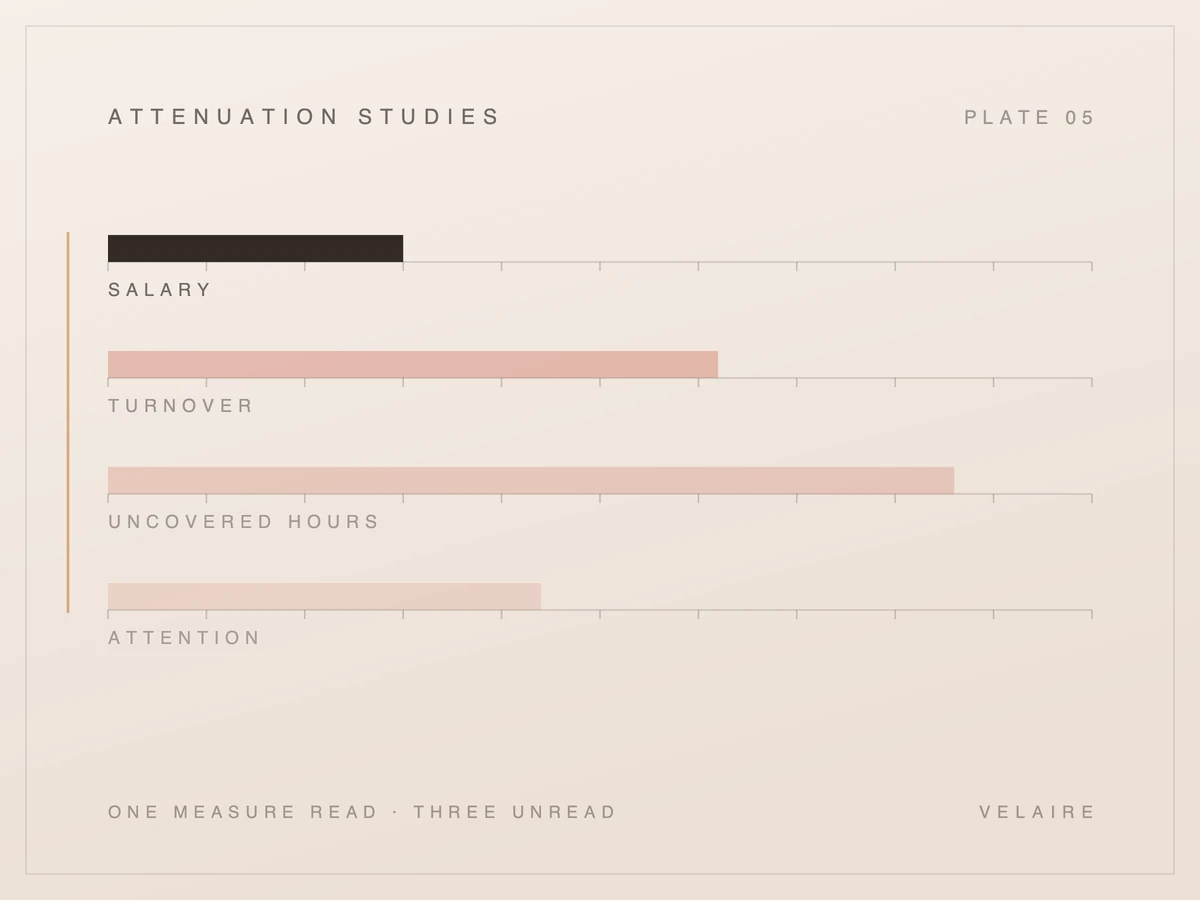
Ask a practice how many patients are on its recall list and you usually get an answer. Ask what share of them were contacted last month and the room goes quiet, which is telling, because the second number is the one that describes performance and the first only describes size.
Compute it plainly. Count patients whose recall date fell inside last month, count how many were contacted at all by any channel, and divide. Practices doing this for the first time commonly land somewhere under half, and the number is usually lower than everyone in the room expected.
| Low contact rate | Low booking rate | |
|---|---|---|
| What it means | Nobody had time to do the work | The work happened and did not land |
| The problem is | Capacity | Message, timing, or channel |
| More staff time helps | Yes | No |
| First thing to try | A fixed weekly slot for the work | Change the wording, then re-measure |
Then split it, because a low overall figure hides two different problems. A low contact rate is a capacity problem: nobody had the time. A high contact rate with a low booking rate is a message or timing problem, and buying more capacity will not touch it.
Define contacted strictly before you count, or the number flatters you into inaction. A voicemail nobody returned and a bulk email nobody opened are activity, not contact. Counting a conversation, a replied-to message, or a booking that followed a letter gives a lower and far more useful figure.
The market context makes this more pressing than it was. In 2025 one third of dentists reported they were not busy enough, up from one quarter in the fourth quarter of 2024, while new-patient appointment wait times stayed stable through the year [1]. Capacity is available and it is not being filled, which is not a picture of demand that cannot get through the door.
Why recall is not marketing, legally#
Practices routinely over-restrict recall because it feels like promotion, and the fear is misplaced in a specific and checkable way. Under HIPAA, marketing means a communication about a product or service that encourages the recipient to buy or use it, and several categories are carved out of that definition.
Communications for the treatment of an individual, including case management and care coordination, sit outside the marketing definition, as do refill reminders, provided no third party is paying for the message [2]. A message telling a patient their 6 month review is due is care coordination on any ordinary reading of those words.
- Your 6 month review is due, here is how to book
- Follow-up after a procedure you have had
- A reminder about an appointment already booked
- Care coordination between providers treating you
- Book your review and get 20% off whitening
- A seasonal package offer sent to the recall list
- A treatment you have never had, promoted to you
- A third party paying for the message to be sent
That is a genuinely useful clarification, and it is worth being equally clear about where the line sits. "Your check-up is due, here is how to book" is not marketing. "Book your check-up and get 20% off whitening" is, and no amount of arguing that whitening is health-related moves it.
One consequence is worth stating for aesthetics practices in particular, where the boundary is genuinely harder to hold. A message about a treatment the patient is already receiving is a treatment communication. A message about a treatment they have never had is promotion, whatever the clinical framing around it, and sending both to the same list on the same day makes the distinction invisible to the person receiving them.
The line is about what the message encourages, not about who receives it or how clinical the practice is. Attaching an offer to a recall converts the whole message, which is the single most common way a practice turns a permitted communication into one that needs authorisation.
None of this exempts you from the separate question of whether you were allowed to send an automated text at all, which is telecoms law rather than health privacy law and answers to a different regulator. The two frameworks are worked through in the patient texting rules.
What reminders can and cannot do here#
Reminders are the standard tool for this and the evidence behind them is genuinely good, provided you read what it actually measured rather than what it gets quoted as measuring. The distinction turns out to matter a great deal for recall specifically, and almost nobody bothers to draw it.
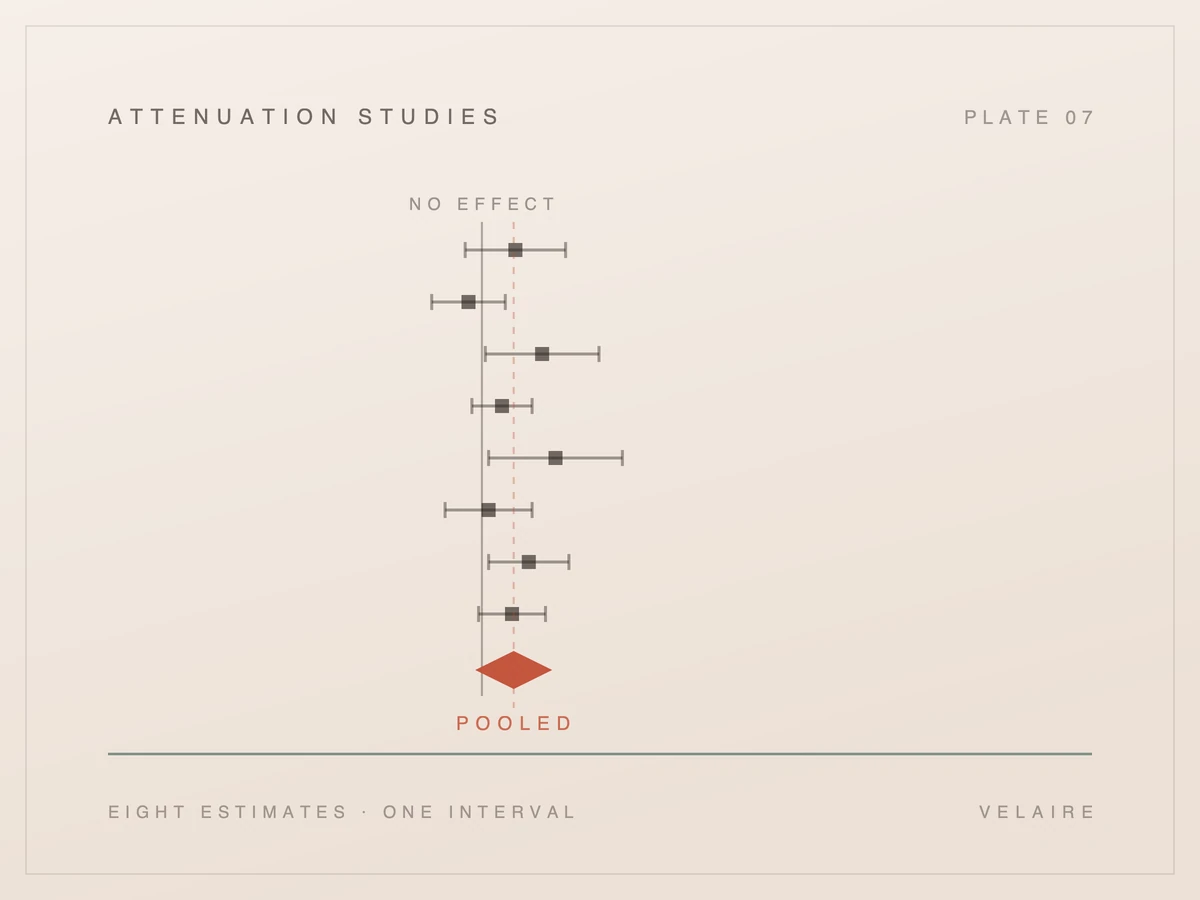
Pooled across 8 randomised trials covering 6,615 participants, attendance ran at 67.8% with no reminder and 78.6% with a text, with phone calls at 80.3% [3].
That is a real improvement of roughly 10.8 percentage points, and it is an improvement in attendance at appointments that already exist. It is not evidence that a reminder causes someone to book in the first place, which is the job a recall message is doing, and the distinction is routinely glossed over by people quoting the number.
The reminder literature is about attendance at booked appointments. Recall is about getting the appointment booked at all.
The transferable finding is the cost one. Text and telephone reminders produce statistically indistinguishable attendance, and 2 studies in the review put the cost per text per attendance at 55% and 65% below the equivalent phone call [3]. If your recall process is currently a person making calls, the channel change is defensible on cost even though the evidence for the outcome is thinner.
What the literature cannot tell you is your own booking rate from a recall contact, because that depends on your interval, your patients, and what the message says. That number has to come from your own system, and it is the second half of the split described above.
There is one more transferable finding and it is about timing rather than channel. The trials that worked sent their reminder about 24 hours ahead of a known appointment. Recall has no such anchor, so the equivalent question, how long after the interval elapses to make contact, is genuinely unanswered by the evidence and has to be settled by your own testing. Practices that try 2 weeks against 6 weeks usually find the difference larger than they expected.
Why the list decays quietly#
Recall is the first thing to slip and the last thing anyone rescues, and the reason is structural rather than anybody's fault. The work competes for exactly the same minutes as the walk-ins, the checkouts, and the ringing phone, and it is the only one of those four that nobody is standing in front of you asking for.
That gives it a particular failure signature. Nothing breaks, no report turns red, and no patient complains, because a patient who was never contacted has nothing to complain about. The consequence arrives 3 or 4 months later as a quieter diary that gets attributed to the season, the economy, or a competitor.
- 2 weeksA reminderStill considers you their practice. Highest booking rate.
- 3 monthsA nudgeNothing has gone wrong yet, but the visit has stopped feeling due.
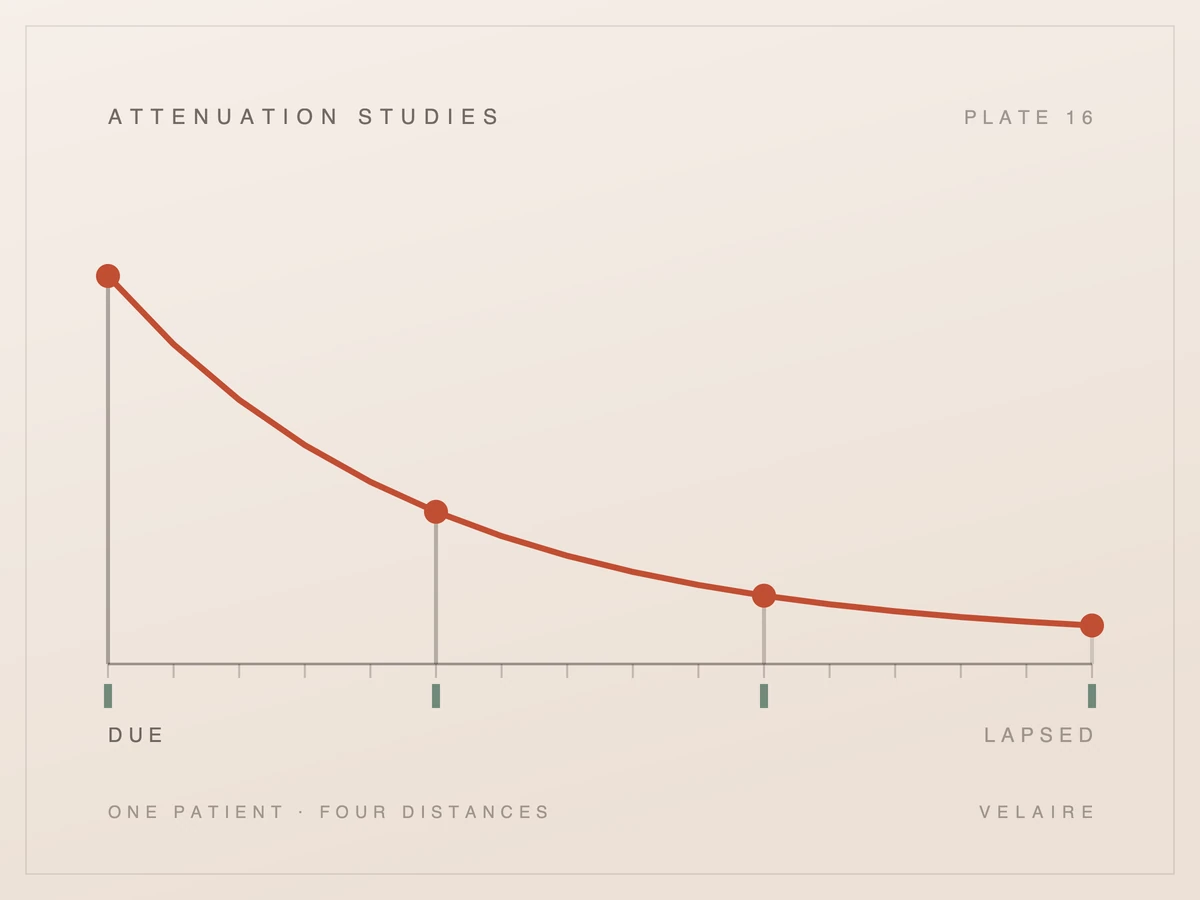
- 8 monthsA reactivationA harder conversation with a materially lower success rate.
- 18 monthsPossibly goneMay have moved practices. The number on file may not reach them.
The decay compounds in a way that is worth naming. A patient contacted 2 weeks after their interval elapsed is being reminded. The same patient contacted 8 months later is being reactivated, which is a harder conversation with a lower success rate, and the list has quietly converted itself from an easy job into a difficult one while nobody was looking.
There is also a data-quality decay running underneath. Phone numbers change, people move, and a list nobody has worked in a year contains a growing share of contacts that no longer reach anybody. That share is invisible until you try.
The two decays interact badly. A practice that finally works a neglected list gets a low response rate, concludes that recall does not work here, and stops. The low rate was mostly a function of how long the list had been left rather than of whether recall works, and the conclusion locks in the behaviour that produced it.
What to do about it this month#
The first move is measurement rather than a process change, and it takes under an hour. Pull the recall-due count for last month, pull the contacted count, and write both numbers on a page with the date. You now have a baseline, which is the thing that has been missing.
| What to pull | Where it lives | What it tells you |
|---|---|---|
| Patients due last month | Practice management recall report | The size of the opportunity |
| Contacted at all | Call log, message log, letter log | Whether anyone did the work |
| Booked after contact | Practice management, by appointment source | Whether the message works |
| Unreachable on file | Bounced messages, dead numbers | How much the list has decayed |
Pull all four in the same session rather than over a month, because they only mean anything together. Each one on its own supports a story, and the four of them together support only one.
The fourth row is the one people leave out and it changes how you read the other three. A 40% contact rate where a tenth of the list is unreachable is a different problem from a 40% contact rate on clean data, and only one of those is fixed by finding more time.
Then pick one thing rather than redesigning the process. The most common highest-value change is simply doing it on a fixed day each week instead of when there is a gap, because a recurring commitment survives a busy Tuesday and good intentions do not. Whatever you pick, put the two rates on the same page as the rest of your front-office numbers rather than in a separate report, per read your front office numbers, so they get looked at monthly instead of when somebody remembers.
What you should not do is buy something before the baseline exists. A recall automation deployed against an unmeasured list will report an encouraging contact rate against whatever denominator it happens to use, and you will have no way to tell whether it helped, because you never knew what the number was.
Sources
- [1]ADA Health Policy Institute, The State of the U.S. Dental Economy, Q4 2025 update
- [2]45 CFR 164.501, definition of marketing and its exclusions, via Cornell LII
- [3]Gurol-Urganci et al., Mobile phone messaging reminders for attendance at healthcare appointments, Cochrane Database of Systematic Reviews (2013)