Compliance
Do You Need a BAA for an AI Phone Agent?
When a US practice needs a business associate agreement with an AI phone agent vendor, what the agreement must cover under HIPAA, and what to request before call data flows.
One consent record, one opt-out list every sender checks, a registered 10DLC campaign, and a dated page proving all three.
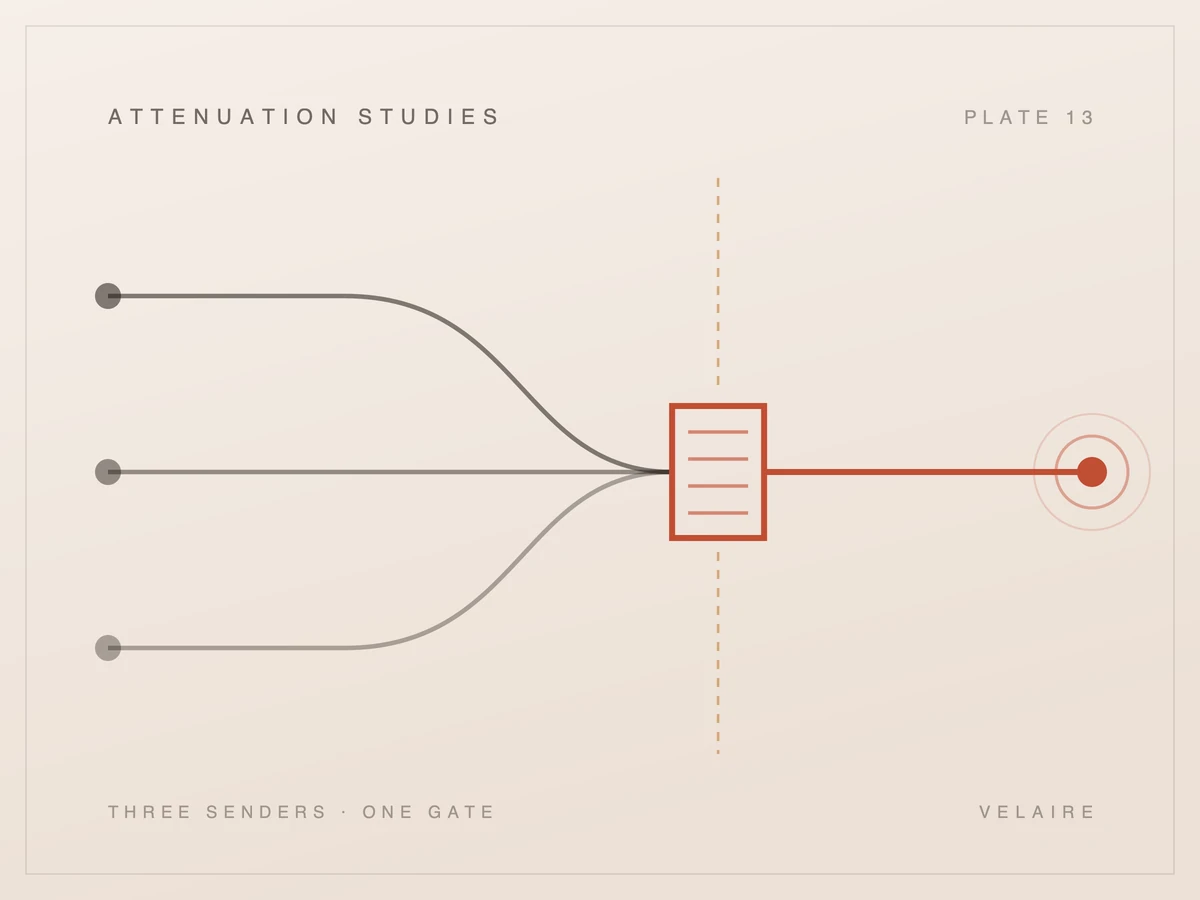
Most practices texting patients are doing it from three systems that cannot see each other's opt-outs. That is survivable today. It stops being survivable on 31 January 2027, and the fix takes weeks rather than days.
the patient replies, once
the senders, none of them told
This guide exists because patient texting is three separate problems wearing one name, and practices usually discover that in the wrong order. There is a legal question about consent, a carrier question about registration, and an architectural question about whether your systems can tell each other anything. Most practices meet the carrier one first, because it is the one that blocks messages.
The nine lessons below run in the order that saves the most rework. Inventory before consent, consent before opt-out plumbing, and registration in parallel with all of it, because registration involves waiting on other people and you may as well start the clock.
None of this is legal advice, and a practice sending patient messages at any volume should have its own counsel read the underlying rules. What this is instead is the operational work: the parts you have to build regardless of how your lawyer reads the finer points.
This covers outbound text messages to patients from a US practice: reminders, recall, follow-up, and promotions. It covers consent, revocation, carrier registration, and the plumbing that connects them. It is written to the stricter reading of a rule currently under a waiver.
It does not cover voice calls, which have overlapping but distinct rules, nor email, which sits under different law again. It does not cover practices outside the US, where Canada's CASL and the UK and Irish regimes impose different and sometimes stricter obligations on the same message.
It also does not attempt to tell you whether a particular message is marketing. That determination is genuinely fact-specific, it depends on who paid for the message, and it is exactly the question worth paying a lawyer 1 hour for.
Registration decides whether your message is delivered. Consent decides whether you were allowed to send it. They are unrelated and you need both.
The first lesson is the one that most often changes the shape of the problem, and it is deliberately boring. You cannot build one opt-out list until you know how many senders it has to serve.
The last column is the one that matters and it is the one people cannot fill in. A sender whose opt-out storage you cannot name is a sender that will keep messaging someone who asked it to stop.
Expect the list to be longer than you assumed. A single-location practice commonly finds 3 or 4 systems capable of texting a patient, and a multi-location group frequently finds more than 6 systems doing it.
Two hiding places are worth checking explicitly, because neither shows up when you go looking system by system. The first is your own phone bill: an unfamiliar messaging line item usually has a tool attached to it that somebody forgot. The second is your outbound message logs for the last 30 days, sorted by sending number, which will surface any sender nobody remembered to mention.
Line 5 of the list, staff texting from personal phones, is not a compliance problem you can solve with plumbing, and it is worth separating for that reason. It is a policy and training problem, and it also carries a records issue: a message about a patient's care sitting on a personal handset is part of the practice's communication record and is not under the practice's control.
Consent is not one permission. A patient who agreed to appointment reminders has not thereby agreed to promotions, and a system that records one flag called "SMS OK" cannot tell the difference between them.
Classify every message stream you found in lesson 1 against this:
| Purpose | Example | Where it sits |
|---|---|---|
| Treatment | Appointment reminder, pre-visit instructions | Outside HIPAA's marketing definition |
| Care coordination | Recall due, follow-up after a procedure | Outside marketing, per the same carve-out |
| Operational | Practice closed for weather, number changed | Neither treatment nor marketing |
| Marketing | Package offer, seasonal promotion | Marketing, and needs authorisation |
The HIPAA line here is narrower than people assume. Marketing means a communication about a product or service that encourages the recipient to buy or use it, and communications for the treatment of an individual, including case management and care coordination, are carved out of that definition [1].
That carve-out does most of the work for a normal practice. Reminders and recall are not marketing under HIPAA. A discount on a treatment package is, and calling it "patient education" does not move it.
Record the classification. You will need it in lesson 4, and you will need it again if a carrier ever asks what your campaign actually sends.
There is one architectural decision in this whole guide and this is it. Every downstream problem follows from getting it wrong, and it is much cheaper to make now than after 18 months of records exist.
Step 4 is the one people skip past, and it is the whole point of doing this in lesson 3 rather than lesson 8. A marketing tool that cannot check your consent record is a tool that will eventually message someone who opted out, and no policy document prevents it.
A policy that says "honour all opt-outs" does nothing if the systems have no way to tell each other. Plumbing beats policy here.
The uncomfortable version of step 4 is that the answer is sometimes to retire a tool. That is a real cost and it is smaller than the alternative, which is discovering the gap after somebody complains.
There is a middle option worth considering before retiring anything. If a tool cannot read your consent record automatically but can accept an imported suppression list, a scheduled push every 24 hours is materially better than nothing, and it is honest to write down that the window exists. What it cannot do is satisfy a same-day revocation, so treat it as a stopgap with a stated gap rather than a solution.
A daily sync is not a shared list. It is a shared list with a 24 hour hole in it, and the hole belongs in the written record.
Consent on paper is real consent and it is useless to an automated sender, which cannot read a filing cabinet. The record has to carry enough for a system to answer "may I send this specific message to this specific person right now".
Five fields do it. Anything less and you will be reconstructing intent from a timestamp:
| Field | Why it is needed |
|---|---|
| Phone number | The thing consent attaches to, not the patient, since numbers move |
| Purpose | Which of the four categories from lesson 2 this covers |
| Captured at | The timestamp, since consent has to predate the send |
| Method | Web form, intake paperwork, verbal at the desk, inbound text |
| Evidence | The form submission, the recording reference, or the staff member |
Attaching consent to the number rather than to the patient is the field practices most often get wrong, and it matters because numbers get reassigned. A patient who changes carrier and gives up a number leaves that number with someone who never consented to anything.
Record method honestly. A verbal "yes, texting is fine" at the desk is legitimate consent and it is weaker evidence than a signed form, and knowing which you have is the difference between defending a complaint and guessing.
Two operational details follow from attaching consent to the number. First, when a patient updates their phone number, the old consent does not travel with them: capture it again against the new number rather than copying the flag across. Second, a number that has been unreachable for 6 months or more is worth flagging for re-confirmation, since carrier reassignment is invisible to you and the person now holding it never agreed to anything.
Neither of these is required by a rule you can point at. Both are the difference between a consent record that describes the world and one that describes the world as it was 3 years ago.
This is the lesson the 2027 rule is actually about. The requirement heading toward you is that a revocation received in response to one type of message applies to every regulated message you send that person, and a practice with per-system opt-out lists cannot satisfy it.
Step 4 is not optional and it is the step that finds the bugs. Practices that run it routinely discover one sender that never checks, usually the one installed longest ago by a vendor who is no longer engaged.
There is an argument for going further than the rule requires, and it is the position we took in our own product. One opt-out ending everything is stricter than today's requirement, and building to today's requirement means rebuilding when the waiver lapses. It also means a patient who asked once does not have to ask twice.
Where the rule is enforced matters as much as what it says. A check written in application code applies to the application and to nothing else: not to a script somebody runs by hand, not to an automation node a vendor added, not to a bulk import. A constraint enforced in the database applies to all of them, including the paths nobody remembered. That is the reason our own consent and opt-out rules live in the database rather than in TypeScript, and it is a reasonable question to put to any vendor.
| Per system | One shared list | |
|---|---|---|
| Patient opts out of reminders | Reminders stop | Everything stops |
| Marketing tool learns about it | Never | On its next send check |
| Meets the 2027 provision | No | Yes |
| Cost to build | Nothing, it is the default | Days, plus retiring anything that cannot read it |
Every messaging platform recognises STOP. Real patients write "stop texting me", "remove me please", "wrong number", and "who is this", and a keyword matcher looking for 1 exact word misses all 4 while the clock runs.
The clock is real. A request to revoke consent, made in any reasonable manner, must be honoured within a reasonable time not to exceed 10 business days from receipt [2]. "Any reasonable manner" is the operative phrase: a patient does not have to use the magic word, and a request made to your receptionist counts.
The rule does permit one confirmation. A single message confirming the revocation is allowed provided it only confirms, carries no marketing content, and is the only further message sent, and a confirmation sent within 5 minutes of receipt is presumed to fall inside the existing consent [2].
The "wrong number" row deserves emphasis. It is the one staff most often deprioritise and it is the one where continuing to send is least defensible, because by definition the person receiving the messages never consented.
This is the carrier layer and it is entirely separate from consent. Registration decides whether your messages get delivered at all, and it involves waiting on third parties, which is why it belongs in parallel with everything above rather than at the end.
Unregistered traffic does not fail loudly in a way anyone notices. Messages sent to US numbers from an unregistered 10DLC number are blocked, and the practice discovers it when patients mention they stopped getting reminders [3].
Your campaign description has to match what you actually send, and this is where the lesson 2 classification pays for itself. Traffic that does not match the registered use case is a documented cause of brand suspension, alongside inaccurate descriptions of purpose, opt-in, and opt-out [3].
That mismatch is easy to create without meaning to. A practice registering a campaign described as appointment reminders, then adding a seasonal promotion 6 months later, has changed what it sends without changing what it declared. The promotion is the message most likely to draw a complaint, and a complaint against a brand whose declared use case does not cover it is the worst version of that conversation.
The practical rule is to register the broadest accurate description of what you send, not the narrowest one that sounds most benign. A campaign covering reminders, recall, and occasional practice promotions is honest and approvable. One covering only reminders is neither, if you also promote.
Volume matters too, and it is worth knowing before you pick a campaign type. Lower-volume campaign types exist with lower monthly fees and lower throughput, bounded at fewer than 2,000 message segments per day on at least one major carrier [3]. A practice sending 200 messages a day is comfortably inside that. One sending recall blasts to 5,000 patients in an afternoon is not, and will find out through filtering rather than through a warning.
Most practices measure whether an opt-out was honoured. The rule measures how long it took, and a process that always gets there eventually can still be non-compliant.
Step 4 is the one that matters. A manual process handled by one person is entirely reasonable at 3 or 4 opt-outs a month, and it is fragile in a specific way: a request arriving the Friday before someone takes 2 weeks off has consumed most of its 10 business days before anyone reads it.
The test is not whether the process works on a normal Tuesday. It is whether it works during the worst week of the year, when the person who normally handles it is away and the practice is short-staffed.
Alerting at 2 business days rather than at 10 is deliberate. The rule caps the honour time at 10 business days, which in a normal calendar is 2 full weeks, and a process that only alarms at the deadline gives you no room to fix anything. An alert at 2 days is a process problem you can still solve; an alert at 9 days is an incident.
If you want the same measurement discipline applied to the rest of your front office rather than only to opt-outs, size your missed-call gap applies the same evidence-first approach to your call records.
The last lesson makes the previous 8 durable. Everything above is invisible unless it is written down, and the value of the written version is that someone who was not there can check it.
Review it every 6 months, and immediately whenever a new tool is added. New tools are how this decays: a practice that did all 9 lessons correctly in March and installed a review-request tool in August is back where it started and does not know it.
The specific provision heading for that date requires a revocation made in response to one message type to be applied to all future regulated calls and texts from you, including on unrelated subjects. That is the requirement per-system opt-out lists cannot meet, and it is why lessons 3 and 5 sit where they do.
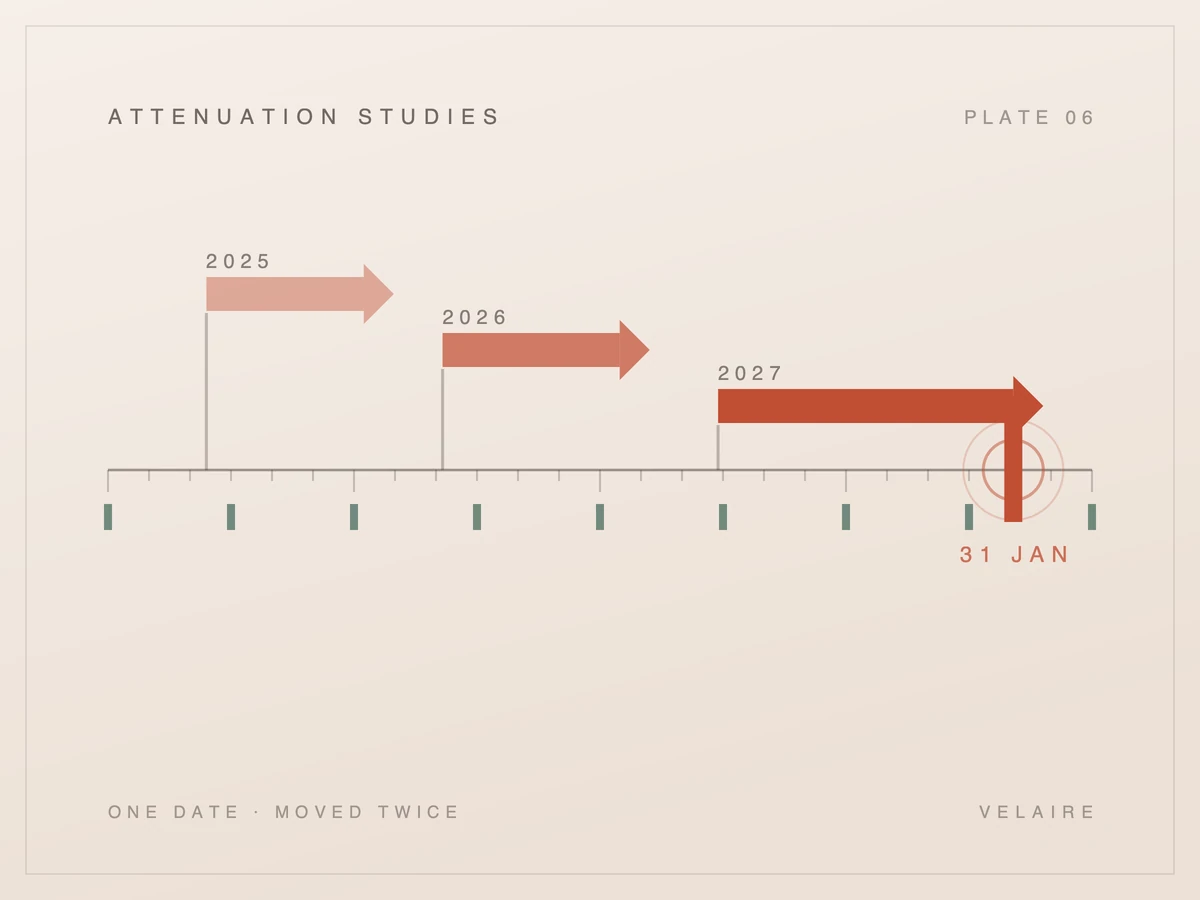
It has moved twice, from April 2025 to April 2026, and then again on 6 January 2026 to 31 January 2027 [4]. Both delays were granted because regulated firms could not build in time, not because the requirement was reconsidered, which is a meaningfully different thing from a rule being abandoned.
The practical reading is that a practice which completes these 9 lessons is compliant with the current rule, ready for the delayed one, and has better messaging hygiene either way. Nothing here is wasted if the date moves a third time. How Velaire itself handles consent, opt-out and the send window is on patient messaging, and what a front desk actually costs covers the economics of the systems doing the sending.

Compliance
When a US practice needs a business associate agreement with an AI phone agent vendor, what the agreement must cover under HIPAA, and what to request before call data flows.
Compliance
Six situations that happen weekly at every practice, what the rule actually permits in each, and why the answer is usually more permissive than staff assume and stricter than callers expect.
Compliance
One rule has been delayed twice and is now scheduled for 31 January 2027. It changes what a patient opt-out means, and the practices that will struggle are the ones running texts from three different systems.
Buyer's guide
Seven lessons scoring five options, including doing nothing, against your own after-hours data. Ends with a written decision, a review date, and a clear reason if the answer turns out to be no.
Operations
Seven lessons of unglamorous cleanup that decide whether a connected system works. Appointment types, availability rules, duplicates, phone formats, and who is allowed to write what.
Operations
Seven lessons on the misses that happen while you are open and staffed. Find the abandonment curve, match volume to cover, fix the hold experience, and give callers a way out that is not hanging up.
The plain-language explainer: what it does, what it deliberately doesn't, and how it compares with voicemail, an answering service, a phone tree, and hiring.
See how Velaire would handle the calls your practice misses. A personal walkthrough, built around your questions.
Let’s talk about your practice