Front office
Will Patients Hang Up on an AI Phone Agent?
Surveys show many customers distrust AI in service, mostly because they fear losing a route to a person. Waiting on hold also drives hang-ups. Here is how to weigh both risks.
One is capturing discretionary demand that decides in the moment. The other is refilling a chair from a patient list it already owns. Same complaint, opposite problem, and the fix differs at every layer.
A med spa and a dental practice both tell you their phone is a problem. They mean opposite things by it, and a product that fixes one of them will do very little for the other.
the med spa, 9pm
the dental chair, Tuesday 2pm
Vendors in this category sell one product to both, and the demo is identical. Answers your calls, sounds natural, captures the details, books the appointment. It lands well in both rooms because both rooms have a phone problem, and it obscures the fact that they do not have the same phone problem.
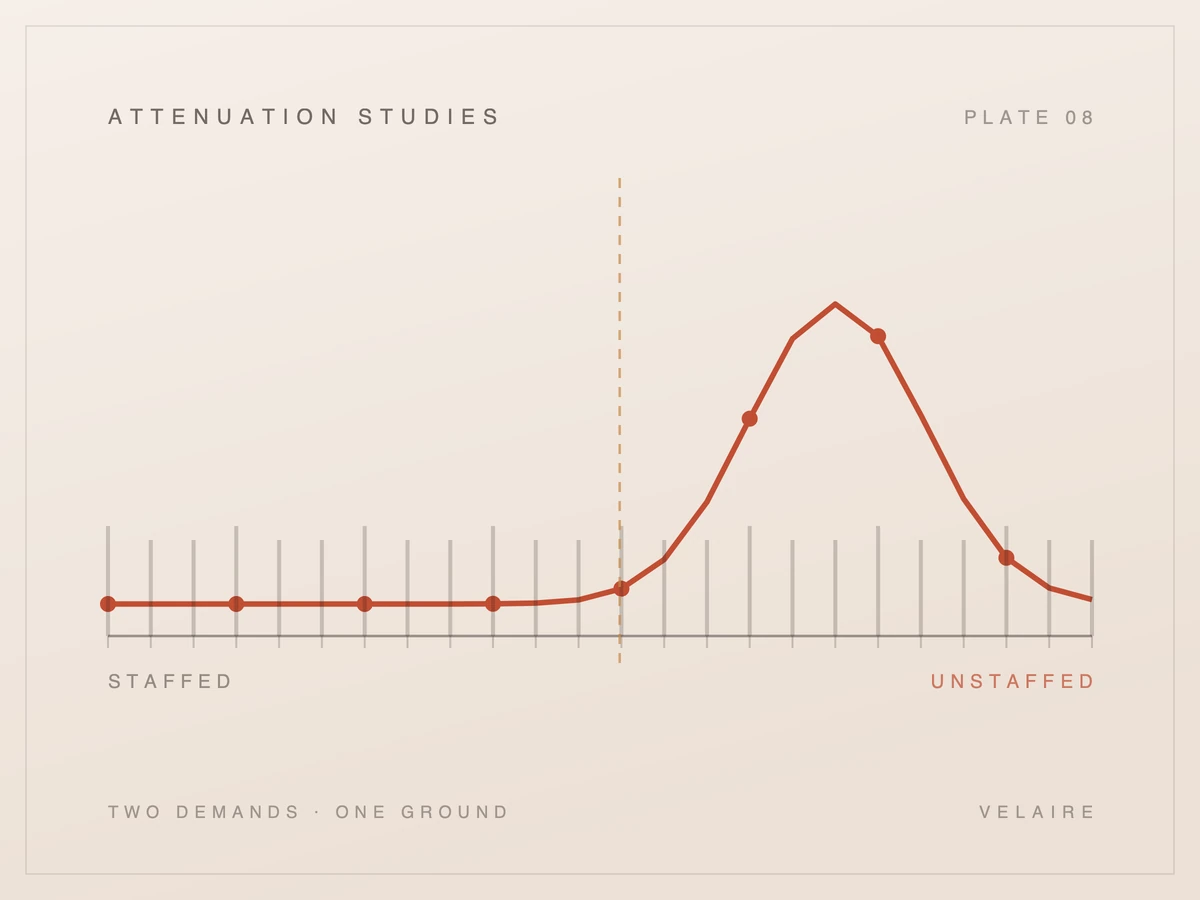
The difference is not tone or vocabulary, though those differ too. It is that the two phones are doing structurally different jobs. One is capturing demand that arrives unpredictably and decides quickly. The other is refilling capacity from a list of people the practice already has a relationship with.
Getting this wrong is expensive in a specific way: you buy something that works, deploy it correctly, and get a fraction of the result, because the thing it optimises is not the thing that was broken.
An aesthetics phone is a demand capture instrument. Someone who has been thinking about a treatment decides, in a particular moment, to find out more, and the practice that responds while that moment is open gets the consultation. Nobody needs the appointment.
A dental phone is a capacity management instrument. Most of the demand is already inside the practice, sitting in a recall list, and the job is converting known patients into filled chairs on the right days. The caller is usually not a stranger.
Both are real problems and both cost money. They just have almost nothing in common at the level where you would actually fix them.
One phone is trying to catch people who were never yours. The other is trying to bring back people who already are.
The volume context matters more than it first appears. The aesthetics market is overwhelmingly made up of low-commitment, repeatable treatments rather than the surgical procedures the category is named after, and the ratio between the two is close to 18 to 1. That shape determines how the phone behaves.
The published figures put it precisely. In 2024 there were over 28.5 million minimally invasive cosmetic procedures in the US against nearly 1.6 million cosmetic surgical ones, with minimally invasive growing 1.5% and surgical 1% year over year [1].
Low commitment cuts both ways. It means a first appointment is easy to say yes to, and it means the decision is easy to abandon, easy to defer, and easy to give to whoever answers first. There is no clinical urgency holding the caller in place.
The behaviour that follows is predictable. Callers arrive outside working hours, because a discretionary decision gets made in discretionary time. They price-shop, because the treatments are comparable across providers in a way that a dental crown is not. And they frequently do not call back, because the next practice on the list is equally acceptable.
Patient preference data supports treating this population as genuinely different. Among patients dealing with sensitive health issues, 67% said they would be more comfortable booking through an online chatbot than with a person, and 42% were comfortable with AI scheduling routine appointments outright [2]. Appearance-related enquiries carry exactly that kind of self-consciousness.
The implication is that an aesthetics practice losing evening calls is losing first contact with people who will never appear in any of its systems. There is no record of them, which is why the loss is invisible and why practices consistently underestimate it.
Compare that to how the same practice experiences a lost existing patient. A client who stops rebooking shows up in a report, prompts a conversation, and can be chased. A stranger who rang at 8pm and got voicemail leaves no trace anywhere, so the practice's felt sense of how it is doing is built entirely from the half of the picture that keeps records.
There is a second-order effect worth naming. Evening callers are frequently the people least likely to have called during the day, because a daytime call about an appearance-related treatment means finding privacy at work or explaining yourself in a room with other people in it. The after-hours channel is not simply a fallback for that group, it is the channel they would have chosen.
Dentistry's problem is on the other side of the relationship. The practice usually knows who it wants in the chair, has their history, and has a recall date. The phone's job is conversion of a known list, not capture of an unknown one.
The pressure here is real and current. In 2025 one third of dentists reported they were not busy enough, up from one quarter in the fourth quarter of 2024, while new-patient appointment wait times stayed stable through the year [3]. That combination is diagnostic: capacity is available and it is not being filled.
Stable wait times alongside rising underuse means the constraint is not access. If patients wanted appointments and could not get them, wait times would lengthen. They did not, which points at demand activation rather than demand overflow.
That reframes what the phone is for. An unfilled chair next Tuesday is not usually waiting on a stranger who could not get through, it is waiting on a patient who is 8 months past a 6 month recall and has not been contacted in a way that produced a booking.
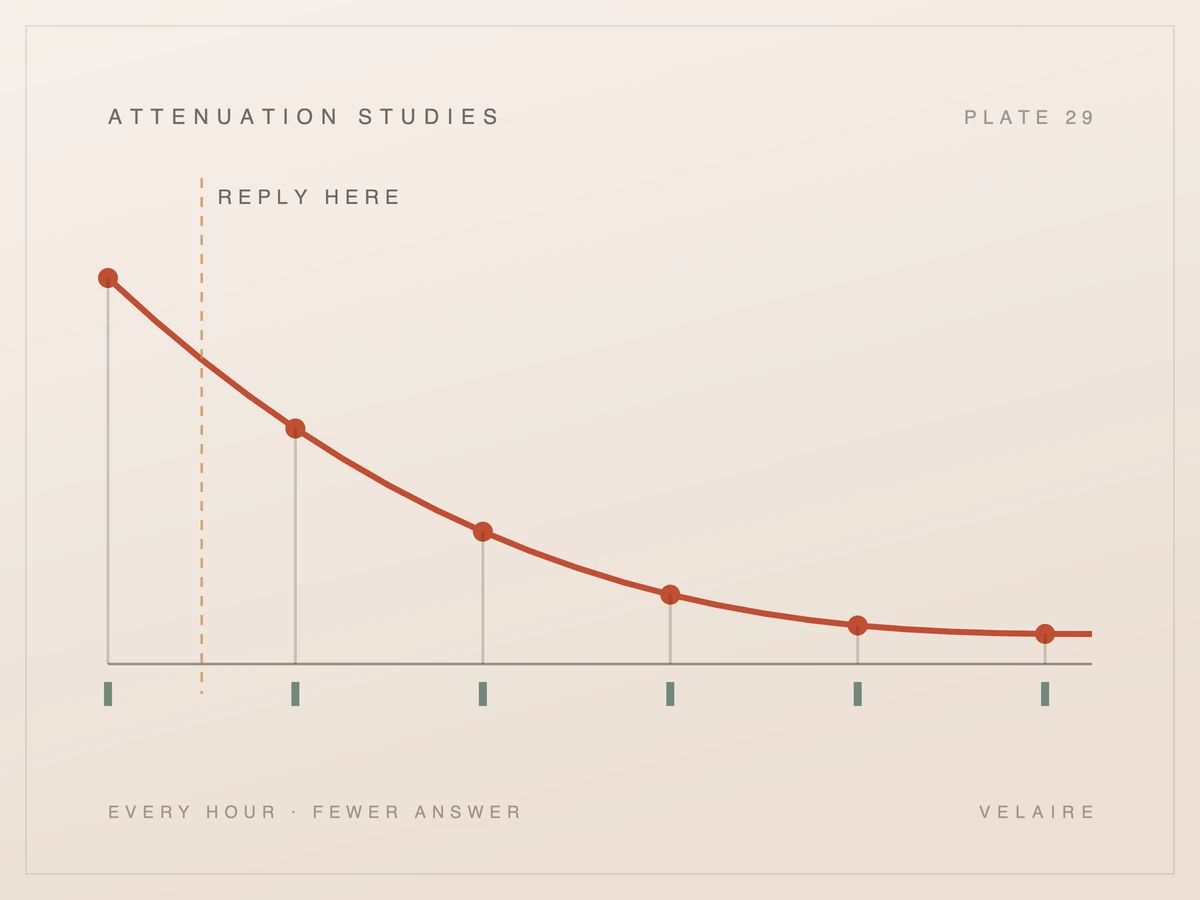
Stable wait times and rising underuse point at activation, not access. The chair is empty and the phone is not the reason.
Outbound therefore matters more here than inbound, which reverses the aesthetics picture entirely. A dental practice with a perfectly answered phone and an unworked recall list has solved the wrong half.
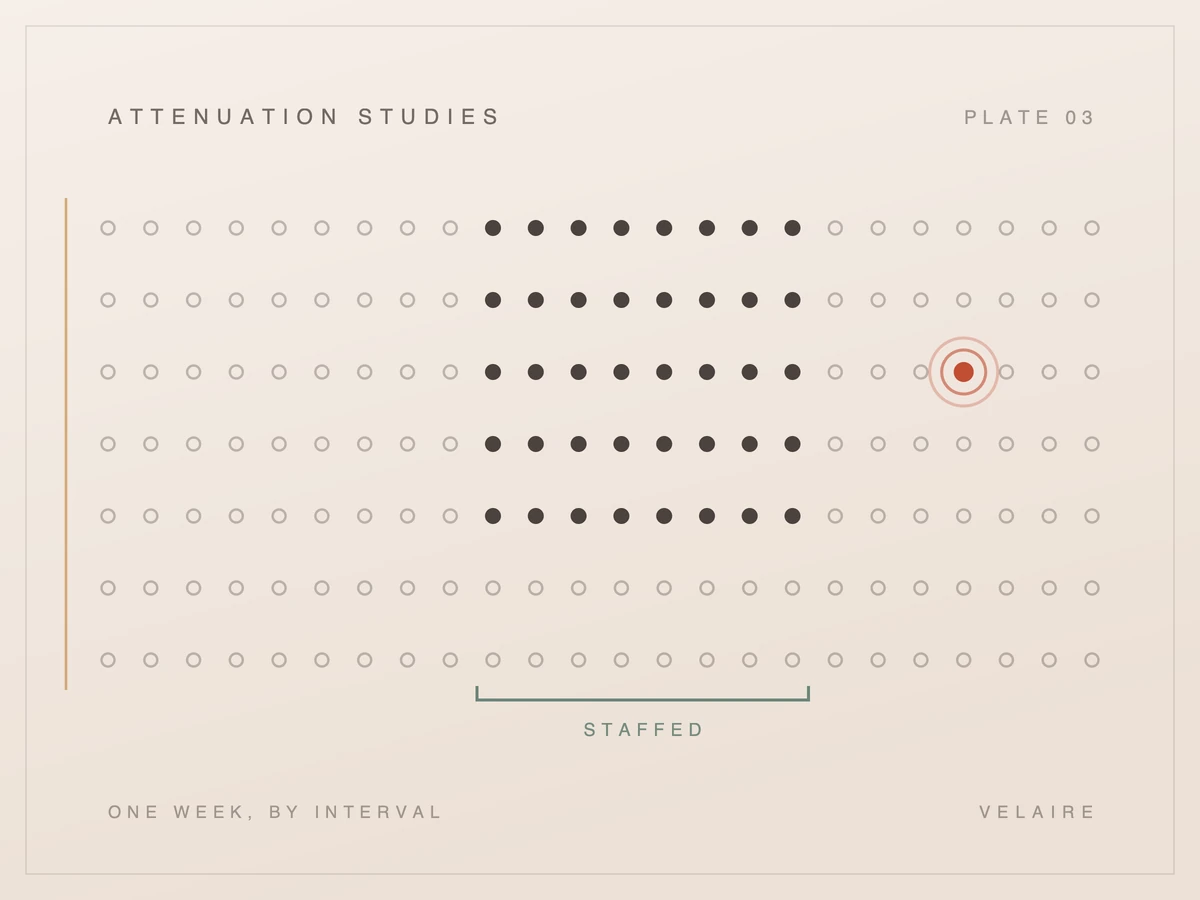
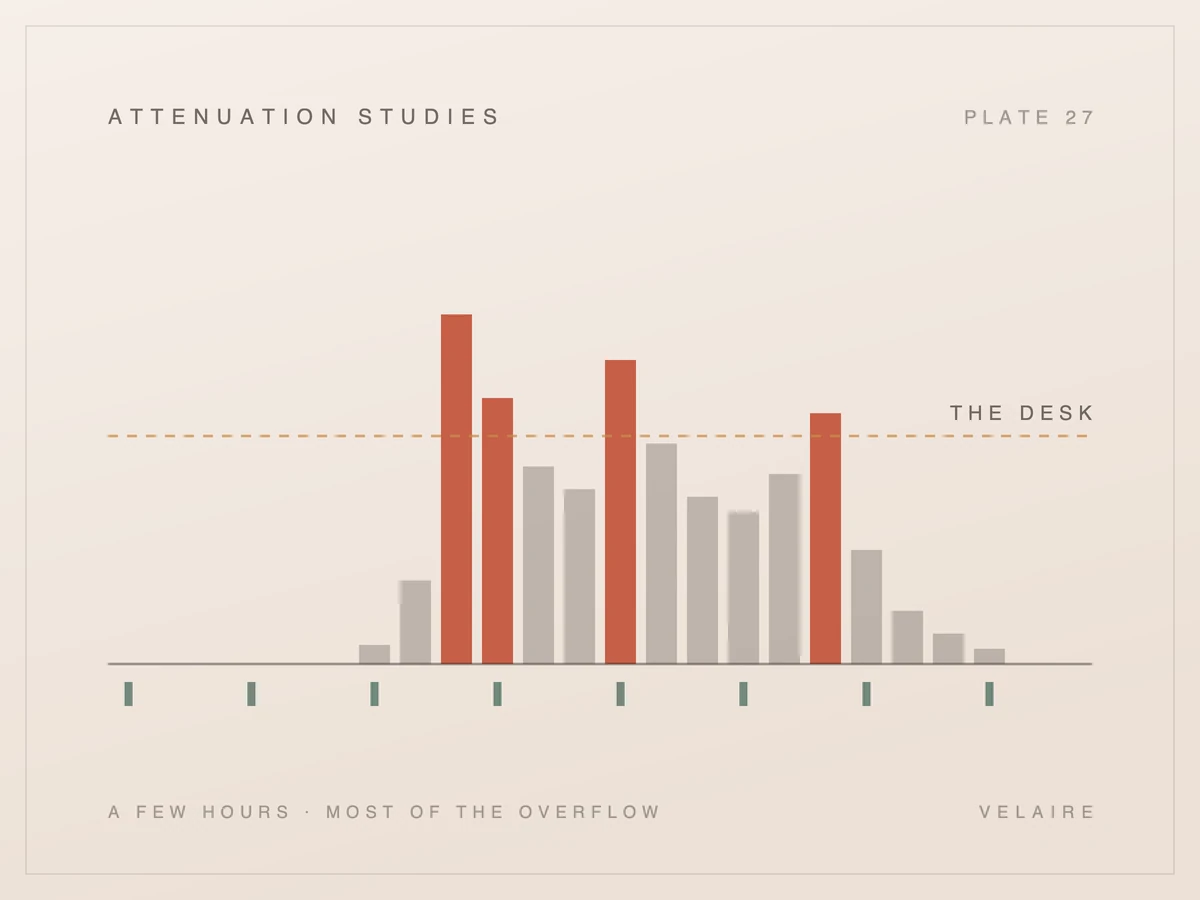
This is also why the two practices experience the same 128 uncovered hours a week so differently. For a med spa those hours contain live demand. For a dental practice they mostly contain nothing, because the patients it needs are asleep and would not have called anyway, and the work that fills next Tuesday's chair happens at 10am on a weekday when the front desk is already at its busiest.
That last detail is the one dental practices tend to feel and not articulate. The recall calls compete for exactly the same minutes as the walk-ins, the checkouts, and the ringing phone, which is why the recall list is the first thing to slip and the last thing anyone has time to rescue.
Once you see the two jobs separately, the mismatches stop being vague and become specific enough to check against a purchase order. A tool tuned for one is not neutral on the other, because it is pointed at a metric that is not the constraint, and it will report success against that metric while the real problem sits untouched.
| Aesthetics | Dentistry | |
|---|---|---|
| Primary direction | Inbound, from strangers | Outbound, to known patients |
| When it matters | Evenings and weekends | Business hours, when staff are busiest |
| What a miss costs | A person you will never know existed | A gap in a schedule you can still fill |
| What the caller wants | Price, availability, reassurance | A time that fits around work |
| Right first metric | Speed to first response | Recall list worked per week |
| Wrong first metric | Recall conversion | After-hours capture |
The last two rows are where money gets wasted. An aesthetics practice that buys a recall automation is optimising a list it barely has. A dental practice that buys after-hours coverage is covering hours in which its actual problem, an unworked recall list, does not occur.
Neither purchase is a bad product. Both are the right answer to the other practice's question.
The mismatch is easy to miss because both purchases will report a good result. Recall automation deployed at a med spa will show a healthy contact rate against the small list it has, and after-hours coverage at a dental practice will faithfully report the 4 or 5 evening calls it caught. Neither number is wrong and neither is the constraint, which is the specific way a well-run pilot can validate the wrong thing for 90 days.
Measurement is where the divergence becomes practical, because the two practices should not be looking at the same dashboard even when a vendor ships one. The right first number differs, the system it comes out of differs, and in both cases it is available today without buying anything at all.
An aesthetics practice should start with the share of inbound calls arriving outside staffed hours, and the time from first contact to a human response. Those two numbers describe whether discretionary demand is being caught while it is still live.
A dental practice should start with how many recall-due patients exist and how many were actually contacted in the last 30 days. That ratio is almost always worse than expected and it requires no new software to compute.
| Aesthetics | Dentistry | |
|---|---|---|
| First metric | Share of calls outside staffed hours | Recall-due patients contacted in 30 days |
| Where the data is | Phone system call export | Practice management recall report |
| What a bad number means | Demand arriving when nobody is there | A list you own and are not working |
| Likely first fix | Coverage outside hours | A worked recall process |
For either, the honest starting move is the same even though the numbers differ: measure your own before believing anyone's benchmark. Size your missed-call gap walks the inbound version of that with your own call records.
There is one thing both phones genuinely share, and it is worth naming clearly because it is the part where a general-purpose product does help and where the two practices want exactly the same thing. Neither of them wants a clinical question answered by software, and both of them need the calls that carry one to reach a person quickly.
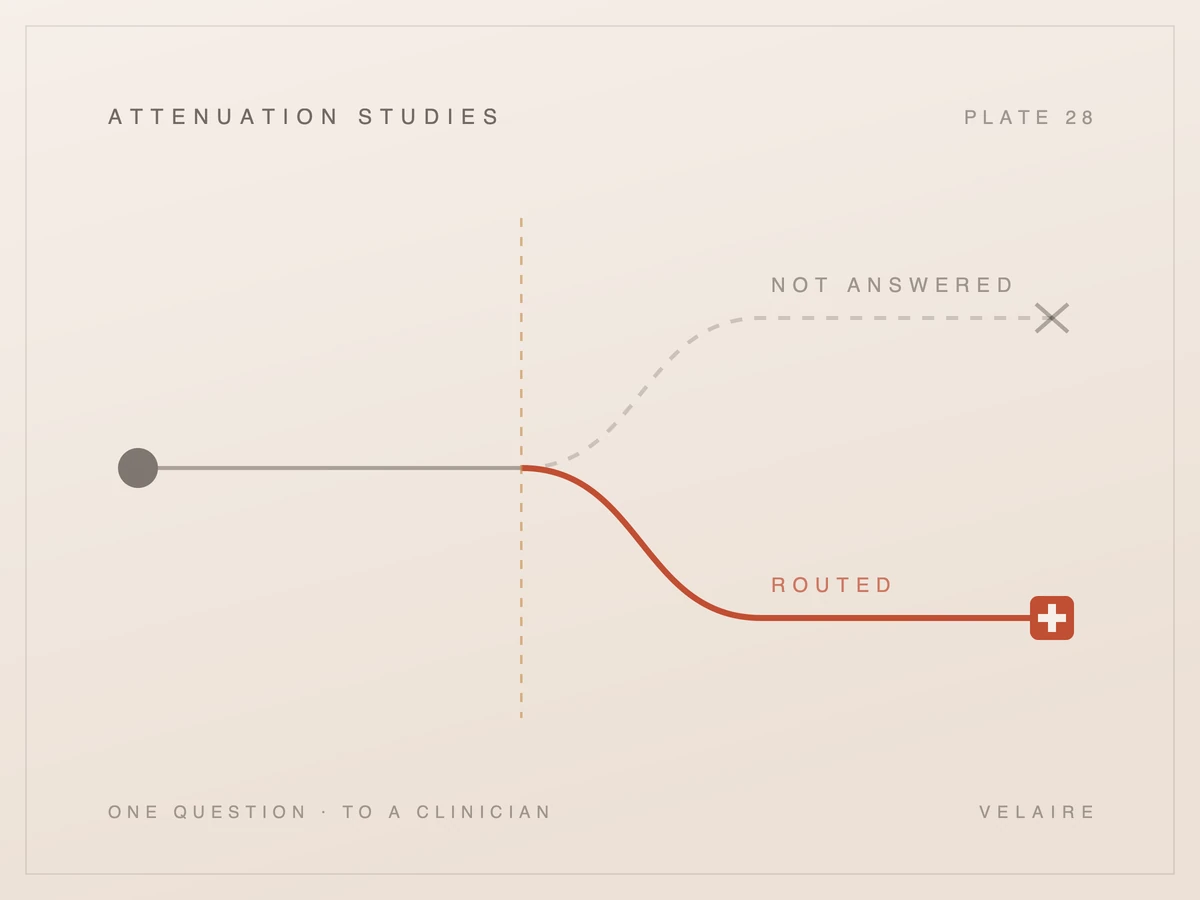
Both need urgent and clinical calls routed to a human quickly and reliably. A dental practice takes real emergencies. An aesthetics practice takes post-treatment concerns that are clinical whether or not the treatment was elective. Survey data has been consistent that 81% of patients still want a human for actual medical advice [2].
Both also need the boundary stated rather than implied. A system that captures a request and hands it to a person is doing something different from one that claims to complete a booking, and practices in both categories should be clear which they are buying. That distinction is worked through in what "the AI books the appointment" actually means.
There is a third thing they share and it is a constraint rather than a capability. Both are bound by the same consent and messaging rules once they start texting patients, and neither gets an exemption for being clinical or for being elective. A med spa sending a promotion and a dental practice sending a recall are treated as the same kind of sender by the carrier layer, whatever HIPAA says about the content.
That shared constraint is worth knowing precisely because everything else on this page is a difference. It means the compliance work is common ground: one consent record, one opt-out list, one registered campaign, built the same way in both practices even though what they send over it looks nothing alike.
So the shared ground is narrow and real: route the urgent things to people, capture the rest accurately, respect the same messaging rules, and be honest about which is which. Everything above that layer should look different in a med spa and a dental practice, and a vendor whose product looks identical in both has probably not thought about it.
Front office
Surveys show many customers distrust AI in service, mostly because they fear losing a route to a person. Waiting on hold also drives hang-ups. Here is how to weigh both risks.
Front office
What published research can and cannot tell you about replying to new inquiries, and a target your front desk can hold for live calls, callbacks and web forms.
Front office
Clinical and urgent calls are never booked by Velaire Health. They go to a person. Here is why that line exists, and how to write the handoff so an urgent caller never waits in a queue.
Front office
Voicemail looks like a safety net and behaves like an unmanaged work queue. Here is why the ownership problem is structural, what the alternatives actually change, and the number that settles it.
Front office
A missed call at 2pm and a missed call at 8pm are not the same problem. One is a delay you recover from. The other is usually just gone, and nobody is there to see it happen.
Operations
Vendor benchmarks disagree on when dental patients call. Here is how to read your own call log, map your peak hours by day, and see where the desk overflows.
The plain-language explainer: what it does, what it deliberately doesn't, and how it compares with voicemail, an answering service, a phone tree, and hiring.
See how Velaire would handle the calls your practice misses. A personal walkthrough, built around your questions.
Let’s talk about your practice